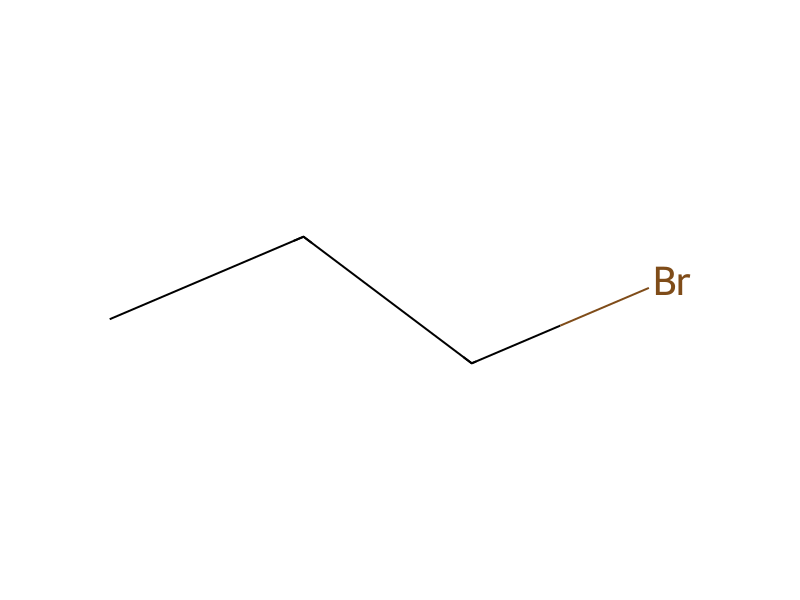
A solution of 900 g (4.43 mol) of 1,2,3,6-tetrahydro-4-(3-methoxyphenyl)-1-methylpyridine dissolved in 10.8 liters of dry THF was added to a dry, nitrogen purged 22 liter reaction flask equipped with a stirrer, low temperature thermometer, and addition funnel. The temperature of the reaction mixture was lowered to approximately -10° C. whereupon 3.04 liters of 1.6 molar n-butyllithium in hexane was added at a rate so as to maintain the temperature below -5° C. The resulting deep red solution was stirred for 15 minutes at -5° C. and 572 g (4.65 mol) of n-propylbromide in 2.4 liters of dry tetrahydrofuran were added at such a rate so that the temperature remained below -5° C. The reaction mixture was stirred for 10 minutes at -5° C. and then carefully quenched by the addition of 1.5 liters of water to destroy any excess n-butyllithium. The organic phase was separated, washed with 1.5 liters of water, 1.5 liters of saturated sodium chloride solution and dried over 500 g of anhydrous sodium sulfate. Evaporation of the solvent gave 1126 g of crude 1,2,3,4-tetrahydro-4-(3-methoxyphenyl)-1-methyl-4-propylpyridine (75% pure).