Ammonia → 3-Bromo-6-chloro-7-(morpholin-4-yl)-1,2,4-triazolo[4,3-b]pyridazine
HRID 1383847
Reaction equation

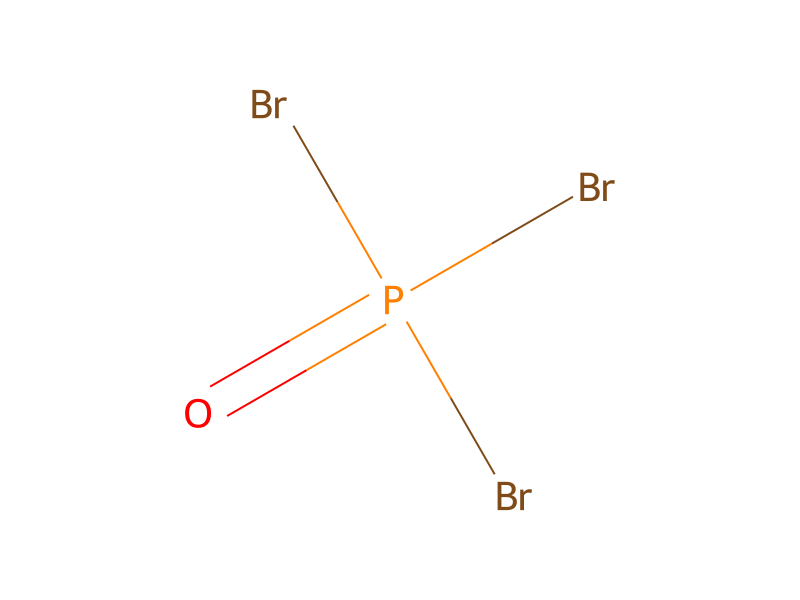
[Cl:1][C:2]1[C:3]([N:12]2[CH2:17][CH2:16][O:15][CH2:14][CH2:13]2)=[CH:4][C:5]2[N:6]([C:8](=O)[NH:9][N:10]=2)[N:7]=1.P(Br)(Br)([Br:20])=O.N>>[Br:20][C:8]1[N:6]2[N:7]=[C:2]([Cl:1])[C:3]([N:12]3[CH2:17][CH2:16][O:15][CH2:14][CH2:13]3)=[CH:4][C:5]2=[N:10][N:9]=1Participants
4



Conditions
- Temperature
- 80 °C
Procedure
A mixture of 6-chloro-7-(morpholin-4-yl)-2 H-1,2,4-triazolo[4,3-b]pyridazin-3-one (1.1 g, 4.3 mmol) and phosphoryl bromide (25 g) was stirred and heated at 80° C. for 24 hours. Upon cooling the mixture was treated with ice. The aqueous was then basified with aqueous ammonia. The aqueous was then extracted with dichloromethane (x3). The combined extracts were dried (Na2SO4), filtered and evaporated. The residue was purified by chromatography on silica gel, eluting with 5% methanol/dichloromethane to give 3-bromo-6-chloro-7-(morpholin-4-yl)-1,2,4-triazolo[4,3-b]pyridazine (600 mg). 1H NMR and mass spectrum revealed the product to be a mixture of the desired compound and the 6-bromo compound. This mixture was used without further purification. Sodium hydride (60% dispersion in oil, 80 mg, 2.0 mmol) was added in one portion to a stirred solution of the product from above (600 mg) and (1-methyl-1 H-1,2,4-triazol-3-yl)methanol (240 mg, 2.1 mmol, prepared as described in Example 65) in dry DMF at 0° C. under nitrogen. The ice bath was removed and the mixture was stirred at room temperature for 2 hours. The reaction was quenched with water and then partitioned between ethyl acetate and water. The aqueous layer was further extracted with dichloromethane (x3). The combined organic extracts were dried (Na2SO4), filtered and evaporated. The residue was purified by chromatography on silica gel, eluting with 5 to 8% methanol/dichloromethane to give the title compound (358 mg, 48% for 2 steps). 1H NMR (360 MHz, d6-DMSO) δ3.20-3.22 (4 H, m), 3.69-3.71 (4 H, m), 3.68 (3 H, s), 5.47 (2 H, s), 7.41 (1 H, s), 8.49 (1 Hi s); MS (ES+) m/e 395, 397 [MH+].