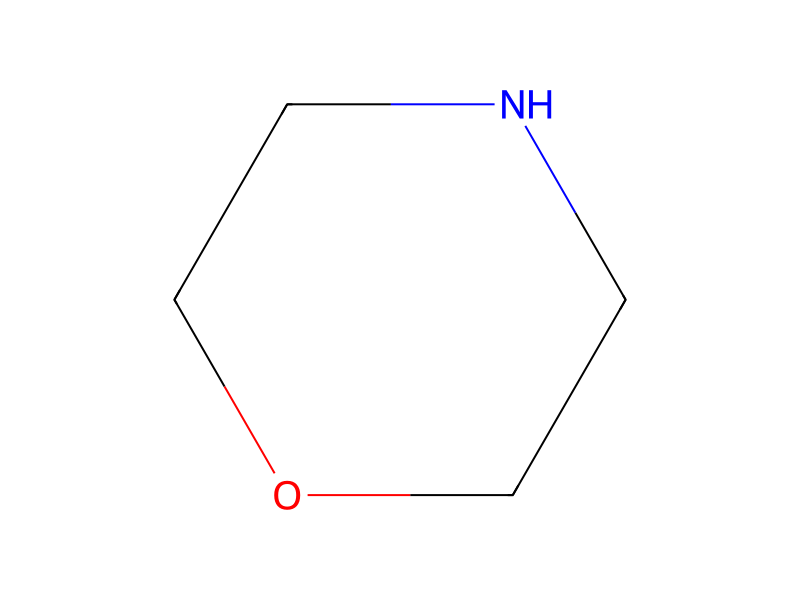
Morpholine → HCID 20672905, compound
HRID 1386501
Reaction equation

[CH3:1][O:2][C:3]1[CH:8]=[C:7](F)[CH:6]=[C:5]([O:10][CH3:11])[C:4]=1[C:12](=[O:16])[CH:13]([CH3:15])[CH3:14].[NH:17]1[CH2:22][CH2:21][O:20][CH2:19][CH2:18]1.C([O-])([O-])=O.[K+].[K+]>CS(C)=O>[CH3:1][O:2][C:3]1[CH:8]=[C:7]([N:17]2[CH2:22][CH2:21][O:20][CH2:19][CH2:18]2)[CH:6]=[C:5]([O:10][CH3:11])[C:4]=1[C:12](=[O:16])[CH:13]([CH3:15])[CH3:14]Participants
5
Reactant 3


Product 1

Reagents, catalysts & solvents 1

Procedure
Into a 1-liter, three-necked round-bottom flask was placed 15.0 g (0.07 mole) of 1-(2,6-dimethoxy-4-fluorophenyl)-2-methylpropan-1-one produced in Example 12, 5.8 g (0.07 mole) of morpholine, and 19.0 g (0.14 mole) of K2CO3 in 100 ml. of dimethylsulfoxide (DMSO). The mixture was flushed with argon and heated to reflux overnight. The reaction mixture was cooled and then mixed with about 100 ml of distilled water and extracted with dichloromethane. The organic layer was washed with NaHCO3 solution, salt water, and then dried. The solvent was removed by vacuum to yield the final product, 1-(2,6-dimethoxy-4-morpholinophenyl)-2-methylpropan-1-one. The yield of the reaction was 18.1 g of product (88%).