Reaction equation

COC1C=CC2NC(S(CC3C(C)=C(OC)C(C)=CN=3)=O)=NC=2C=1.N1C=CC=CC=1CS(C1NC2C=CC=CC=2N=1)=O.N1C=CC=CC=1CSC1NC2C=CC=CC=2N=1.[Cl:60][C:61]1[CH:62]=[C:63]([CH:68]=[CH:69][CH:70]=1)[C:64]([O:66]O)=[O:65]>C(Cl)(Cl)Cl>[Cl:60][C:61]1[CH:62]=[C:63]([CH:68]=[CH:69][CH:70]=1)[C:64]([OH:66])=[O:65]Participants
Reactant 4
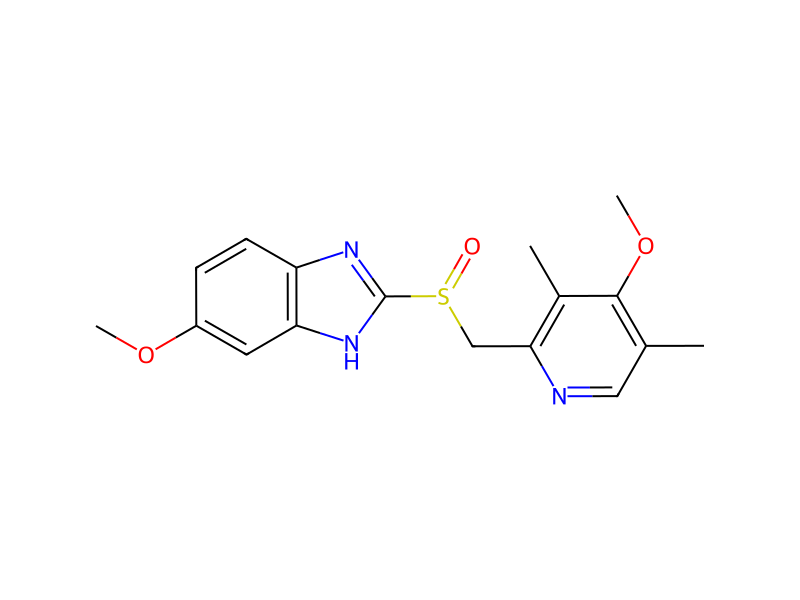



Product 1
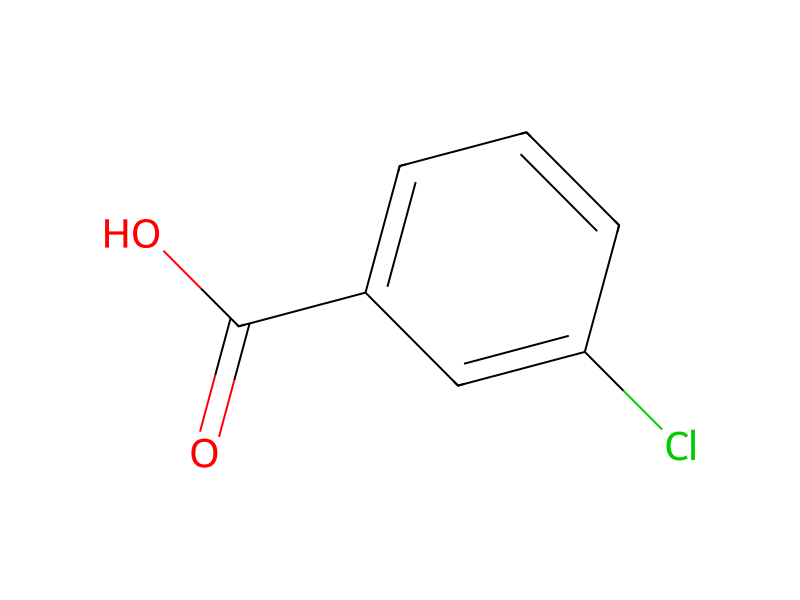
Reagents, catalysts & solvents 1

Conditions
- Temperature
- 5 °C
Procedure
5-methoxy-2-[(4-methoxy-3,5-dimethyl-2-pyridyl)methyl]sulfinyl- 1H-benzimidazole (omeprazole) was disclosed for the first time in U.S. Pat. No. 4,255,431. In the process of preparing 2-(2-pyridylmethylsulfinyl)benzimidazole compounds there is mentioned an oxidation of corresponding 2-(2-pyridylmethylthio)benzimidazole compounds with 3-chloroperoxybenzoic acid in a chloroform solution under stirring and cooling at a temperature under 5° C. 3-chlorobenzoic acid formed is then filtered off, the filtrate is diluted with methylene chloride, washed with Na2CO3, dried with Na2SO4, evaporated in vacuo and the residue is crystallized under addition of CH3CN. Since omeprazole is unstable in an acidic medium, the cooling of the reaction mixture to 5° C. is necessary to prevent a decomposition of the omeprazole formed.
Sources & evidence
- ORD record
- ord-870ea6c530364bcab1c884964fa1820a
- Source dataset
- uspto-grants-2001_07
- Patent number
- US06268502B1
Linked notes
Loading…