Reaction equation

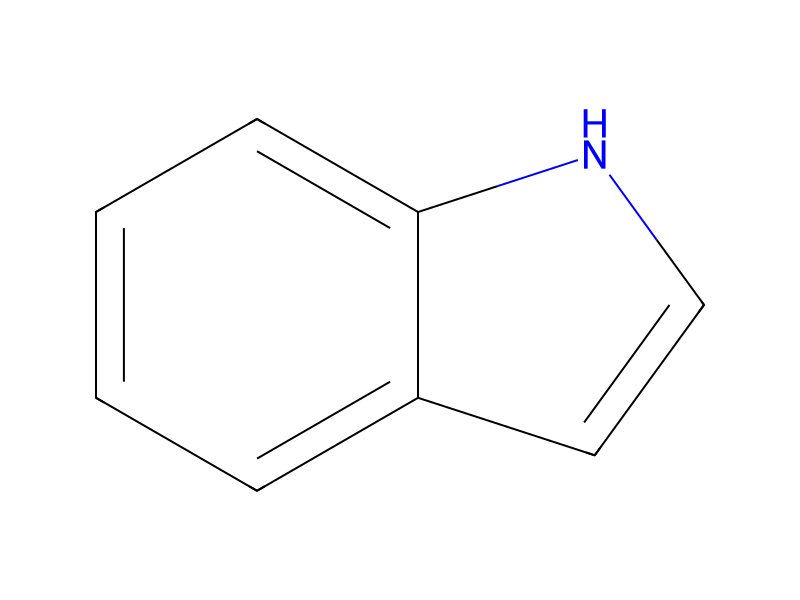
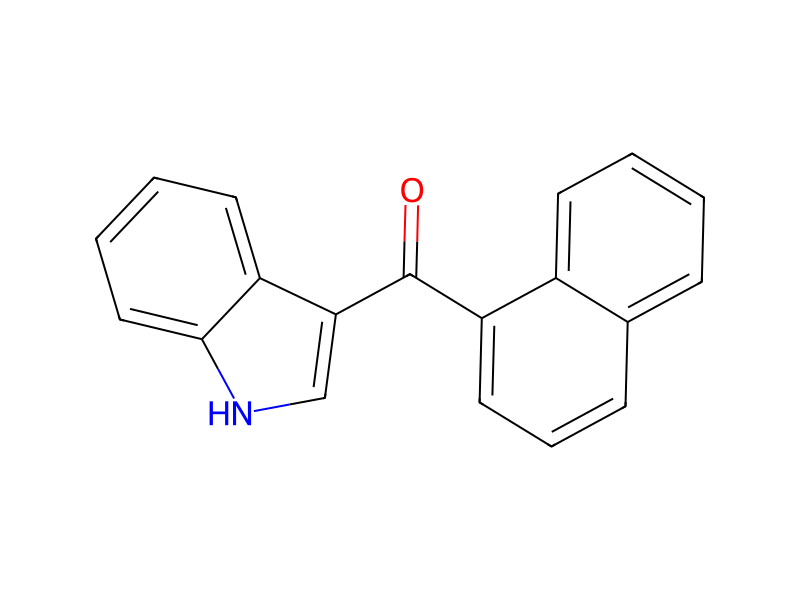
[NH:1]1[C:9]2[C:4](=[CH:5][CH:6]=[CH:7][CH:8]=2)[CH:3]=[CH:2]1.C[Mg]Br.[C:13]1([C:23](Cl)=[O:24])[C:22]2[C:17](=[CH:18][CH:19]=[CH:20][CH:21]=2)[CH:16]=[CH:15][CH:14]=1.[Cl-].[NH4+]>CCOCC>[C:13]1([C:23]([C:3]2[C:4]3[C:9](=[CH:8][CH:7]=[CH:6][CH:5]=3)[NH:1][CH:2]=2)=[O:24])[C:22]2[C:17](=[CH:18][CH:19]=[CH:20][CH:21]=2)[CH:16]=[CH:15][CH:14]=1Participants
Reactant 4



Product 1
Reagents, catalysts & solvents 1

Procedure
To a cooled solution of indole (5.85 g, 50 mmol) in ether (50 ml) under nitrogen was added slowly a solution of methylmagnesium bromide (3M) in ether (17.5 ml). After addition, the reaction mixture was warmed up to room temperature and stirred for 2 h at room temperature. Then the mixture was cooled down again to 0° C., and to it was added slowly with stirring a solution of 1-naphthoylchloride (9.5 g, 50 mmol) in ether (50 ml). The resulting mixture was warmed up to room temperature and stirred for 2 h at room temperature followed by slow addition of saturated ammonium chloride solution (375 ml). The mixture was then stirred overnight at room temperature. A white solid was formed, filtered, washed by ether and dried under high vacuum to give 3-(1-naphthoyl)-1H-Indole 1 (12.3 g, 91%).
Workup
- additionAfter addition
- temperatureThen the mixture was cooled down again to 0° C.
- additionto it was added slowly
- temperatureThe resulting mixture was warmed up to room temperature
- stirringstirred for 2 h at room temperature
- stirringThe mixture was then stirred overnight at room temperature
- customA white solid was formed
- filtrationfiltered
- washwashed by ether
- customdried under high vacuum
Sources & evidence
- ORD record
- ord-b69bec5ad1684caaadfe16aec74c23c4
- Source dataset
- uspto-grants-2014_12
- Patent number
- US08906633B2
Linked notes
Loading…