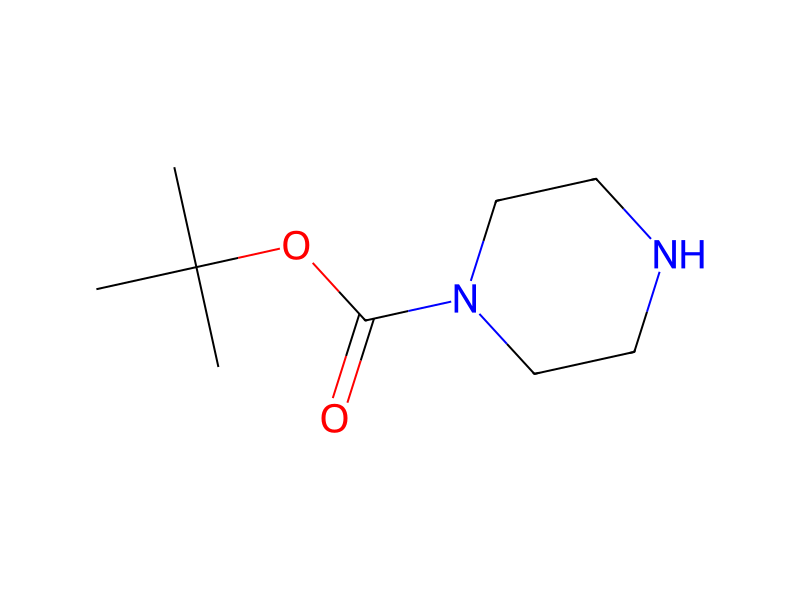
[I:1][C:2]1[N:3]=[CH:4][NH:5][CH:6]=1.Br[CH2:8][CH2:9]Cl.C([O-])([O-])=O.[K+].[K+].[C:17]([N:24]1[CH2:29][CH2:28][NH:27][CH2:26][CH2:25]1)([O:19][C:20]([CH3:23])([CH3:22])[CH3:21])=[O:18]>CS(C)=O>[I:1][C:2]1[N:3]=[CH:4][N:5]([CH2:8][CH2:9][N:27]2[CH2:26][CH2:25][N:24]([C:17]([O:19][C:20]([CH3:23])([CH3:22])[CH3:21])=[O:18])[CH2:29][CH2:28]2)[CH:6]=1To a stirred solution of 4-iodoimidazole (25 g, 129 mmol) and 1-bromo-2-chloroethane (12.87 ml, 155 mmol) in DMSO (250 ml) under nitrogen was added K2CO3 (26.7 g, 193 mmol). The reaction mixture was heated at 80° C. for 30 min. More 1-bromo-2-chloroethane (1.28 ml, 15.5 mmol) was added and the reaction mixture was heated at 80° C. for an additional 30 min. Finally, 1-Boc-piperazine (28.8 g, 155 mmol) was added and the reaction mixture heated at 80° C. for 1 h, cooled to RT and partitioned between water and AcOEt. The organic layer was collected, washed with brine, dried over anhydrous sodium sulfate, filtered and concentrated. The residue was purified by Biotage (SNAP 340 g cartridge; Hexane/AcOEt:40/60 to 0/100 over 15 CV) followed by another purification under different conditions (SNAP 100 g cartridge; MeOH/DCM: 0/100 to 5/95 over 15 CV), to afford title compound 304 (4 g, 9.85 mmol, 8% yield) as white solid. MS (m/z): 407.18 (M+H).