HomeMCPWorkbenchSkills
HomeWorkbenchNotificationsMe
llms.txt · MCP GuidePrivacy Policy · Terms of Service · Supportv1.8.0
  1. Home
  2. /Reaction

Cesium carbonate → Ethyl (2-fluoro-4-((4-fluorobenzyl)amino)-6-nitrophenyl)carbamate

HRID 1404832
Notes
Print preview

Reaction equation

HRID 1404832 reaction equation
C(OC([N:6]([C:18]([O:20][CH2:21][CH3:22])=[O:19])[C:7]1[C:12]([N+:13]([O-:15])=[O:14])=[CH:11][C:10](Br)=[CH:9][C:8]=1[F:17])=O)C.[F:23][C:24]1[CH:31]=[CH:30][C:27]([CH2:28][NH2:29])=[CH:26][CH:25]=1.C([O-])([O-])=O.[Cs+].[Cs+].CC1(C)C2C(=C(P(C3C=CC=CC=3)C3C=CC=CC=3)C=CC=2)OC2C(P(C3C=CC=CC=3)C3C=CC=CC=3)=CC=CC1=2>O1CCOCC1.C1C=CC(/C=C/C(/C=C/C2C=CC=CC=2)=O)=CC=1.C1C=CC(/C=C/C(/C=C/C2C=CC=CC=2)=O)=CC=1.C1C=CC(/C=C/C(/C=C/C2C=CC=CC=2)=O)=CC=1.[Pd].[Pd]>[F:17][C:8]1[CH:9]=[C:10]([NH:29][CH2:28][C:27]2[CH:30]=[CH:31][C:24]([F:23])=[CH:25][CH:26]=2)[CH:11]=[C:12]([N+:13]([O-:15])=[O:14])[C:7]=1[NH:6][C:18](=[O:19])[O:20][CH2:21][CH3:22]
ParticipantsConditionsProcedureWorkupSources & evidenceReaction notes

Participants

7

Reactant 4

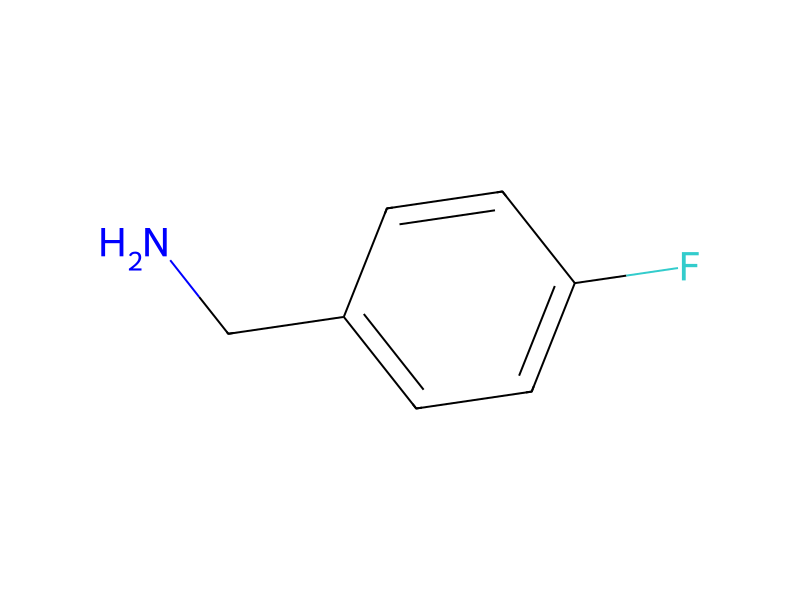
HCID 10796Cesium carbonateHCID 673264-FluorobenzylamineHCID 6360441,1'-(9,9-Dimethyl-9H-xanthene-4,5-diyl)bis(1,1-diphenylphosphine)HCID 86700476HCID 86700476, compound

Product 1

HCID 86700477Ethyl (2-fluoro-4-((4-fluorobenzyl)amino)-6-nitrophenyl)carbamateYield 50.4%

Reagents, catalysts & solvents

2
HCID 9811564Bis(dibenzylideneacetone)palladiumCatalystHCID 312751,4-DioxaneSolvent

Conditions

Temperature
90 °C

Procedure

To a stirred solution of compound 2 (0.300 g, 0.790 mmol, 1.00 equiv) in 1,4-dioxane (10 mL) were added 4-fluorobenzylamine (0.200 g, 1.58 mmol, 2.00 equiv), Cs2CO3 (0.500 g, 1.50 mmol, 2.00 equiv) followed by Pd2 (dba)3 (0.072 g, 0.079 mmol, 10 mol %) and Xantphos (0.045 g, 0.079 mmol, 10 mol %) at RT. The reaction mixture was heated at 90° C. and stirred at the same temperature for 8 h. After consumption of the starting material (by TLC), the reaction mixture was concentrated under vacuum. The obtained residue was diluted with water (50 mL) and extracted with EtOAc (2×50 mL). The combined organic extracts were dried over anhydrous Na2SO4, filtered and concentrated under vacuum. The crude material was purified by silica gel column chromatography (EtOAc/Hexane 2:23) to afford compound 3 (0.140 g, 50.3%) as yellow solid. TLC: 40% EtOAc/Hexane (Rf: 0.25); 1H NMR (500 MHz, CDCl3): δ 7.31-7.28 (m, 2H), 7.06 (t, J=8.5 Hz, 1H), 7.00 (s, 2H), 6.91 (br s, 1H), 6.60 (d, J=9.5 Hz, 1H), 4.46 (br s, 1H), 4.31 (d, J=4.4 Hz, 2H), 4.20 (q, J=7.0 Hz, 2H), 1.28 (t, J=7.0 Hz, 3H); LC-MS: m/z=350 (M+-1) at RT 3.69 (97.8% purity).

Workup

  1. customAfter consumption of the starting material (by TLC)
  2. concentrationthe reaction mixture was concentrated under vacuum
  3. additionThe obtained residue was diluted with water (50 mL)
  4. extractionextracted with EtOAc (2×50 mL)
  5. dry with materialThe combined organic extracts were dried over anhydrous Na2SO4
  6. filtrationfiltered
  7. concentrationconcentrated under vacuum
  8. customThe crude material was purified by silica gel column chromatography (EtOAc/Hexane 2:23)

Sources & evidence

ORD record
ord-910ca26a52e14e46b9855c2a1062f5e1
Source dataset
uspto-grants-2014_12
DOI
10.6084/m9.figshare.5104873.v1
Patent number
US08916133B2

Reaction notes

Loading…

On this pageParticipantsConditionsProcedureWorkupSources & evidenceReaction notes