HomeMCPWorkbenchSkills
HomeWorkbenchNotificationsMe
llms.txt · MCP GuidePrivacy Policy · Terms of Service · Supportv1.8.3
  1. Home
  2. /Reaction

Water → 1-(Cyclopent-1-en-1-yl)-2-nitrobenzene

HRID 1404872
Print

Reaction equation

HRID 1404872 reaction equation
Cl[C:2]1[CH:7]=[CH:6][CH:5]=[CH:4][C:3]=1[N+:8]([O-:10])=[O:9].C(=O)([O-])[O-].[Na+].[Na+].O.[C:18]1(B2OC(C)(C)C(C)(C)O2)[CH2:22][CH2:21][CH2:20][CH:19]=1>Cl[Pd](Cl)([P](C1C=CC=CC=1)(C1C=CC=CC=1)C1C=CC=CC=1)[P](C1C=CC=CC=1)(C1C=CC=CC=1)C1C=CC=CC=1.O1CCOCC1>[C:18]1([C:2]2[CH:7]=[CH:6][CH:5]=[CH:4][C:3]=2[N+:8]([O-:10])=[O:9])[CH2:22][CH2:21][CH2:20][CH:19]=1
ParticipantsConditionsProcedureWorkupSources & evidenceReaction notes

Participants

7

Reactant 4

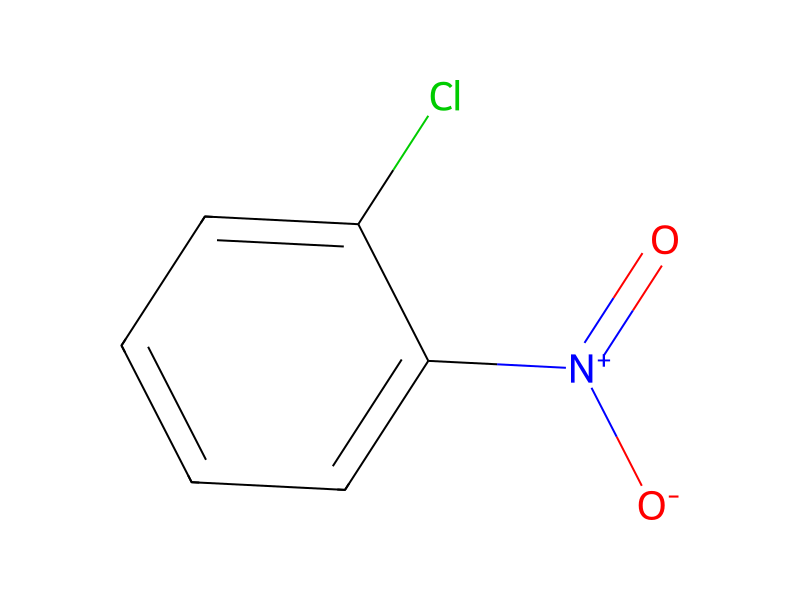
HCID 962WaterHCID 69451-Chloro-2-nitrobenzeneHCID 10340Sodium CarbonateHCID 154866112-(Cyclopent-1-en-1-yl)-4,4,5,5-tetramethyl-1,3,2-dioxaborolane

Product 1

HCID 862422841-(Cyclopent-1-en-1-yl)-2-nitrobenzeneYield 93.8%

Reagents, catalysts & solvents 2

HCID 178418476
HCID 178418476, compound
Catalyst
HCID 312751,4-DioxaneSolvent

Conditions

Temperature
80 °C

Procedure

To a mixture of 1-chloro-2-nitrobenzene (0.5 g, 3.2 mmol) and sodium carbonate (0.34 g, 3.2 mmol) in a 100 mL roundbottom flask equipped with a magnetic stir bar and nitrogen inlet were added water (3.2 mL), dioxane (13 mL) and 2-(cyclopent-1-en-1-yl)-4,4,5,5-tetramethyl-1,3,2-dioxaborolane (0.77 mL, 3.8 mmol). The reaction flask was evacuated and purged with nitrogen (2×) prior to the addition of bis(triphenylphosphine)palladium(II) chloride (0.18 g, 0.25 mmol), and then evacuated and purged (3×) following the addition of the catalyst. The reaction was heated to 80° C. and stirred overnight. The reaction was cooled and filtered through a pad of Celite® which was subsequently washed with water and ethyl acetate. The phases were separated and the organic phase was dried by passing it through a phase separator cartridge and concentrated. The residue was purified by flash column chromatography providing the title compound (0.56 g, 3.0 mmol, 93% yield) as a yellow oil: 1H NMR (400 MHz, CDCl3) δ 7.78-7.71 (m, 1H), 7.54-7.47 (m, 1H), 7.40-7.32 (m, 2H), 5.86-5.82 (m, 1H), 2.63-2.55 (m, 2H), 2.55-2.47 (m, 2H), 2.09-1.98 (m, 2H); 13C NMR (101 MHz, CDCl3) δ 148.77, 139.96, 133.58, 132.08, 130.87, 130.52, 127.55, 123.70, 35.31, 33.49, 24.05; ESIMS m/z 190 ([M+H]+).


Workup

  1. customequipped with a magnetic stir bar and nitrogen inlet
  2. customThe reaction flask was evacuated
  3. custompurged with nitrogen (2×)
  4. customevacuated
  5. custompurged (3×)
  6. additionthe addition of the catalyst
  7. temperatureThe reaction was cooled
  8. filtrationfiltered through a pad of Celite® which
  9. washwas subsequently washed with water and ethyl acetate
  10. customThe phases were separated
  11. customthe organic phase was dried
  12. concentrationconcentrated
  13. customThe residue was purified by flash column chromatography

Sources & evidence

ORD record
ord-41c2216237da4b8e8a9a725f93d41e91
Source dataset
uspto-grants-2014_12
DOI
10.6084/m9.figshare.5104873.v1
Patent number
US08916183B2

Reaction notes

On this pageParticipantsConditionsProcedureWorkupSources & evidenceReaction notes