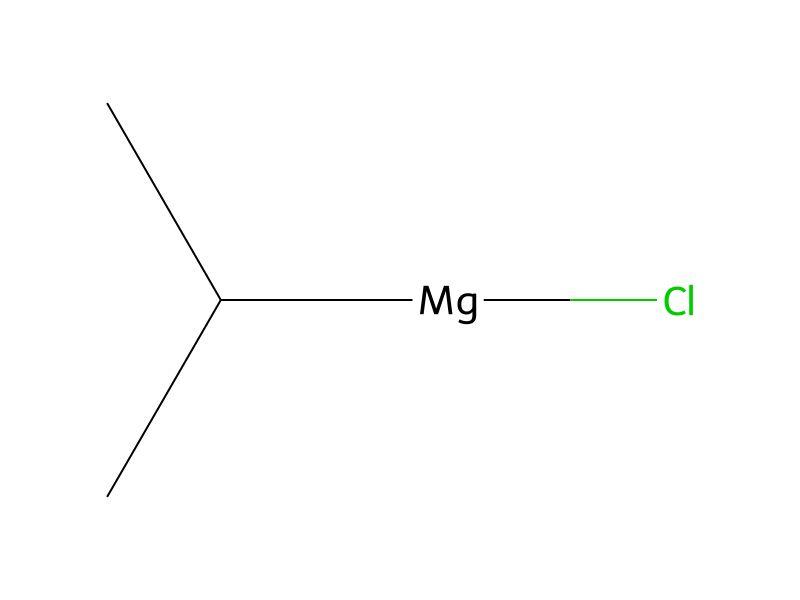
[O:1]1[C:6]2[CH:7]=[CH:8][C:9]([OH:11])=[CH:10][C:5]=2[O:4][CH2:3][CH2:2]1.C([Mg]Cl)(C)C.[Br:17][C:18]1[CH:26]=[CH:25][CH:24]=[C:23]2[C:19]=1[C:20](=[O:29])[C:21](=[O:28])[N:22]2[CH3:27].Cl>ClCCl>[Br:17][C:18]1[CH:26]=[CH:25][CH:24]=[C:23]2[C:19]=1[C:20]([OH:29])([C:8]1[C:9]([OH:11])=[CH:10][C:5]3[O:4][CH2:3][CH2:2][O:1][C:6]=3[CH:7]=1)[C:21](=[O:28])[N:22]2[CH3:27]To a stirred solution of 2,3-dihydro-1,4-benzodioxin-6-ol (36.0 g, 230 mmol) in dichloromethane (1000 mL) was added isopropylmagnesium chloride (120 mL, 2.0 M solution in tetrahydrofuran, 240 mmol) at 0° C. The mixture was allowed to stir at 0° C. for 1 h and 4-bromo-1-methyl-1H-indole-2,3-dione (48.0 g, 200 mmol) was added. The reaction mixture was stirred at ambient temperature for 22 h and 5% w/v hydrochloric acid was added at 0° C. The organic layer was separated, washed with water and brine, dried over anhydrous sodium sulfate and filtered. The filtrate was concentrated in vacuo and the residue was triturated in methanol and washed with diethyl ether to afford 4-bromo-3-hydroxy-3-(7-hydroxy-2,3-dihydro-1,4-benzodioxin-6-yl)-1-methyl-1,3-dihydro-2H-indol-2-one (63.4 g, 80%): 1H NMR (300 MHz, DMSO-d6) δ 8.80 (s, 1H), 7.21-7.13 (m, 2H), 7.01-6.93 (m, 2H), 6.45 (s, 1H), 6.03 (s, 1H), 4.17-4.10 (m, 4H), 3.08 (s, 3H); MS (ES+) m/z 373.8 (M−17), 375.8 (M−17).