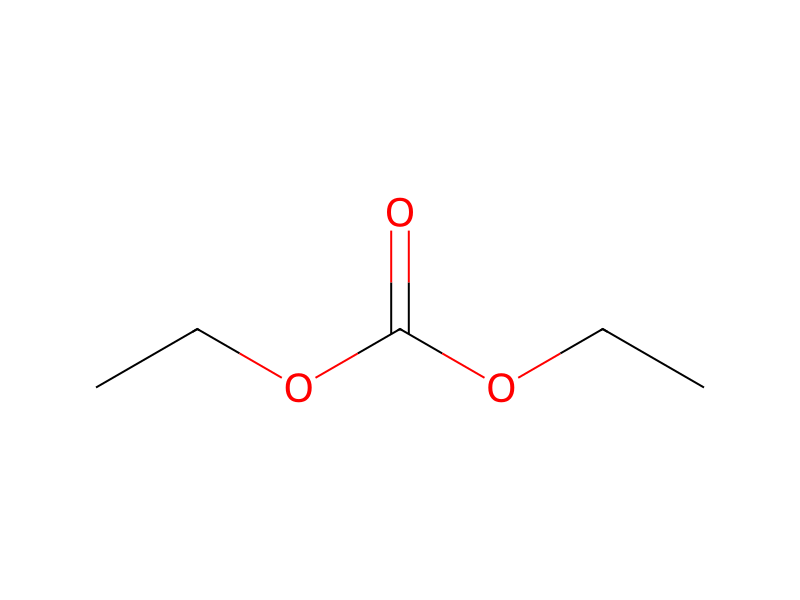
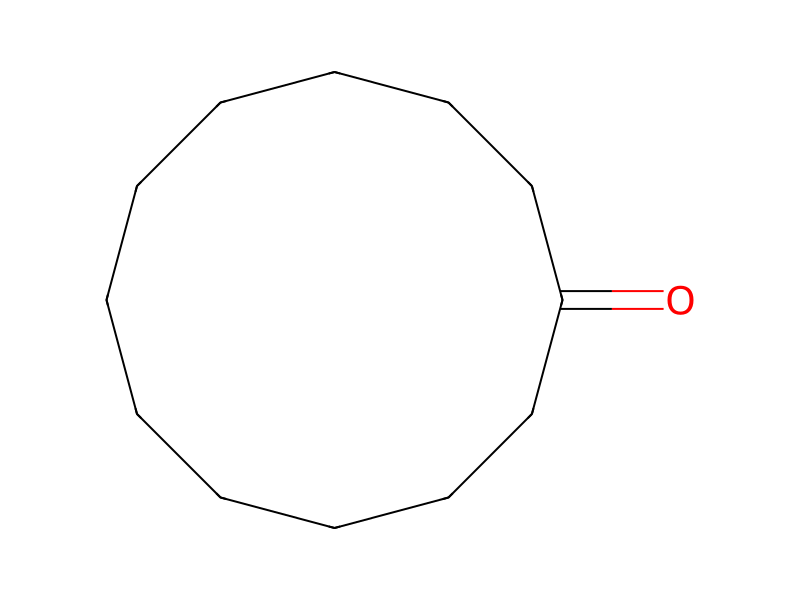
Diethyl Carbonate → Cyclododecanecarboxylic acid, 2-oxo-, ethyl ester
Reaction equation

[C:1]1(=[O:13])[CH2:12][CH2:11][CH2:10][CH2:9][CH2:8][CH2:7][CH2:6][CH2:5][CH2:4][CH2:3][CH2:2]1.[C:14](=O)([O:18]CC)[O:15][CH2:16][CH3:17]>>[C:14]([CH:2]1[CH2:3][CH2:4][CH2:5][CH2:6][CH2:7][CH2:8][CH2:9][CH2:10][CH2:11][CH2:12][C:1]1=[O:13])([O:15][CH2:16][CH3:17])=[O:18]Participants
3

Procedure
Cyclododecanone and diethyl carbonate were allowed to react in the presence of a base to give 2-carboethoxycyclododecanone in 93% yield. Ten grams of the 2-carboethoxycyclododecanone was dissolved in 40 ml of toluene and the resulting solution was added dropwise into a solution of 2.4 g of sodium hydride (purity 60%) suspended in toluene and kept at 80° C. After the completion of the dropping, the solution thus obtained was stirred for 30 minutes and then the reaction temperature was cooled to room temperature. Thereafter, into the solution was dropped 5.7 g of β-propiolactone and further 25 ml of aqueous sodium hydroxide solution was added, and was refluxed for 4 hours. After the reaction was complete, the aqueous layer of the solution was drawn off and acidified with hydrochloric acid to give 8.5 g of β-(2-oxocyclododecyl)propionic acid as white crystals. The product melts at 101° to 102° C.