Reaction equation

C1NC2NC(N)=NC(=[O:14])C=2N2C1CN(C1C=CC(C(N[C@H:25]([C:31]([OH:33])=[O:32])[CH2:26][CH2:27][C:28](O)=O)=O)=CC=1)C2.[C:34](O)(=[O:40])[CH2:35][CH2:36][C:37]([CH3:39])=[O:38]>[O-2].[Cr+3].[Cu+2]>[C:31]1(=[O:33])[O:32][CH:27]([CH3:28])[CH2:26][CH2:25]1.[CH2:34]([OH:40])[CH2:35][CH2:36][CH:37]([OH:38])[CH3:39].[OH2:14]Participants
6
Reactant 2
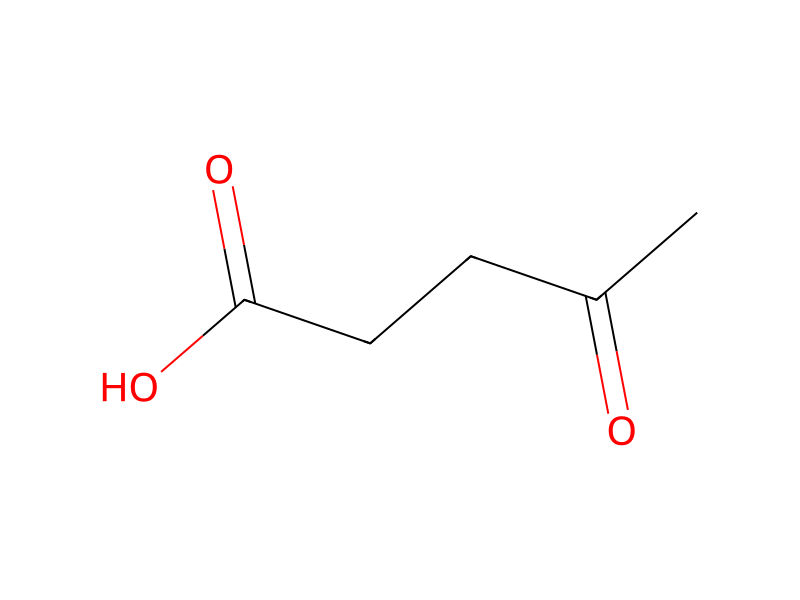

Product 3



Reagents, catalysts & solvents 1

Procedure
Direct production of MTHF from levulinic acid is not reported in the literature except as a minor byproduct [4]. Copper-chromium oxide was used to catalyze the hydrogenation in a two stage manner at 245° C. and 300° C. and required about 80 minutes. The reaction yielded 11% gamma-valerolactone and 44% 1,4-pentanediol with a 22% yield of a water byproduct with the "odor of a alpha-methyl tetrahydrofuran", but no quantitative analysis of the water byproduct was reported, (estimated 4.5 mol % yield of MTHF in the water byproduct).
Workup
- customat 245° C.
- custom300° C.
- customabout 80 minutes
Sources & evidence
- ORD record
- ord-e52f987c1f4744d49e0e5b7dd11a6c1a
- Source dataset
- uspto-grants-1999_03
- Patent number
- US05883266
Linked notes
Loading…