Reaction equation

Br[C:2]1[CH:11]=[C:10]2[C:5]([CH:6]=[CH:7][N:8]=[C:9]2[N:12]([CH2:16][CH2:17][CH3:18])[CH2:13][CH2:14][CH3:15])=[CH:4][CH:3]=1.[C:19]([Cu])#[N:20]>CN(C)C=O.O>[CH2:13]([N:12]([CH2:16][CH2:17][CH3:18])[C:9]1[C:10]2[C:5](=[CH:4][CH:3]=[C:2]([C:19]#[N:20])[CH:11]=2)[CH:6]=[CH:7][N:8]=1)[CH2:14][CH3:15]Participants
5
Reactant 2

Product 1

Reagents, catalysts & solvents 2


Procedure
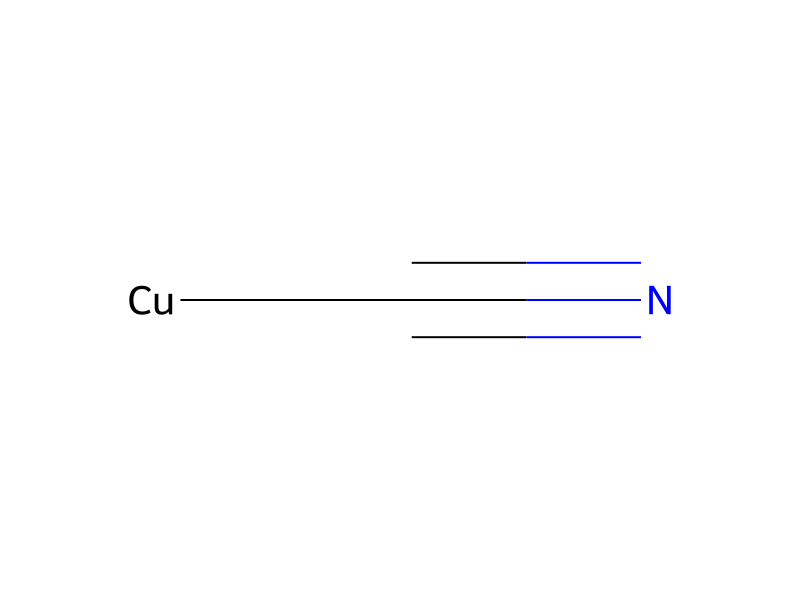
A solution of 7-bromo-N,N-dipropylisoquinolin-1-amine (350 mg, 1.1 mmol) and CuCN (204 mg, 2.2 mmol) in N,N-dimethylformamide (2 mL) was stirred at reflux for 24 h. The reaction mixture was cooled to room temperature, diluted with water, and extracted with ethyl acetate (3×50 mL). The combined organics were washed with saturated sodium chloride, dried (magnesium sulfate), filtered, and concentrated under reduced pressure to provide 1-(dipropylamino)isoquinoline-7-carbonitrile (279 mg, which was used without any further characterization.
Workup
- temperatureat reflux for 24 h
- extractionextracted with ethyl acetate (3×50 mL)
- washThe combined organics were washed with saturated sodium chloride
- dry with materialdried (magnesium sulfate)
- filtrationfiltered
- concentrationconcentrated under reduced pressure
Sources & evidence
- ORD record
- ord-3b3881acd748434d9adb4b9528b554be
- Source dataset
- uspto-grants-2010_06
- Patent number
- US07727997B2
Linked notes
Loading…