HomeMCPWorkbenchSkills
HomeWorkbenchNotificationsMe
llms.txt · MCP GuidePrivacy Policy · Terms of Service · Supportv1.8.0
  1. Home
  2. /Reaction

Tetrahydrofuran → (1S,2S,4R)-2-(hydroxymethyl)-4-(tritylamino)cyclopentan-1-ol

HRID 1427334
Notes
Print preview

Reaction equation

HRID 1427334 reaction equation
C([Si](C(C)C)(C(C)C)[O:5][CH2:6][C@@H:7]1[CH2:11][C@@H:10]([NH:12][C:13]([C:26]2[CH:31]=[CH:30][CH:29]=[CH:28][CH:27]=2)([C:20]2[CH:25]=[CH:24][CH:23]=[CH:22][CH:21]=2)[C:14]2[CH:19]=[CH:18][CH:17]=[CH:16][CH:15]=2)[CH2:9][C@@H:8]1[OH:32])(C)C.C1COCC1.[F-].C([N+](CCCC)(CCCC)CCCC)CCC>C(OCC)(=O)C.CCCCCCC>[OH:5][CH2:6][C@@H:7]1[CH2:11][C@@H:10]([NH:12][C:13]([C:14]2[CH:19]=[CH:18][CH:17]=[CH:16][CH:15]=2)([C:20]2[CH:21]=[CH:22][CH:23]=[CH:24][CH:25]=2)[C:26]2[CH:31]=[CH:30][CH:29]=[CH:28][CH:27]=2)[CH2:9][C@@H:8]1[OH:32]
ParticipantsProcedureWorkupSources & evidenceReaction notes

Participants

5

Reactant 3

HCID 8028TetrahydrofuranHCID 2724141Tetrabutylammonium FluorideHCID 68909459(1S,2S,4R)-2-{[(triisopropylsilyl)oxy]methyl}-4-(tritylamino)cyclopentanol

Product 1

HCID 68907359(1S,2S,4R)-2-(hydroxymethyl)-4-(tritylamino)cyclopentan-1-olYield 344%

Reagents, catalysts & solvents 1

HCID 21899848
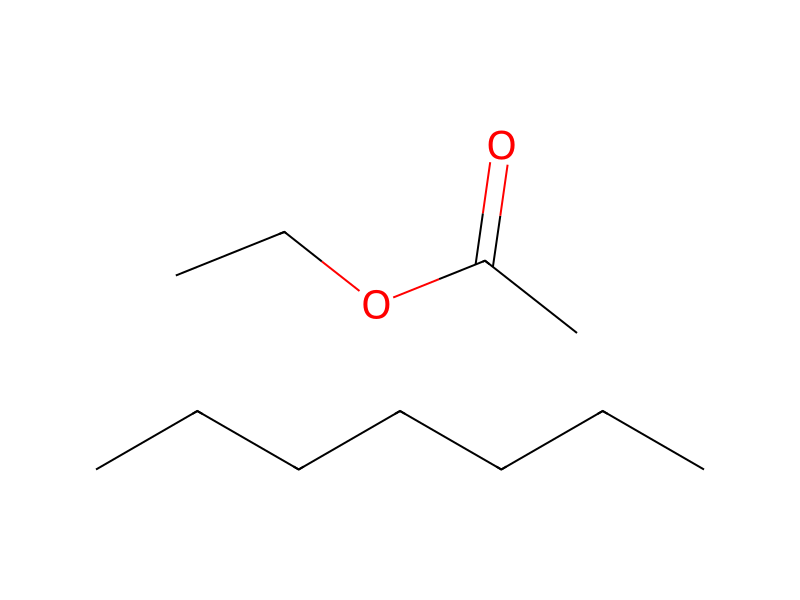
Ethylacetate heptane
Solvent

Procedure

A reactor was charged with (1S,2S,4R)-2-{[(triisopropylsilyl)oxy]methyl}-4-(tritylamino)cyclopentanol (2.94 kg total, ˜1.6 kg assumed pure material, 3.02 mol). The reactor was charged with THF (6 L) and agitation started. While maintaining the temperature less than 25° C., tetrabutylammonium fluoride (1M solution in THF, 3.02 L, 3.0 mol) was added. The reaction mixture was allowed to stir at 20° C. to 22° C., for 3 hours. TLC (50% ethyl acetate/heptane, UV visualization) confirmed a complete conversion of the starting material to the product. The reaction mixture was concentrated under reduced pressure to ˜2 L volume and transferred to a second reactor. The concentrate was diluted with methylene chloride (16 L), washed with saturated aqueous ammonium chloride (8 L), and DI water (8 L). The organic phase was dried over anhydrous magnesium sulfate, filtered through a pad of diatomaceous earth and concentrated under reduced pressure to give an amber oil (3.88 kg) which was purified by silica gel chromatography. Two columns were performed as follows. A 20 cm diameter glass column was loaded with a slurry of silica gel (5 kg) in 10% ethyl acetate/heptane. About 1.9 kg of the oil was adsorbed onto silica gel (1.5 kg) and loaded on the column and the polarity was gradually increased from 10% to 50% ethyl acetate/heptane. Pure fractions were combined and concentrated under reduced pressure to afford the title compound (800 g) as a white solid. 1H NMR (300 MHz, CDCl3, δ): 7.57-7.53 (m, 5H), 7.32-7.18 (m, 10H), 4.26-4.23 (m, 1H), 3.65-3.46 (m, 2H), 3.36-3.29 (m, 1H), 2.17-2.07 (m, 2H), 1.65-1.62 (d, 1H), 1.51-1.39 (m, 2H), 1.37-1.26 (m, 1H) and 1.2-1.17-1.11 (m, 1H).


Workup

  1. additionwas added
  2. concentrationThe reaction mixture was concentrated under reduced pressure to ˜2 L volume
  3. customtransferred to a second reactor
  4. additionThe concentrate was diluted with methylene chloride (16 L)
  5. washwashed with saturated aqueous ammonium chloride (8 L), and DI water (8 L)
  6. dry with materialThe organic phase was dried over anhydrous magnesium sulfate
  7. filtrationfiltered through a pad of diatomaceous earth
  8. concentrationconcentrated under reduced pressure

Sources & evidence

ORD record
ord-a79d1415395d41a49d17303bd9d9b55e
Source dataset
uspto-grants-2015_01
DOI
10.6084/m9.figshare.5104873.v1
Patent number
US08933225B2

Reaction notes

Loading…

On this pageParticipantsProcedureWorkupSources & evidenceReaction notes