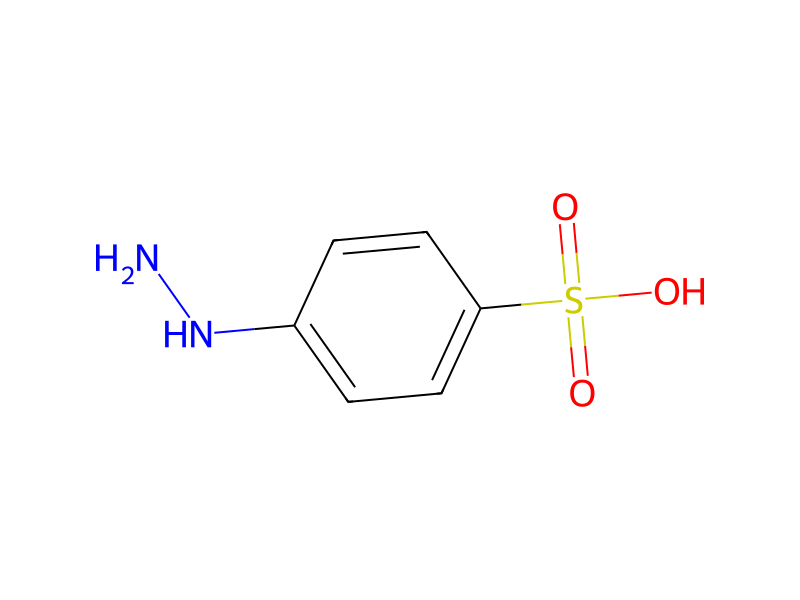
[NH:1]([C:3]1[CH:8]=[CH:7][C:6]([S:9]([OH:12])(=[O:11])=[O:10])=[CH:5][CH:4]=1)N.[C:13]([CH:16]([CH3:25])[CH2:17][CH2:18][CH2:19][CH2:20][CH2:21][C:22]([OH:24])=[O:23])(=O)[CH3:14]>C(O)(=O)C.O.CO>[CH3:14][C:13]1[C:16]([CH2:17][CH2:18][CH2:19][CH2:20][CH2:21][C:22]([OH:24])=[O:23])([CH3:25])[C:8]2[C:3](=[CH:4][CH:5]=[C:6]([S:9]([OH:12])(=[O:11])=[O:10])[CH:7]=2)[N:1]=1To a stirred solution of 4-hydrazinobenzenesulfonic acid (Aldrich, 11.25 g, 0.06 mol) in acetic acid (50 ml) was added 7-acetyloctanoic acid (16.7 g, 0.09 mol). The reaction mixture was heated under reflux for 12 hrs. Acetic acid was removed under reduced pressure. The resulting solid was dissolved in methanol and reprecipitated with a saturated solution of potassium hydroxide in isopropanol. The solid was filtered, washed with isopropanol and dried, (8 g, 40%). The analytical sample was obtained by C18 reversed phase column chromatography using water/methanol mixture as solvent., m.p. 250° C. dec; IR νcm−1=2930, 2597, and 1719. 1H NMR, D2O, δ, 7.8-7.9 (m, 2H, 4-H and 6-H of aromatic protons); 7.6 (d, J=7 Hz, 1H, 7-H of aromatic); 2.2 (t, J=7 Hz, 2H, —CH2—COOH); 1.9-2.1 (m, 2H, alkyl); 1.2-1.6 (a singlet merged in a multiplet, 7H, —CH3 & (—CH2)2); 0.6-0.9 (m, 2H, alkyl).