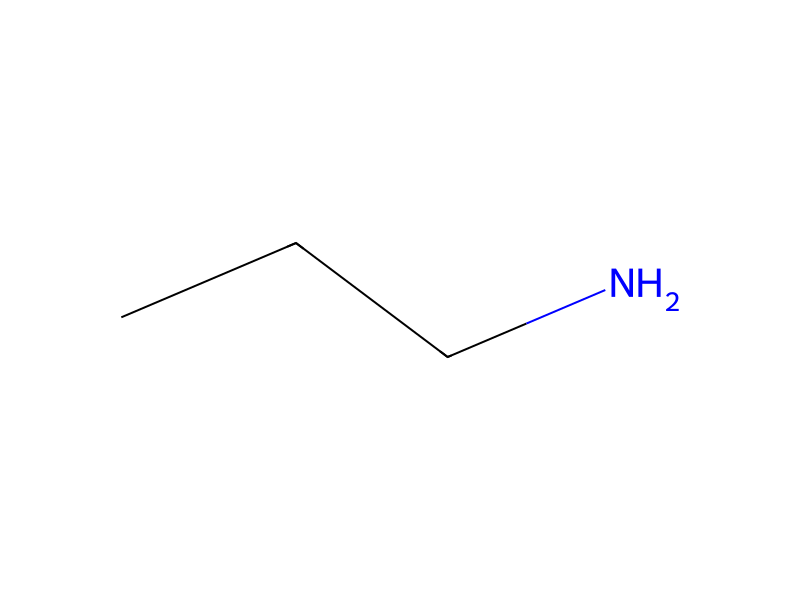
Propylamine → HCID 15338359, compound
HRID 1440801
Reaction equation

Cl[C:2]1[C:11]([C:12]([O:14][CH2:15][CH3:16])=[O:13])=[CH:10][C:9]2[C:4](=[CH:5][CH:6]=[CH:7][CH:8]=2)[N:3]=1.[CH2:17]([NH2:20])[CH2:18][CH3:19]>C(O)C>[CH2:17]([NH:20][C:2]1[C:11]([C:12]([O:14][CH2:15][CH3:16])=[O:13])=[CH:10][C:9]2[C:4](=[CH:5][CH:6]=[CH:7][CH:8]=2)[N:3]=1)[CH2:18][CH3:19]Participants
4
Reactant 2

Product 1

Reagents, catalysts & solvents 1

Procedure
An solution of ethyl 2-chloroquinoline-3-carboxylate (1.1 g) [(K. Shimizu et al., J. Pharm. Soc. Jpn., 87, 672(1967)] and propylamine (1.8 g) in ethanol (20 ml) was heated at 95° C. for 8 hours in a sealed tube. The reaction mixture was concentrated under reduced pressure, to which was added a saturated aqueous solution of sodium hydrogencarbonate, followed by extraction with chloroform. The extract was dried over anhydrous sodium sulfate, then the solvent was distilled off. The residue was purified by column chromatography on silica gel to afford the title compound as a yellow oil (0.98 g, 80%).