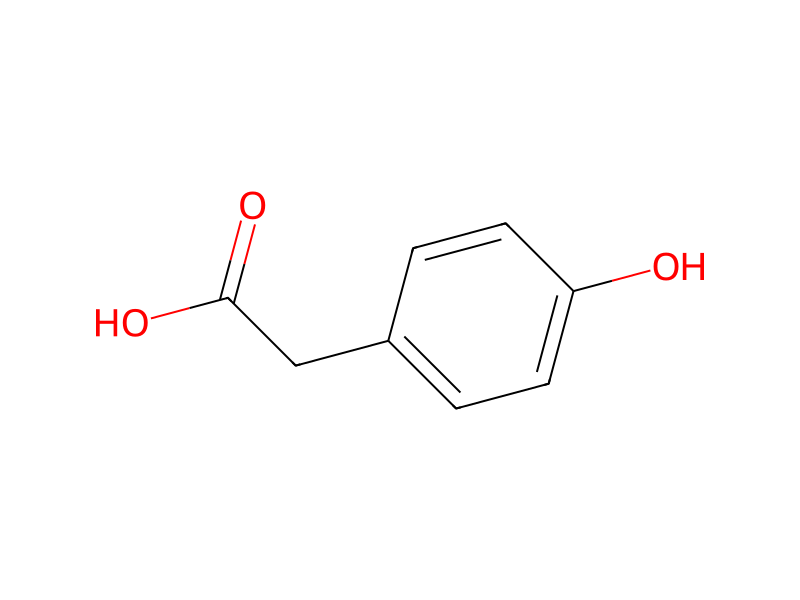
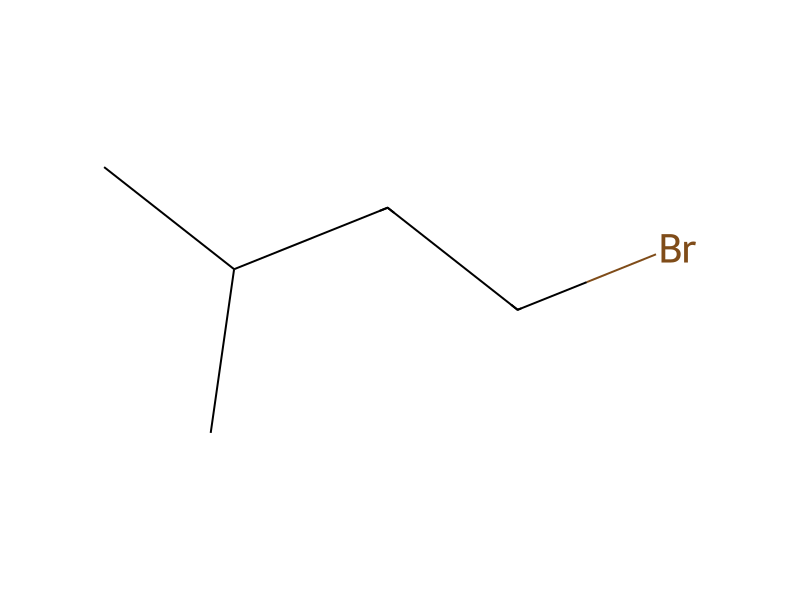
Hydroxyphenylacetic acid → [4-(Isopentyloxy)phenyl]acetic acid
HRID 1454095
Reaction equation

[OH-].[Na+].[OH:3][C:4]1[CH:9]=[CH:8][C:7]([CH2:10][C:11]([OH:13])=[O:12])=[CH:6][CH:5]=1.Br[CH2:15][CH2:16][CH:17]([CH3:19])[CH3:18]>C(O)C>[CH2:15]([O:3][C:4]1[CH:5]=[CH:6][C:7]([CH2:10][C:11]([OH:13])=[O:12])=[CH:8][CH:9]=1)[CH2:16][CH:17]([CH3:19])[CH3:18]Participants
5
Reactant 3

Product 1

Reagents, catalysts & solvents 1

Procedure
Aqueous sodium hydroxide solution (2.0 M; 32.9 mL, 65.8 mmol) was added in one portion to a stirred solution of p-hydroxyphenylacetic acid (5.00 g, 32.9 mmol) in ethanol (200 mL) at room temperature. After stirring for 15 min 1-bromo-3-methylbutane (4.97 g, 3.94 mL, 32.9 mmol) was added in one portion and the resulting solution heated at reflux for 12 h. The reaction was cooled to room temperature then evaporated to dryness. The residue was partitioned between dichloromethane (150 mL) and aqueous hydrochloric acid solution (1.0 M; 150 mL). The layers were separated and the aqueous phase was washed with dichloromethane (2×100 mL). The organic extracts were combined, dried (magnesium sulfate) and evaporated to dryness. The resulting white solid residue was used without purification in the preparation of R8782/83/1. LC/MS: 3.30 min; z/e 221, calcd (M−1) 221. 1H NMR (400 MHz: CDCl3): 7.25 (2H), 6.95 (2H), 4.05 (2H), 3.65 (2H), 1.95 (1H), 1.75 (2H), 1.05 (6H). The absolute regiochemistry of the product was unambiguously assigned using an HMBC correlation experiment.