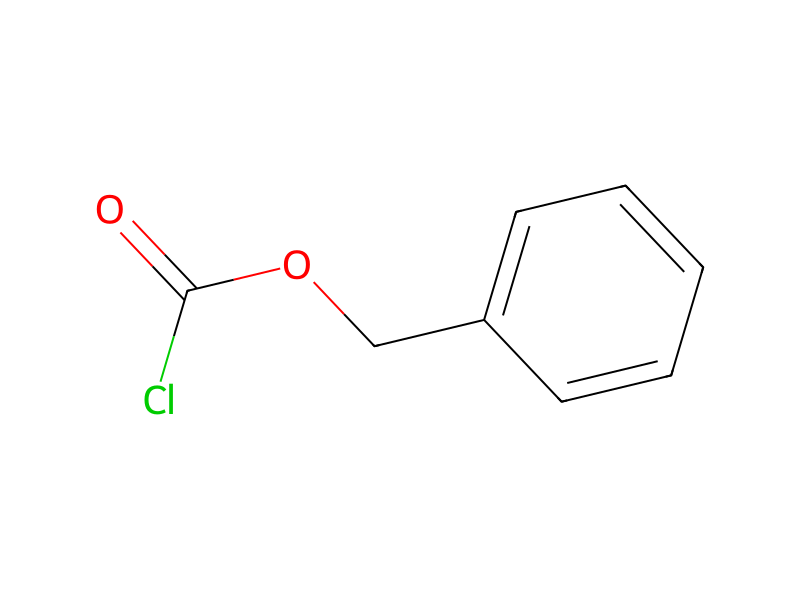
[CH:1]1[CH:6]=[C:5]([CH2:7][CH:8]([NH2:12])[C:9]([OH:11])=[O:10])[C:4]([OH:13])=[CH:3][CH:2]=1.S(Cl)(Cl)=O.[C:18](=O)([O-])[O-].[Na+].[Na+].Cl[C:25]([O:27][CH2:28][C:29]1[CH:34]=[CH:33][CH:32]=[CH:31][CH:30]=1)=[O:26]>CO>[CH3:18][O:10][C:9](=[O:11])[C@H:8]([CH2:7][C:5]1[CH:6]=[CH:1][CH:2]=[CH:3][C:4]=1[OH:13])[NH:12][C:25]([O:27][CH2:28][C:29]1[CH:34]=[CH:33][CH:32]=[CH:31][CH:30]=1)=[O:26]9.5 g (52.4 mmol) of o-tyrosine (2-hydroxyphenylalanine, Heraeus) is suspended in 48 ml of methanol, cooled in an ice bath and mixed drop by drop with 7.6 ml (105 mmol) of thionyl chloride. After one hour, the batch is heated to reflux temperature and stirred for three hours. Then, it is allowed to stir overnight at room temperature. It is evaporated to dryness, the residue is taken up in methanol, concentrated by evaporation and the process is repeated twice. It is taken up in 50 ml of water, adjusted to pH 8.5 with 1.5 molar sodium carbonate solution and 22.1 ml (63 mmol) of benzyl chloroformate is added under pH control. It is stirred for four hours at room temperature, the organic phase is separated, it is washed with water and dried on sodium sulfate. After the concentration by evaporation, the residue is chromatographed on silica gel (methylene chloride/ethyl acetate).