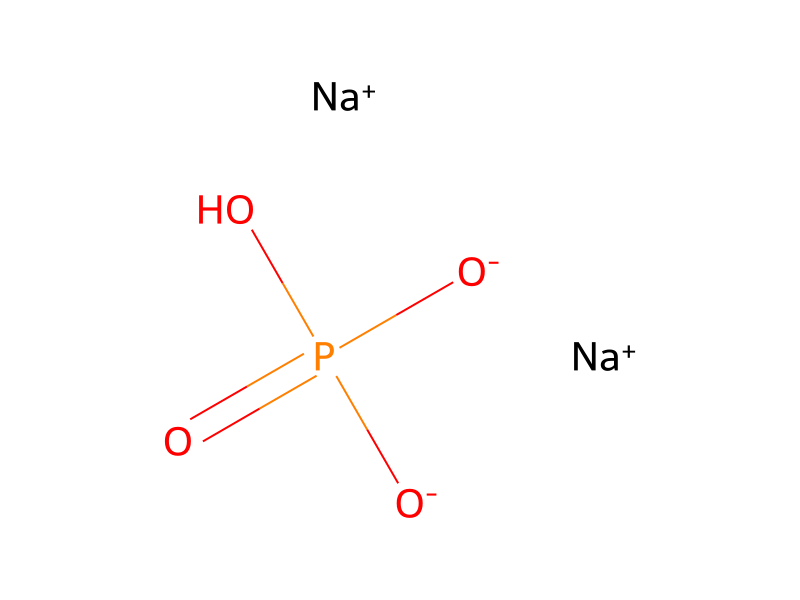
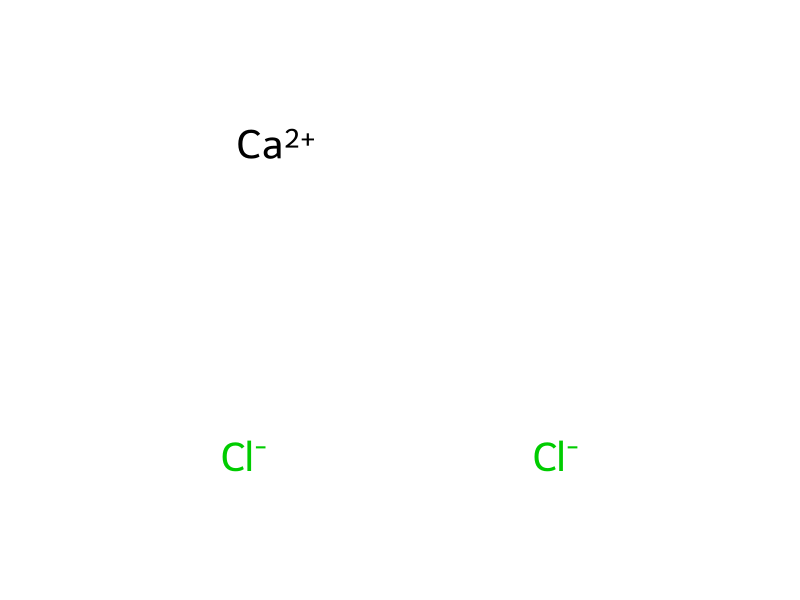
Sodium Phosphate, Dibasic → Hydroxylapatite (Ca5(OH)(PO4)3)
HRID 1460938
Reaction equation

[Cl-].[Ca+2:2].[Cl-].[P:4]([OH:8])([O-:7])([O-:6])=[O:5].[Na+].[Na+]>>[OH-:5].[O-:6][P:4]([O-:8])([O-:7])=[O:5].[O-:6][P:4]([O-:8])([O-:7])=[O:5].[O-:6][P:4]([O-:8])([O-:7])=[O:5].[Ca+2:2].[Ca+2:2].[Ca+2:2].[Ca+2:2].[Ca+2:2]Participants
3

Procedure
Brushite was prepared in the same manner as in Example 1 except that 1 l of an aqueous calcium chloride solution of 0.5 mol/l in concentration and 1 l of an aqueous disodium phosphate solution of 0.5 mol/l in concentration were used and reaction temperature was room temperature. Then, at 95° C., 300 ml of an aqueous sodium hydroxide solution of 1 mol/l in concentration was added to the resulting brushite over a period of 1 hour to obtain hydroxylapatite in the form of platy crystal [hereinafter referred to as "hydroxylapatite (H)"].
Workup
- customreaction temperature
- customwas room temperature