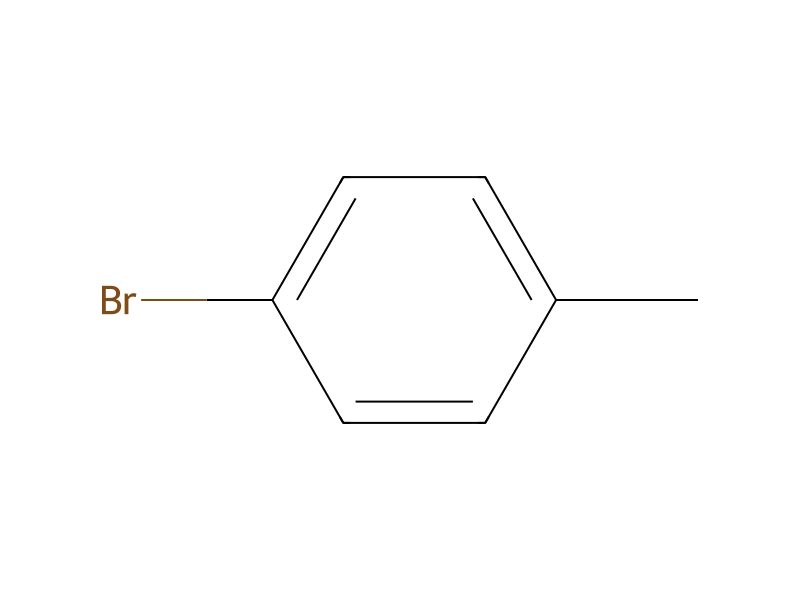
(1-Methyl-1H-pyrazol-5-yl)boronic acid (2.0 g, 16 mmol), 1-bromo-4-methylbenzene (1.96 mL, 15.9 mmol), sodium carbonate (5.05 g, 47.6 mmol) and dichlorobis(triphenylphosphine)palladium(II) (557 mg, 0.794 mmol) were combined in a mixture of water (20 mL) and 1,2-dimethoxyethane (100 mL), and heated at 80° C. for 18 hours. After the reaction mixture had cooled, it was filtered through Celite, and concentrated in vacuo. The residue was partitioned between water and ethyl acetate, and the aqueous layer was extracted with additional ethyl acetate. The combined organic layers were dried over magnesium sulfate, filtered and concentrated under reduced pressure. Chromatography on silica gel (Gradient: 0% to 50% ethyl acetate in heptane) provided the product as a yellow oil. Yield: 1.15 g, 6.68 mmol, 42%. LCMS m/z 173.1 (M+1). 1H NMR (400 MHz, CDCl3) δ 2.42 (s, 3H), 3.89 (s, 3H), 6.29 (d, J=2.0 Hz, 1H), 7.30 (br AB quartet, JAB=8 Hz, ΔvAB=18 Hz, 4H), 7.51 (d, J=1.9 Hz, 1H).