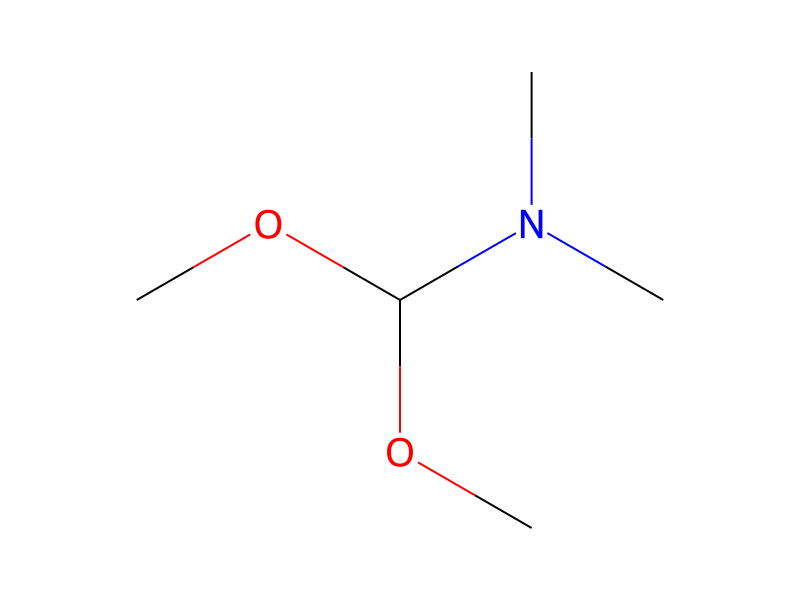
[Cl:1][C:2]1[N:18]=[CH:17][C:5]2[C:6]3[N:7]([CH:11]=[C:12]([C:14]([NH2:16])=O)[N:13]=3)[CH2:8][CH2:9][O:10][C:4]=2[CH:3]=1.COC(OC)N(C)C.[C:27]1([CH3:33])C=CC=C[CH:28]=1.Cl.[CH:35]([NH:38][NH2:39])(C)C.C(O)(=O)C>>[Cl:1][C:2]1[N:18]=[CH:17][C:5]2[C:6]3[N:7]([CH:11]=[C:12]([C:14]4[N:39]([CH:27]([CH3:33])[CH3:28])[N:38]=[CH:35][N:16]=4)[N:13]=3)[CH2:8][CH2:9][O:10][C:4]=2[CH:3]=1A mixture of [9-chloro-5,6-dihydroimidazo[1,2-d]pyrido[3,4-f][1,4]oxazepine-2-carboxamide (0.520 g, 1.96 mmol) and 1,1-Dimethoxy-N,N-dimethylmethanamine (1.305 mL, 9.824 mmol) in Toluene (28.2 mL, 265 mmol) was heated under reflux for 1 hour. LCMS: no stm, major peak m/z 320.1. After cooling, the intermediate was concentrated. A mixture of the intermediate and isopropylhydrazine hydrochloride (0.4345 g, 3.929 mmol) in Acetic acid (18 mL, 320 mmol) was heated at 85° C. for 3 hours. The mixture was cooled and filtered from an insoluble impurity. The mother liquor was concentrated in vacuum. The residue was diluted with EtOAc then washed with water and brine. The organic layer was dried Na2SO4, filtered, and concentrated to give 317 (264). MS: (ESI+)=331.0. 1H NMR (400 MHz, DMSO) δ 9.29 (s, 1H), 7.97 (d, J=24.4 Hz, 1H), 7.94 (s, 1H), 7.31-7.19 (m, 1H), 5.85 (dq, J=13.0, 6.4 Hz, 1H), 4.66 (dd, J=5.2, 2.5 Hz, 2H), 4.63-4.54 (m, 2H), 1.48 (d, J=6.6 Hz, 6H).