Reaction equation
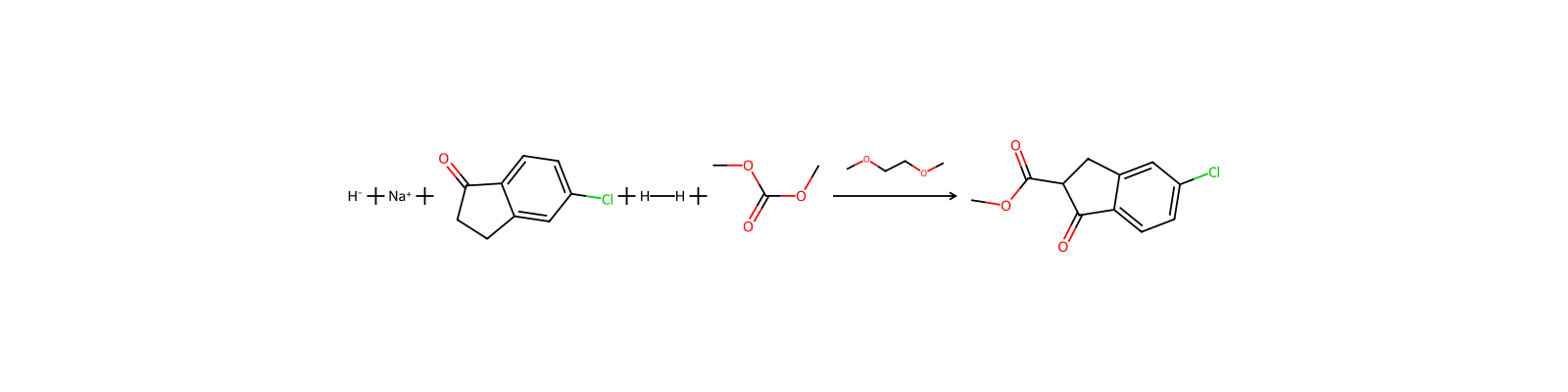
[H-].[Na+].[Cl:3][C:4]1[CH:5]=[C:6]2[C:10](=[CH:11][CH:12]=1)[C:9](=[O:13])[CH2:8][CH2:7]2.[H][H].[CH3:16][O:17][C:18](=O)[O:19]C>C(COC)OC>[C:18]([CH:8]1[CH2:7][C:6]2[C:10](=[CH:11][CH:12]=[C:4]([Cl:3])[CH:5]=2)[C:9]1=[O:13])([O:17][CH3:16])=[O:19]Participants
6
Reactant 4



Product 1

Reagents, catalysts & solvents 1

Conditions
- Temperature
- 60 °C
Procedure
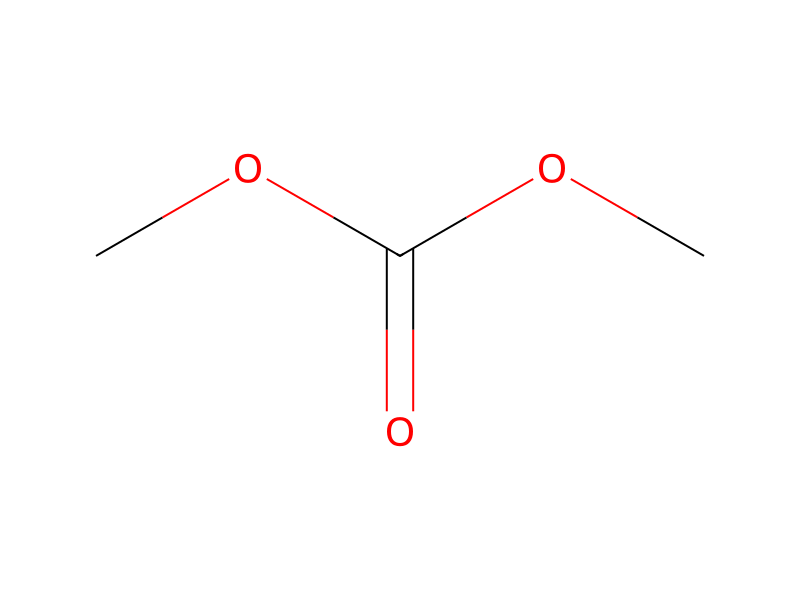
To a mixture of sodium hydride (2.4 g, 60% in mineral oil, 0.06 mole) and 50 ml dry dimethoxyethane, 5-chloroindanone (50 g, 0.03 mole) in 50 ml dimethoxyethane was added dropwise at room temperature. The mixture was stirred at room temperature until hydrogen evolution ceased. Then dimethylcarbonate (27 g, 0.3 mole) was added dropwise at room temperature and the reaction was heated to 60° C. for one hour. The reaction was cooled to room temperature, quenched with 100 ml H2O, acidified to pH 5 with concentrated HCl and extracted with ethyl ether (3×100 ml). The ether extract was washed with brine (100 ml), dried over anhydrous MgSO4 and stripped to yield 3.0 g (45%) of the desired product as a tan solid.
Workup
- additionwas added dropwise at room temperature
- temperatureThe reaction was cooled to room temperature
- customquenched with 100 ml H2O
- extractionextracted with ethyl ether (3×100 ml)
- extractionThe ether extract
- washwas washed with brine (100 ml)
- dry with materialdried over anhydrous MgSO4
Sources & evidence
- ORD record
- ord-54e336ac6c4f4117baf301a34b00c11e
- Source dataset
- uspto-grants-1998_03
- Patent number
- US05726162
Linked notes
Loading…