HomeMCPSkillsWorkbenchOpenChem
HomeWorkbenchNotificationsMe
llms.txt · skill.md · MCP GuidePrivacy Policy · Terms of Service · Supportv1.8.5
  1. Home
  2. /Reaction

2-Bromopropionic acid → (E)-2-Methyl-3-(4-phenyl-thiophen-2-yl)-acrylic acid

HRID 1505635
Print

Reaction equation

C(OP([O-])OCC)C.[H-].[Na+].Br[CH:12]([CH3:16])[C:13]([OH:15])=[O:14].[H][H].[C:19]1([C:25]2[CH:26]=[C:27]([CH:30]=O)[S:28][CH:29]=2)[CH:24]=[CH:23][CH:22]=[CH:21][CH:20]=1>COCCOC>[CH3:16]/[C:12](=[CH:30]\[C:27]1[S:28][CH:29]=[C:25]([C:19]2[CH:20]=[CH:21][CH:22]=[CH:23][CH:24]=2)[CH:26]=1)/[C:13]([OH:15])=[O:14]
ParticipantsProcedureWorkupSources & evidenceReaction notes

Participants

7

Reactant 5

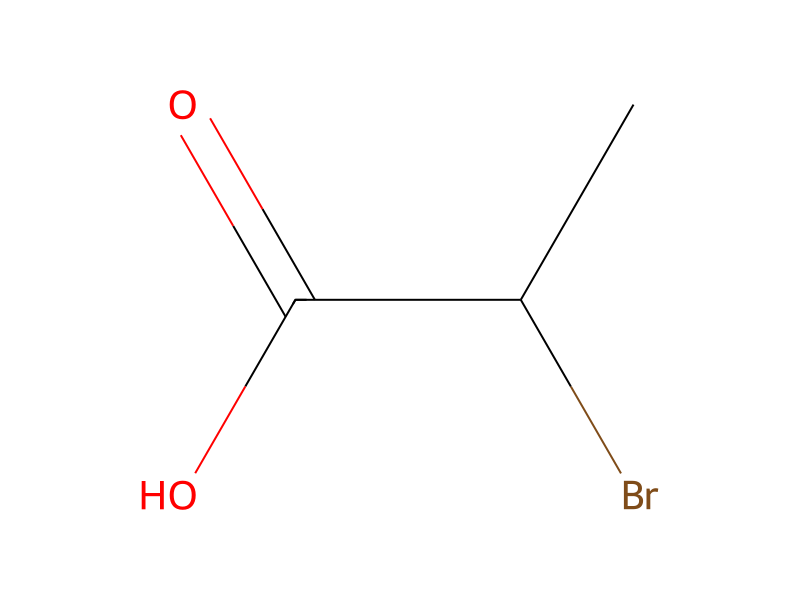
HCID 117292-Bromopropionic acidHCID 24758Sodium hydrideHCID 3780918Di-ethylphosphiteHCID 50094674-Phenylthiophene-2-carbaldehydeHCID 178418361HCID 178418361, compound

Product 1

HCID 66671279(E)-2-Methyl-3-(4-phenyl-thiophen-2-yl)-acrylic acid
Yield 29%

Reagents, catalysts & solvents 1

HCID 80711,2-DimethoxyethaneSolvent

Procedure

A 50 ml round bottomed flask was charged with diethylphosphite (684 μl, 5.31 mmol) and treated sequentially with sodium hydride (637 mg, 15.94 mmol, 60% in mineral oil) in DME (20 ml), followed by 2-bromopropionic acid (478 μl, 5.31 mmol). The reaction was stirred at room temperature until hydrogen evolution ceased. Next 4-phenyl-2-thiophenecarboxaldehyde (1.0 g, 5.31 mmol) was added and the reaction stirred for 1 h. The reaction was quenched by the addition of EtOH (5 ml) and the contents of the flask poured into distilled water (20 ml). The strongly basic solution was washed with diethyl ether (25 ml) to remove traces of mineral oil, the aqueous layer acidified to pH 4 with concentrated HCl and extracted with diethyl ether (2×25 ml). The organic layer was dried (MgSO4) and the solvent removed in vacuo. The crude residue was washed with petroleum spirit 40-60° C., and the resulting insoluble solid, fractionally crystallized from dichloromethane to afford the title compound as a white solid (335.2 mg, 29%).

Workup

  1. customThe reaction was quenched by the addition of EtOH (5 ml)
  2. additionthe contents of the flask poured
  3. distillationinto distilled water (20 ml)
  4. washThe strongly basic solution was washed with diethyl ether (25 ml)
  5. customto remove traces of mineral oil
  6. extractionextracted with diethyl ether (2×25 ml)
  7. dry with materialThe organic layer was dried (MgSO4)
  8. customthe solvent removed in vacuo
  9. washThe crude residue was washed with petroleum spirit 40-60° C.
  10. customthe resulting insoluble solid, fractionally crystallized from dichloromethane

Sources & evidence

ORD record
ord-b83f72bfdee2459c90cdb5ed51f9e915
Source dataset
uspto-grants-2015_12
DOI
10.6084/m9.figshare.5104873.v1
Patent number
US09216992B2

Reaction notes

On this pageParticipantsProcedureWorkupSources & evidenceReaction notes


