HomeMCPWorkbenchSkills
HomeWorkbenchNotificationsMe
llms.txt · MCP GuidePrivacy Policy · Terms of Service · Supportv1.8.3
  1. Home
  2. /Reaction

Pyridine → N-(6-bromo-1-oxo-1,2,3,4-tetrahydronaphthalen-2-yl)-3-phenyl-4-(trifluoromethyl)isoxazole-5-carboxamide

HRID 1506480
Print

Reaction equation

HRID 1506480 reaction equation
[C:1]1([C:7]2[C:11]([C:12]([F:15])([F:14])[F:13])=[C:10]([C:16]([OH:18])=O)[O:9][N:8]=2)[CH:6]=[CH:5][CH:4]=[CH:3][CH:2]=1.N1C=CC=CC=1.Cl.[NH2:26][CH:27]1[CH2:36][CH2:35][C:34]2[C:29](=[CH:30][CH:31]=[C:32]([Br:37])[CH:33]=2)[C:28]1=[O:38].C(N(C(C)C)CC)(C)C>ClCCl.N1C(F)=NC(F)=NC=1F>[Br:37][C:32]1[CH:33]=[C:34]2[C:29](=[CH:30][CH:31]=1)[C:28](=[O:38])[CH:27]([NH:26][C:16]([C:10]1[O:9][N:8]=[C:7]([C:1]3[CH:2]=[CH:3][CH:4]=[CH:5][CH:6]=3)[C:11]=1[C:12]([F:13])([F:14])[F:15])=[O:18])[CH2:36][CH2:35]2
ParticipantsProcedureWorkupSources & evidenceReaction notes

Participants

7

Reactant 4

HCID 1049PyridineHCID 81531DiisopropylethylamineHCID 583740943-Phenyl-4-(trifluoromethyl)-1,2-oxazole-5-carboxylic acidHCID 671707672-amino-6-bromo-3,4-dihydronaphthalen-1(2H)-one hydrochloride

Product 1

HCID 67167732N-(6-bromo-1-oxo-1,2,3,4-tetrahydronaphthalen-2-yl)-3-phenyl-4-(trifluoromethyl)isoxazole-5-carboxamide
Yield 73.9%

Reagents, catalysts & solvents 2

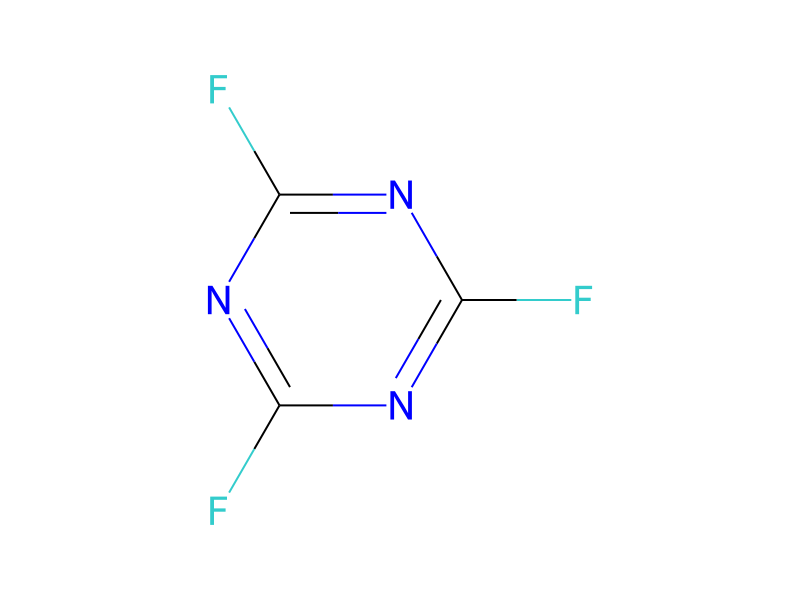
HCID 12664Cyanuric fluorideCatalystHCID 6344DichloromethaneSolvent3×

Procedure

To 3-phenyl-4-(trifluoromethyl)isoxazole-5-carboxylic acid (Intermediate I-3D, 0.465 g, 1.808 mmol) in dichloromethane (5 mL) was added pyridine (0.175 ml, 2.170 mmol) followed by cyanuric fluoride (0.188 ml, 2.172 μmol) at room temperature. The reaction mixture was stirred at room temperature for 20 h., and partitioned between dichloromethane (30 mL) and cold 0.5N HCl (15 mL). The dichloromethane layer was separated, dried over sodium sulfate, and concentrated to afford an orange-red solid. The solid was dissolved in dichloromethane (5 mL) and added dropwise over a period of 2 min. to 2-amino-6-bromo-3,4-dihydronaphthalen-1(2H)-one hydrochloride (Preparation 82B, 0.5 g, 1.808 mmol) in dichloromethane (5.00 mL) and diisopropylethylamine (0.789 ml, 4.52 mmol) at 0° C. The reaction mixture was allowed to come to room temperature over a period of 20 min., stirred at room temperature for 2 h., and partitioned between dichloromethane (30 mL) and cold 0.5N HCl (10 mL). The dichloromethane layer was separated, dried over sodium sulfate, and concentrated. The resulting solid was triturated with ether (15 mL), sonicated for 5 min. and filtered to yield N-(6-bromo-1-oxo-1,2,3,4-tetrahydronaphthalen-2-yl)-3-phenyl-4-(trifluoromethyl)isoxazole-5-carboxamide (0.640 g, 1.335 mmol, 73.9% yield) as a light tan solid. LC/MS M+1=480.


Workup

  1. custompartitioned between dichloromethane (30 mL) and cold 0.5N HCl (15 mL)
  2. customThe dichloromethane layer was separated
  3. dry with materialdried over sodium sulfate
  4. concentrationconcentrated
  5. customto afford an orange-red solid
  6. waitto come to room temperature over a period of 20 min.
  7. stirringstirred at room temperature for 2 h.
  8. custompartitioned between dichloromethane (30 mL) and cold 0.5N HCl (10 mL)
  9. customThe dichloromethane layer was separated
  10. dry with materialdried over sodium sulfate
  11. concentrationconcentrated
  12. customThe resulting solid was triturated with ether (15 mL)
  13. customsonicated for 5 min.
  14. filtrationfiltered

Sources & evidence

ORD record
ord-0ff764cd656f488f838d298b62073c67
Source dataset
uspto-grants-2015_12
DOI
10.6084/m9.figshare.5104873.v1
Patent number
US09216972B2

Reaction notes

On this pageParticipantsProcedureWorkupSources & evidenceReaction notes