HomeMCPSkillsWorkbenchOpenChem
HomeWorkbenchNotificationsMe
llms.txt · skill.md · MCP GuidePrivacy Policy · Terms of Service · Supportv1.8.5
  1. Home
  2. /Reaction

Chlorodiphenylphosphine → 8-(Diphenylphosphino)quinoline

HRID 1515169
Print

Reaction equation

Br[C:2]1[CH:3]=[CH:4][CH:5]=[C:6]2[C:11]=1[N:10]=[CH:9][CH:8]=[CH:7]2.[Li]CCCC.Cl[P:18]([C:25]1[CH:30]=[CH:29][CH:28]=[CH:27][CH:26]=1)[C:19]1[CH:24]=[CH:23][CH:22]=[CH:21][CH:20]=1>C1COCC1>[C:25]1([P:18]([C:19]2[CH:20]=[CH:21][CH:22]=[CH:23][CH:24]=2)[C:2]2[CH:3]=[CH:4][CH:5]=[C:6]3[C:11]=2[N:10]=[CH:9][CH:8]=[CH:7]3)[CH:26]=[CH:27][CH:28]=[CH:29][CH:30]=1
ParticipantsProcedureWorkupSources & evidenceReaction notes

Participants

5

Reactant 3

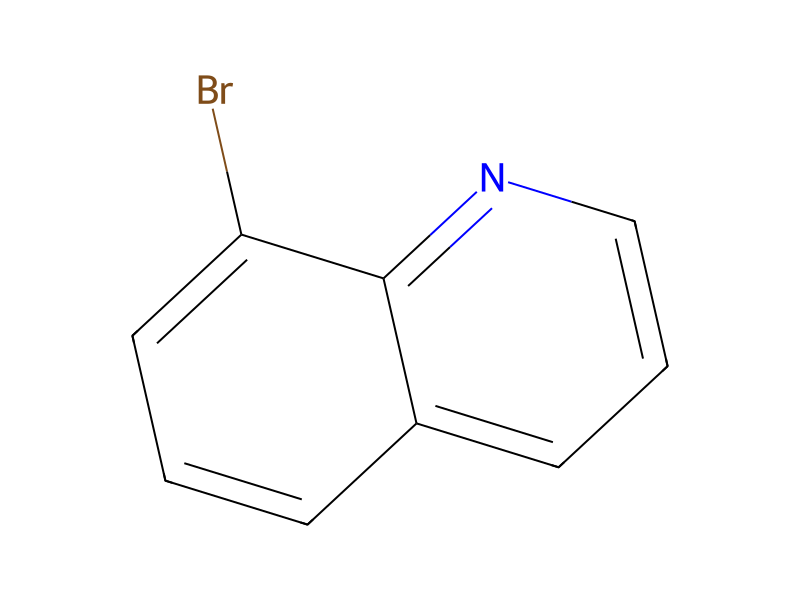
HCID 66180ChlorodiphenylphosphineHCID 1401098-BromoquinolineHCID 178418339Butyllithium

Product 1

HCID 6286598-(Diphenylphosphino)quinolineYield 60.6%

Reagents, catalysts & solvents 1

HCID 8028TetrahydrofuranSolvent

Procedure

To a stirred solution of 8-bromoquinoline (20.8 g, 100 mmol) in dry THF (200 mL) under nitrogen was added n-BuLi (62.5 mL, 1.6 M in hexanes, 100 mmol) at −78° C. and the mixture was stirred for 30 minutes. Chlorodiphenylphosphine (17.9 mL, 100 mmol) was then added and the solution was allowed to warm up to room temperature and stirred for 2 h. The solution was then cooled to −78° C. and quenched by addition of saturated aqueous NH4Cl solution (100 mL). After warming up to room temperature, the solution was filtered, the precipitated solid collected, taken up in CH2Cl2 (200 mL) and filtered over silica gel eluting with further portions of CH2Cl2 (4×200 mL). The combined filtrates were evaporated to give 1 as a light yellow solid (19 g, 60% yield). 1H NMR (400.13 MHz, CDCl3) δ 8.37 (dd, 1H, J=4.0, 1.6 Hz, C2—H), 8.17 (dd, 1H, J=8.0, 1.6 Hz, C3—H), 7.82 (d, 1H, J=8.4 Hz, C5—H), 7.44 (t, 1H, J=7.6 Hz, C6—H), 7.40 (dd, 1H, J=8.0, 4.0 Hz, C4—H), 7.3-7.2 (m, 10H, Ph-H), 7.14 (ddd, 1H, J=7.2, 3.6, 1.6 Hz, C7—H) ppm; 13C NMR (100.61 MHz, CDCl3) δ 149.8, 149.6 (d, J=17.2 Hz), 138.4 (d, J=12.1 Hz), 137.4 (d, J=11.1 Hz), 136.2, 134.4, 134.2 (d, J=21.2 Hz), 128.8, 128.4 (d, J=19.2), 127.9, 126.57, 121.41 ppm; 31P NMR (161.97 MHz, CDCl3) δ 15.0 ppm.

Workup

  1. stirringstirred for 2 h
  2. temperatureThe solution was then cooled to −78° C.
  3. customquenched by addition of saturated aqueous NH4Cl solution (100 mL)
  4. temperatureAfter warming up to room temperature
  5. filtrationthe solution was filtered
  6. customthe precipitated solid collected
  7. filtrationfiltered over silica gel eluting with further portions of CH2Cl2 (4×200 mL)
  8. customThe combined filtrates were evaporated

Sources & evidence

ORD record
ord-4245b607374149c39622e8872739bf03
Source dataset
uspto-grants-2012_07
DOI
10.6084/m9.figshare.5104873.v1
Patent number
US08222415B2

Reaction notes

On this pageParticipantsProcedureWorkupSources & evidenceReaction notes