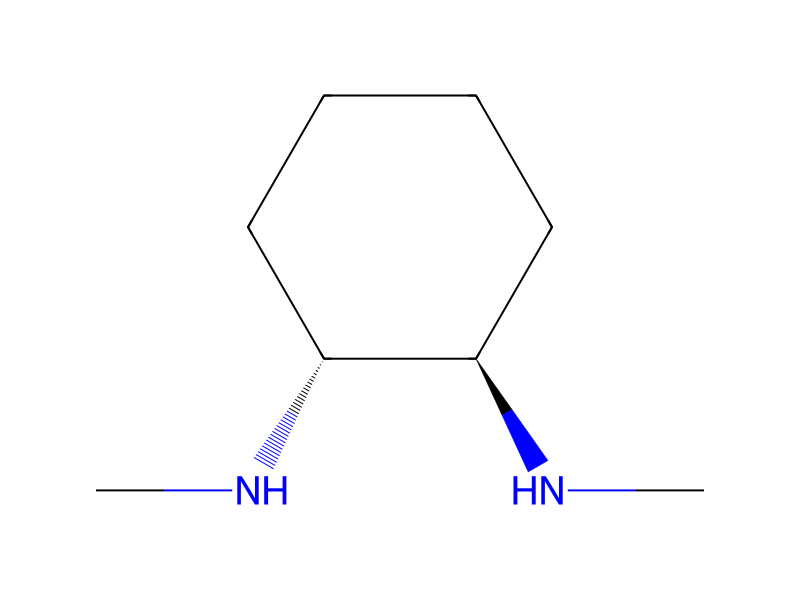
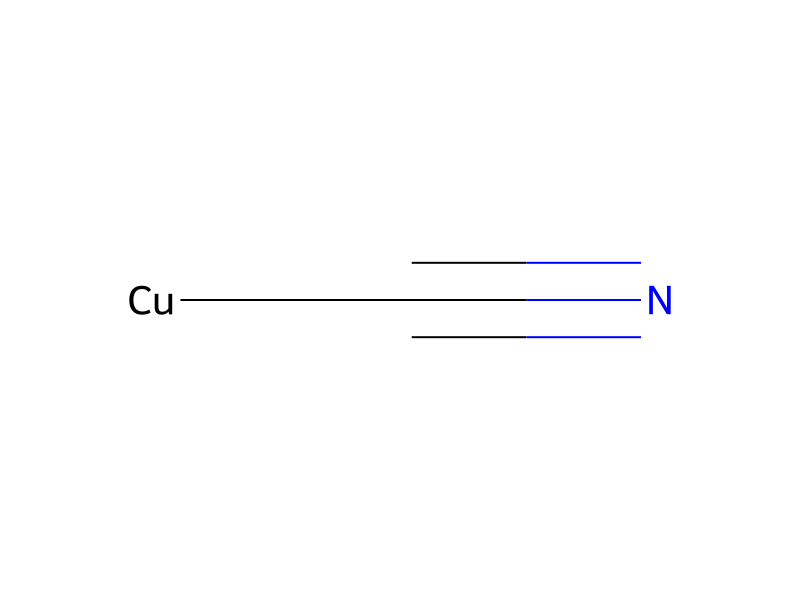
Br[C:2]1[C:3]([C:21]([O:23][CH3:24])=[O:22])=[C:4]([NH:7][C:8](=[O:20])[CH2:9][C:10]2[CH:19]=[CH:18][CH:17]=[C:16]3[C:11]=2[CH:12]=[CH:13][CH:14]=[N:15]3)[S:5][CH:6]=1.[C:25]([Cu])#[N:26].CN[C@@H]1CCCC[C@H]1NC>CN(C=O)C>[C:25]([C:2]1[C:3]([C:21]([O:23][CH3:24])=[O:22])=[C:4]([NH:7][C:8](=[O:20])[CH2:9][C:10]2[CH:19]=[CH:18][CH:17]=[C:16]3[C:11]=2[CH:12]=[CH:13][CH:14]=[N:15]3)[S:5][CH:6]=1)#[N:26]A 20 mL microwave vessel was charged with methyl 4-bromo-2-(2-(quinolin-5-yl)acetamido)thiophene-3-carboxylate (560 mg, 1.38 mmol), CuCN (540 mg, 6 mmol), DMF (8 mL), and (1R,2R)—N1,N2-dimethylcyclohexane-1,2-diamine (300 uL). The reaction mixture was flushed with nitrogen and sealed under a teflon cap before being heated to 150° C. using microwave radiation for 0.5 h. The reaction mixture was concentrated under reduced pressure to give an oil that was partitioned between an organic layer of 10% iPrOH/chloroform and an aqueous layer saturated with sodium bicarbonate. The heterogeneous organic layer was filtered and concentrated under reduced pressure to give a green oil. The crude product was purified by column chromatography with 60-70% ethyl acetate/hexanes. Yield: 40 mg (8%). Method [1]: rt=1.401 min; MH+ 352.0.
Loading…