HomeMCPWorkbenchSkills
HomeWorkbenchNotificationsMe
llms.txt · MCP GuidePrivacy Policy · Terms of Service · Supportv1.8.0
  1. Home
  2. /Reaction

Hydrazine hydrate (1:1) → HCID 86650809, compound

HRID 1524510
Notes
Print preview

Reaction equation

HRID 1524510 reaction equation
[Cl:1][C:2]1[N:3]=[N:4][C:5]([Cl:12])=[CH:6][C:7]=1[C:8]([F:11])([F:10])[F:9].O.[NH2:14][NH2:15]>O1CCOCC1.O.C(#N)C>[ClH:1].[Cl:12][C:5]1[N:4]=[N:3][C:2]([NH:14][NH2:15])=[C:7]([C:8]([F:11])([F:10])[F:9])[CH:6]=1.[ClH:1].[Cl:1][C:2]1[N:3]=[N:4][C:5]([NH:14][NH2:15])=[CH:6][C:7]=1[C:8]([F:11])([F:10])[F:9]
ParticipantsProcedureWorkupSources & evidenceReaction notes

Participants

6

Reactant 2

HCID 24654Hydrazine hydrate (1:1)HCID 468472073,6-Dichloro-4-(trifluoromethyl)pyridazine

Product 2

HCID 86650809HCID 86650809, compoundHCID 86650810HCID 86650810, compound

Reagents, catalysts & solvents 2

HCID 312751,4-DioxaneSolvent
HCID 18373917
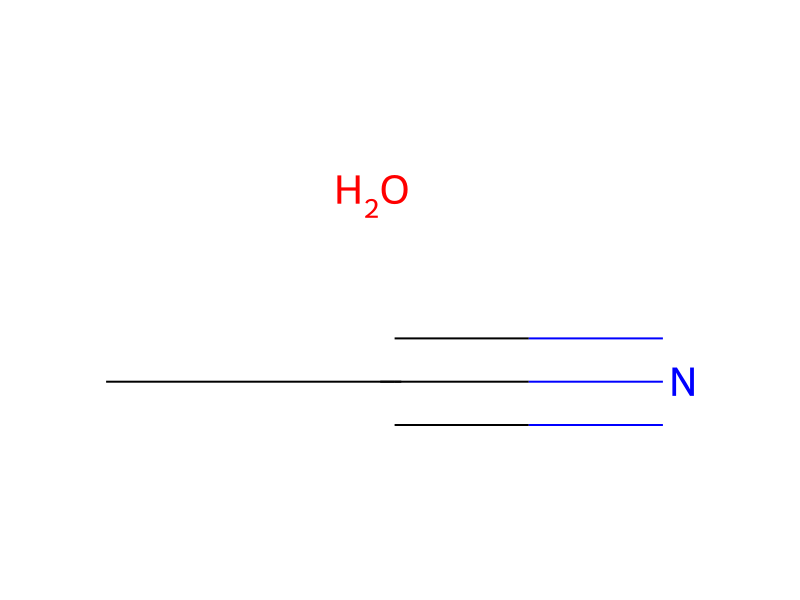
Acetonitrile--water (1/1)
Solvent

Procedure

3,6-Dichloro-4-trifluoromethylpyridazine (W4.004, 150 mg) was dissolved in dioxane (3 ml) and, after hydrazine monohydrate (100 μl) had been added, stirred at RT. After 4 h, the solvent was drawn off and the residue was dissolved in water/ACN and separated by means of preparative HPLC (met. D). The fractions, each of them clean, were combined, freed of the acetonitrile and freeze-dried. 87 mg of (6-chloro-4-trifluoromethylpyridazin-3-yl)hydrazine hydrochloride and 7 mg of (6-chloro-5-trifluoromethylpyridazin-3-yl)hydrazine hydrochloride were obtained.

Workup

  1. customseparated by means of preparative HPLC (met. D)
  2. customfreeze-dried

Sources & evidence

ORD record
ord-b885f3d6485e42f692b7cf98fcba5a98
Source dataset
uspto-grants-2015_07
DOI
10.6084/m9.figshare.5104873.v1
Patent number
US09079906B2

Reaction notes

Loading…

On this pageParticipantsProcedureWorkupSources & evidenceReaction notes