HomeMCPWorkbenchSkills
HomeWorkbenchNotificationsMe
llms.txt · MCP GuidePrivacy Policy · Terms of Service · Supportv1.8.0
  1. Home
  2. /Reaction

Indoline → N-[1-Acetyl-3-(2-acetoxyethyl)-4,6-dimethylindolin-7-yl]-2,2-dimethylpropanamide

HRID 1531965
Notes
Print preview

Reaction equation

HRID 1531965 reaction equation
C([O:3][CH3:4])#N.N1[C:13]2[C:8](=[CH:9]C=CC=2)[CH2:7]C1.[C:14]([N:17]1[C:25]2[C:20](=[C:21]([CH3:31])[C:22](Br)=[C:23]([CH3:29])[C:24]=2[N+:26]([O-])=O)[CH:19]([CH2:32][CH2:33][O:34][C:35](=[O:37])[CH3:36])[CH2:18]1)(=[O:16])[CH3:15]>C1C=CC=CC=1.[Pd]>[C:14]([N:17]1[C:25]2[C:20](=[C:21]([CH3:31])[CH:22]=[C:23]([CH3:29])[C:24]=2[NH:26][C:4](=[O:3])[C:8]([CH3:13])([CH3:9])[CH3:7])[CH:19]([CH2:32][CH2:33][O:34][C:35](=[O:37])[CH3:36])[CH2:18]1)(=[O:16])[CH3:15]
ParticipantsProcedureWorkupSources & evidenceReaction notes

Participants

7

Reactant 3

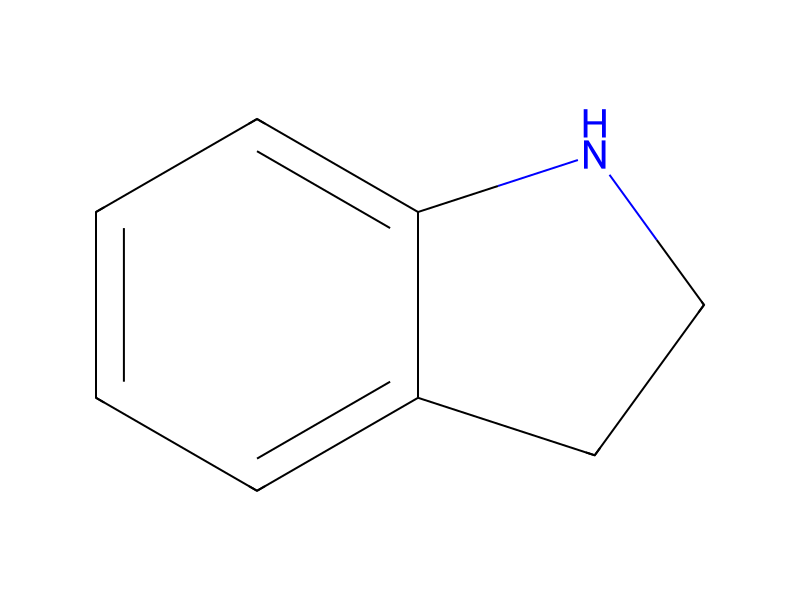
HCID 10328Indoline2×HCID 137201Cyanic acid, methyl esterHCID 222473151-Acetyl-3-(2-acetoxyethyl)-5-bromo-4,6-dimethyl-7-nitroindoline

Product 1

HCID 22247306N-[1-Acetyl-3-(2-acetoxyethyl)-4,6-dimethylindolin-7-yl]-2,2-dimethylpropanamide

Reagents, catalysts & solvents 3

HCID 23938PalladiumCatalyst
HCID 241BenzeneSolvent
HCID 23938PalladiumSolvent

Procedure

1.60·2.20 (2H, m, —CH2 CH2O—), 1.99 (3H, S, -OCOCH3), 2.21 (3H, s, >NCOCH3), 2.38 (6H, s, —CH3×2), 3.40 (1H, m, Indoline C3—H), 4.11 (2H, t, J=7.0 Hz, —CH2 CH2O—), 4.14 (2H, d, J=8.5 Hz, Indoline C2—H). (4) 1-Acetyl-3-(2-acetoxyethyl)-5-bromo-4,6-dimethyl-7-nitroindoline (1.4 g) was dissolved in benzene (20 ml) and 5% Pd—C. (500 mg) was added, which was followed by catalytic hydrogenation at room temperature under A atmospheric pressure. Pd—C. was filtered off and benzene was evaporated under reduced pressure. The residue was dissolved in CHCl3 (50 ml) and the mixture was washed successively with saturated aqueous solution of sodium hydrogencarbonate and saturated brine, and dried over anhydrous sodium sulfate. Pivaloyl chloride (440 mg) and Et3N (448 mg) were added to the obtained solution and the mixture was stirred at room temperature for 30 min. The mixture was washed successively with 5% aqueous citric acid and saturated brine, and dried over anhydrous sodium sulfate. CHCl3 was evaporated under reduced pressure. The residue was purified by silica gel column chromatography (eluent: CHCl3/MeOH=50/1−10/1) to give 1.0 g of N-[1-acetyl-3-(2-acetoxyethyl)-4,6-dimethylindolin-7-yl]-2,2-dimethylpropanamide.

Workup

  1. addition(500 mg) was added
  2. customwas followed by catalytic hydrogenation at room temperature under A atmospheric pressure
  3. filtrationwas filtered off
  4. custombenzene was evaporated under reduced pressure
  5. dissolutionThe residue was dissolved in CHCl3 (50 ml)
  6. washthe mixture was washed successively with saturated aqueous solution of sodium hydrogencarbonate and saturated brine
  7. dry with materialdried over anhydrous sodium sulfate
  8. additionPivaloyl chloride (440 mg) and Et3N (448 mg) were added to the obtained solution
  9. washThe mixture was washed successively with 5% aqueous citric acid and saturated brine
  10. dry with materialdried over anhydrous sodium sulfate
  11. customCHCl3 was evaporated under reduced pressure
  12. customThe residue was purified by silica gel column chromatography (eluent: CHCl3/MeOH=50/1−10/1)

Sources & evidence

ORD record
ord-169cd718f6414ffaadb7f60ee9623229
Source dataset
uspto-grants-2001_03
DOI
10.6084/m9.figshare.5104873.v1
Patent number
US06200988B1

Reaction notes

Loading…

On this pageParticipantsProcedureWorkupSources & evidenceReaction notes
