HomeMCPWorkbenchSkills
HomeWorkbenchNotificationsMe
llms.txt · MCP GuidePrivacy Policy · Terms of Service · Supportv1.8.3
  1. Home
  2. /Reaction

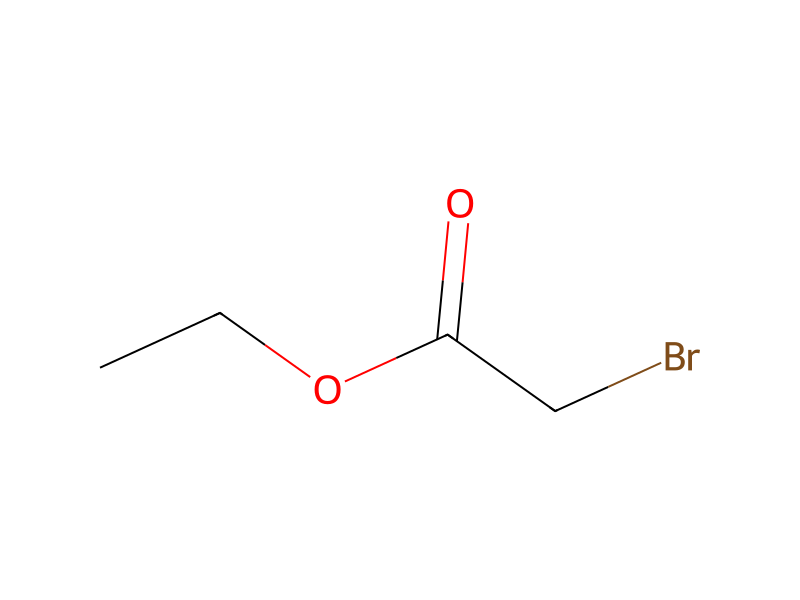
Ethyl bromoacetate → Ethyl 2-(((1S,2R)-2-hydroxy-1,2-diphenylethyl)amino)acetate

HRID 1534668
Print

Reaction equation

HRID 1534668 reaction equation
[NH2:1][C@@H:2]([C:11]1[CH:16]=[CH:15][CH:14]=[CH:13][CH:12]=1)[C@@H:3]([C:5]1[CH:10]=[CH:9][CH:8]=[CH:7][CH:6]=1)[OH:4].Br[CH2:18][C:19]([O:21][CH2:22][CH3:23])=[O:20].C(N(CC)CC)C>ClCCl>[CH2:22]([O:21][C:19]([CH2:18][NH:1][C@@H:2]([C:11]1[CH:16]=[CH:15][CH:14]=[CH:13][CH:12]=1)[C@@H:3]([C:5]1[CH:10]=[CH:9][CH:8]=[CH:7][CH:6]=1)[OH:4])=[O:20])[CH3:23]
ParticipantsProcedureWorkupSources & evidenceReaction notes

Participants

5

Reactant 3

HCID 7748Ethyl bromoacetateHCID 8471TriethylamineHCID 719819(1R,2S)-(-)-2-Amino-1,2-diphenylethanol

Product 1

HCID 11370015Ethyl 2-(((1S,2R)-2-hydroxy-1,2-diphenylethyl)amino)acetate

Reagents, catalysts & solvents 1

HCID 6344DichloromethaneSolvent2×

Procedure

(1R,2S)-2-amino-1,2-diphenylethanol (2.10 g) was dissolved in dichloromethane (30 ml) and stirred at room temperature. Ethyl bromoacetate (2.00 g), dissolved in dichloromethane (15 ml), was added to the solution. The mixture was stirred at room temperature for 7 days, and then triethylamine (1.5 ml) was added and stirred at room temperature for an additional day. After the spot of the starting material in TLC disappeared, dichloromethane was evaporated under reduced pressure. Benzene (100 ml) was added to the remaining residue, and the triethylamine hydrobromide salt was washed out with water. The organic layer was washed with brine and dried over anhydrous sodium sulfate. The solution was filtered and evaporated. The residue (2.60 g, 88%) was recrystallized from hexane (ca. 300 ml). The crystals deposited were collected and dried under reduced pressure. Yield 2.20 g (75%); mp 123°-125° C.; [α]D18 +2.4° (c 1.00, EtOH). IR.(KBr): 3180, 1745, 765, 705 cm-1 . 1H-NMR (CDCl3): 1.17 (t, 3H, J=7 Hz), 2.35 (bs, 2H), 3.16 (pseudo s, 2H), 3.98 (q, 2H, J=7 Hz), 4.15 (d, 1H, J=6 Hz), 4.76 (d, 1H, J=6 Hz), 7.20 (s, 10H) ppm.

Workup

  1. additionwas added to the solution
  2. stirringThe mixture was stirred at room temperature for 7 days
  3. stirringstirred at room temperature for an additional day
  4. customdichloromethane was evaporated under reduced pressure
  5. additionBenzene (100 ml) was added to the remaining residue
  6. washthe triethylamine hydrobromide salt was washed out with water
  7. washThe organic layer was washed with brine
  8. dry with materialdried over anhydrous sodium sulfate
  9. filtrationThe solution was filtered
  10. customevaporated
  11. customThe residue (2.60 g, 88%) was recrystallized from hexane (ca. 300 ml)
  12. customThe crystals deposited were collected
  13. customdried under reduced pressure

Sources & evidence

ORD record
ord-d29e7c4d4aec49388e52053b4ad012e3
Source dataset
uspto-grants-1992_02
DOI
10.6084/m9.figshare.5104873.v1
Patent number
US05089642

Reaction notes

On this pageParticipantsProcedureWorkupSources & evidenceReaction notes

