Reaction equation

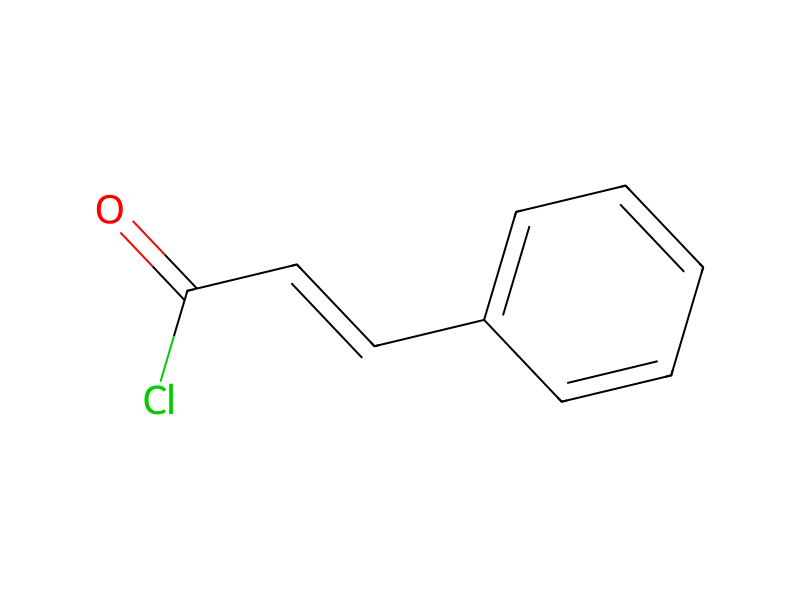
[Cl:1][C:2]1[CH:8]=[CH:7][C:5]([NH2:6])=[CH:4][CH:3]=1.N1C=CC=CC=1.[C:15](Cl)(=[O:24])[CH:16]=[CH:17][C:18]1[CH:23]=[CH:22][CH:21]=[CH:20][CH:19]=1.C(OCC)(=O)C>C1(C)C=CC=CC=1.O>[Cl:1][C:2]1[CH:8]=[CH:7][C:5]([NH:6][C:15](=[O:24])[CH:16]=[CH:17][C:18]2[CH:23]=[CH:22][CH:21]=[CH:20][CH:19]=2)=[CH:4][CH:3]=1Participants
7
Reactant 4



Product 1

Reagents, catalysts & solvents 2


Conditions
- Temperature
- 0 °C
Procedure
To a mixture of 4-chloroaniline (16.2 g), toluene (120 ml), and pyridine (11 ml) at 0° C., cinnamoyl chloride (20.0 g) in 120 ml of toluene was added dropwise. After stirring 15 minutes at 0° C. the reaction mixture was poured into a mixture of ethyl acetate: water (250 ml:250 ml). The organic layer was separated and extracted with 5% aqueous HCl (3×250 ml), water (1×250 ml), 5% aqueous sodium bicarbonate (3×250 ml), dried over anhydrous sodium sulfate and evaporated yielding the amide as a white solid.
Workup
- customThe organic layer was separated
- extractionextracted with 5% aqueous HCl (3×250 ml), water (1×250 ml), 5% aqueous sodium bicarbonate (3×250 ml)
- dry with materialdried over anhydrous sodium sulfate
- customevaporated
Sources & evidence
- ORD record
- ord-0ed0a908d15a48e6b829b90b094e3f19
- Source dataset
- uspto-grants-1998_03
- Patent number
- US05726176
Linked notes
Loading…