HomeMCPSkillsWorkbenchOpenChem
HomeWorkbenchNotificationsMe
llms.txt · skill.md · MCP GuidePrivacy Policy · Terms of Service · Supportv1.8.4
  1. Home
  2. /Reaction

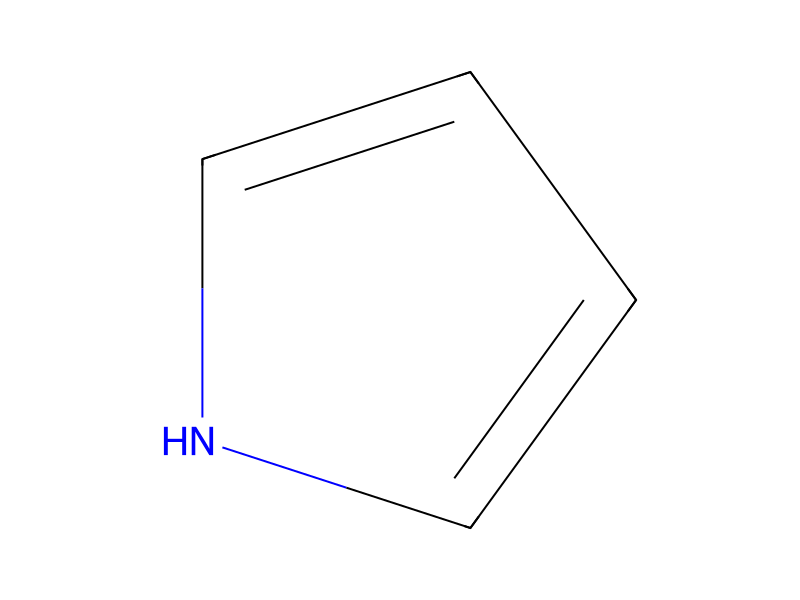
Pyrrole → 2-Phthalidyl-pyrole

HRID 1579547
Print

Reaction equation

[C:1]([OH:11])(=[O:10])[C:2]1[C:3](=[CH:6][CH:7]=[CH:8][CH:9]=1)[CH:4]=O.[NH:12]1[CH:16]=[CH:15][CH:14]=[CH:13]1.C[C:18]1[NH:19][C:20](C)=[CH:21][CH:22]=1>C1C=CC=CC=1>[C:1]1([C:2]2[C:3](=[CH:6][CH:7]=[CH:8][CH:9]=2)[CH:4]([C:13]2[NH:12][CH:16]=[CH:15][CH:14]=2)[O:11]1)=[O:10].[C:1]1([C:2]2[C:3](=[CH:6][CH:7]=[CH:8][CH:9]=2)[CH:4]([C:22]2[CH:21]=[CH:20][NH:19][CH:18]=2)[O:11]1)=[O:10]
ParticipantsProcedureWorkupSources & evidenceReaction notes

Participants

6

Reactant 3

HCID 8027PyrroleHCID 8406Phthalaldehydic acid2×HCID 122652,5-Dimethylpyrrole

Product 2

HCID 125040452-Phthalidyl-pyroleHCID 214250353-Phthalidylpyrrole

Reagents, catalysts & solvents 1

HCID 241Benzene
Solvent

Procedure

Rees et al. in further studies, ibid., pp. 687-91 (1965), reported that the condensation of phthalaldehydic acid could be extended to pyrroles and found that phthalaldehydic acid reacted with pyrrole and 2,5-dimethyl pyrrole in boiling benzene in the absence of an external catalyst to give high yields of 2-phthalidyl-pyrrole and 3-phthalidylpyrrole, respectively. In these reactions, it was observed that pyrrole tended to substitute in the 2-position when possible to yield the 2-phalidyl derivative. In a further extension of the reactions, the authors found that naphthaldehydic acid, though less reactive than phthalaldehydic acid, behaved in a similar manner and could be condensed with indole under fusion conditions to yield 3-naphthalidylindole.

Workup

  1. customto give high

Sources & evidence

ORD record
ord-08711982c30e41b199255cbfc9ceb7c6
Source dataset
uspto-grants-1976_01
DOI
10.6084/m9.figshare.5104873.v1
Patent number
US03931228

Reaction notes

On this pageParticipantsProcedureWorkupSources & evidenceReaction notes