HomeMCPWorkbenchSkills
HomeWorkbenchNotificationsMe
llms.txt · MCP GuidePrivacy Policy · Terms of Service · Supportv1.8.0
  1. Home
  2. /Compound

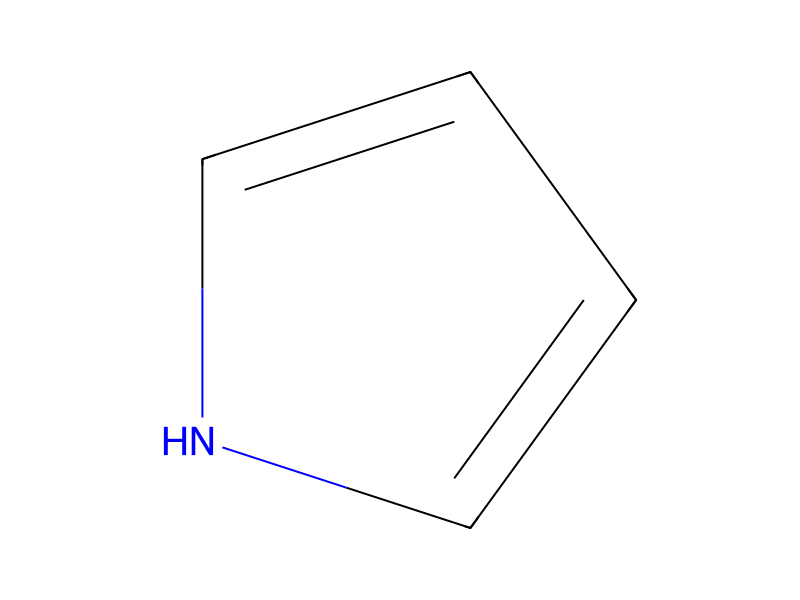
Pyrrole

HCID 8027
New noteNew reactionRequest quotes
Print preview
Basic informationOverviewNames & identifiersPropertiesSafety & regulationChemistry & industryRelated reactionsCompound notes
Substructure searchFind similar structures

Basic information

CAS
109-97-7
Standard SMILES
c1cc[nH]c1
InChIKey
KAESVJOAVNADME-UHFFFAOYSA-N
Molecular formula
C4H5N
Average molar mass
67.09 g/mol
Monoisotopic mass
67.04219916

Overview

1H-pyrrole is a tautomer of pyrrole that has the double bonds at positions 2 and 4. It is a secondary amine and a pyrrole. It is a tautomer of a 3H-pyrrole and a 2H-pyrrole.

Names & identifiers

Preferred name
Pyrrole
IUPAC
1H-pyrrole
English name
Pyrrole
Molecular formula
C4H5N
Molecular weight
67.09

Names & synonyms

PYRROLE1H-Pyrrole109-97-7AzoleDivinylenimineImidolePyrrolMonopyrroleDivinyleneimine1-Aza-2,4-cyclopentadieneFEMA No. 3386Pyrroles
Show more names
PyrrolineFEMA 3386Parzate1H-Pyrrole 98%Pyrrole, 99%, extra purePYRROLE FOR SYNTHESIS 100 ML
DTXSID5021910NSC-6277786S1ZD6L2CCHEBI:19203DTXCID201910Pyrrole 1539RefChem:6188CHEBI:26455

Database identifiers

CAS
109-97-7、30604-81-0
PubChem CID
8027
DTXSID
DTXSID5021910
ChEMBL
CHEMBL16225
ChEBI
CHEBI:19203
UNII
86S1ZD6L2C
EC Number
203-724-7
Nikkaji
J371I

Properties

Computed structural properties

XLogP
0.7
Topological polar surface area
15.8 Ų
Hydrogen bond donors
1
Hydrogen bond acceptors
0
Rotatable bonds
0
Heavy atoms
5
Formal charge
0
Complexity
22.8

Experimental & physicochemical properties

Chemical ClassesNitrogen Compounds -> Pyrroles
SpringerMaterials Properties15N nuclear magnetic resonance spectrum
LogP · 3 items

log Kow = 0.75

0.75

0.75

OdorAgreeable empyreumatic odor resembling that of chloroform
TasteBurning, pungent taste
Food AdditivesFLAVORING AGENT OR ADJUVANT -> FDA Substance added to food
Density · 3 items

0.9698 @ 20 °C

0.955-0.975

0.9698 @ 20°C

Flavoring AgentsEU Flavoring substances
Viscosity4.1123X10-3 Pa.s @ 249.74K
Color/Form · 2 items

Colorless liquid when fresh

Yellowish or brown oil

Safety & regulation

Safety information is for reference only and does not replace the supplier’s Safety Data Sheet (SDS), applicable regulations, or professional assessment.

GHS classification

GHS Classification · 6 items

Warning

H226 (10.7%): Flammable liquid and vapor [Warning Flammable liquids]

P210, P233, P240, P241, P242, P243, P264, P270, P280, P301+P317, P303+P361+P353, P330, P370+P378, P403+P235, and P501 (click each P-code to see the statement)

Aggregated GHS information provided per 1442 reports by companies from 11 notifications to the ECHA C&L Inventory. Each notification may be associated with multiple companies.

Warning

H226: Flammable liquid and vapor [Warning Flammable liquids]

Hazard information

Regulatory Information · 4 items

Chemical: 1H-Pyrrole

Commission Regulation (EC) No 1565/2000 (Repealed by Com. Implementing Reg. (EU) No 872/2012)

Status: Active Update: 22-05-2020 https://echa.europa.eu/registration-dossier/-/registered-dossier/31075

1H-Pyrrole: Does not have an individual approval but may be used under an appropriate group standard

Fire PotentialFlammable liquid when exposed to heat or flame ...
Hazards Summary · 1 item

A CNS depressant; May cause liver injury; Effects of high doses administered by IP injection in dogs include convulsions and liver injury; [HSDB] Safe when used as a flavoring agent in food; [JECFA] Causes convulsions and muscle contractions in oral lethal-dose studies of rabbits; [RTECS]

NFPA Hazard Classification · 3 items

2 - Materials that, under emergency conditions, can cause temporary incapacitation or residual injury.

2 - Materials that must be moderately heated or exposed to relatively high ambient temperatures before ignition can occur. Materials would not under normal conditions form hazardous atmospheres with air, but under high ambient temperatures or under moderate heating could release vapor in sufficient quantities to produce hazardous atmospheres with air.

Chemistry & industry

Pharmacology

Cellular LocationsCytoplasm

Uses & manufacturing

Uses · 3 items

Found in coal tar and bone oil; [Merck Index] Used as an intermediate (pharmaceuticals, dyes, herbicides, and perfumes) and curing agent for resins; [HSDB]

Intermediate especially in drug manufacture

CHEM INT FOR DYES, HERBICIDES, PERFUMES, CROSS-LINKING AGENT FOR RESINS

Methods of Manufacturing · 3 items

REACTION OF AMMONIA AND ACETYLENE OR BUTADIENE

Fractional distillation of bone-oil with sulfuric acid. Later converted into the potassium compound (C4H4NK), washing with ether, and treatment with water, followed by drying and distillation.

Thermal decomposition of ammonium mucate with glycerol or mineral oil. Also formed on heating of albumin; on heating sheep's wool with aqueous barium hydroxide solution; by pyrolysis of gelatin.

Formulations/PreparationsGRADE: TECHNICAL.
Use Classification · 5 items

Flavouring Agent -> FLAVOURING_AGENT -> JECFA Functional Classes

Flavoring Agents -> JECFA Flavorings Index

Flavouring Agent -> FLAVOURING_AGENT -> JECFA Functional Classes

Flavouring Agent -> FLAVOURING_AGENT -> JECFA Functional Classes

Flavouring Agent -> FLAVOURING_AGENT -> JECFA Functional Classes

General Manufacturing Information · 5 items

1H-Pyrrole: ACTIVE

STUDY OF FREE RADICALS PRODUCED IN PYRROLE BY X IRRADIATION & TRITIUM ATOM DECAY.

A constituent of coal tar & bone oil ... .

Pyrrole was found to be potentially useful as a tracer for determining the contribution of environmental tobacco smoke to concentrations of volatile organic compounds in indoor environments with smoking.

The ability of 10 pyrroles to block the acidic nitrosation of morpholine has been determined by using an assay that measures their effectiveness in the presence of a 10-fold excess of amine. The log (% N-nitrosomorpholine) formed is a linear function of blocking agent concentrations ranging from 0.0 to 1.5 times the equivalents of initial nitrate. The negative slopes of these plots allow a ranking of the effectiveness of the blocking agent. Several of the pyrroles have been found to be much more effective than establishing blocking agents such as ascorbic acid. The following order blocking ability has been determined: 2,5-dimethylpyrrole = 1-benzyl-2,5-dimethylpyrroleic acid = 1,2-phenylenediamine = pyrrole > 1,2,5-tribenzylpyrrole = 1-benzylpyrrole = octamethylporphine hydrazine = 2,5-diphenylpyrrolecarboxylic acid. Pyrroles give complex mixtures devoid of N-nitroso compounds upon nitrosation.

Related reactions

481 records
New reaction record
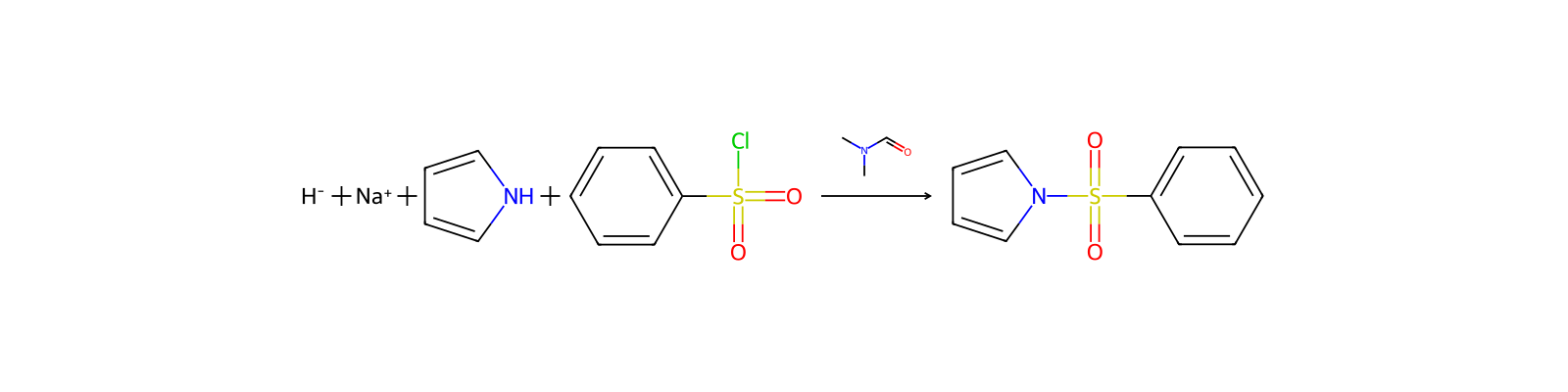
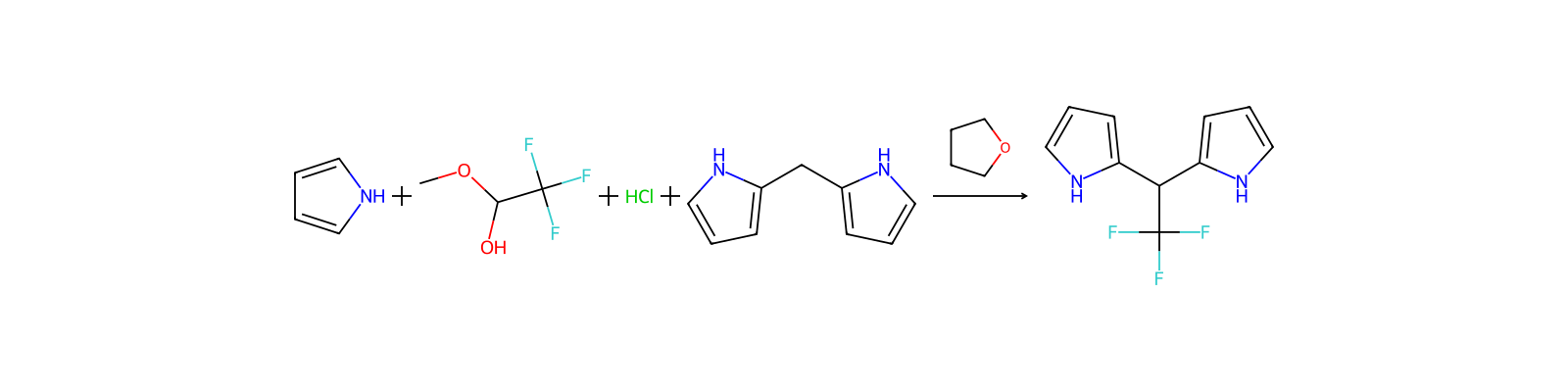
HRID 1127 reaction equation
HRID 1127As reactantuspto-grants-1998_03
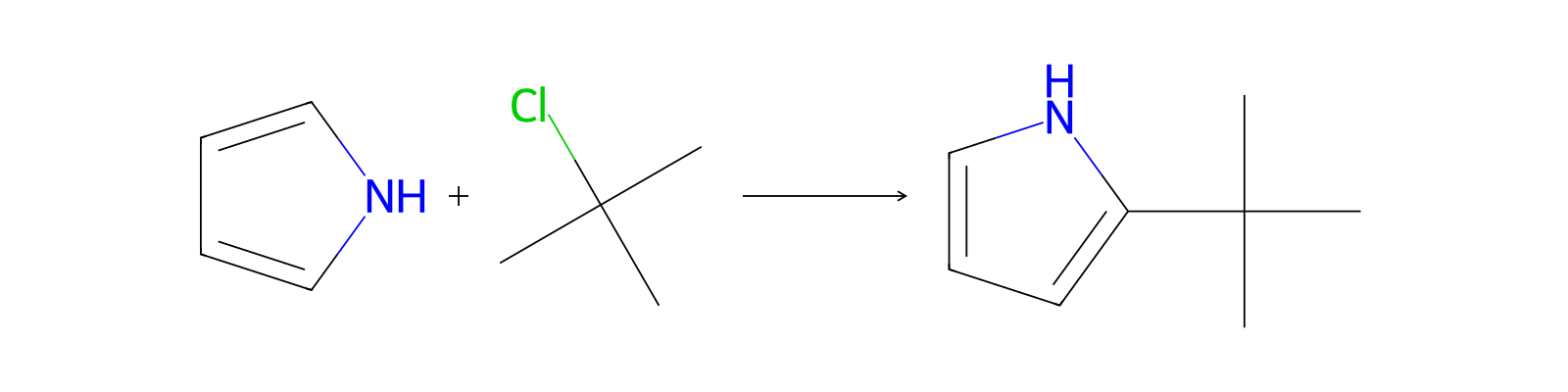
HRID 1305 reaction equation
HRID 1305As reactantuspto-grants-1998_03
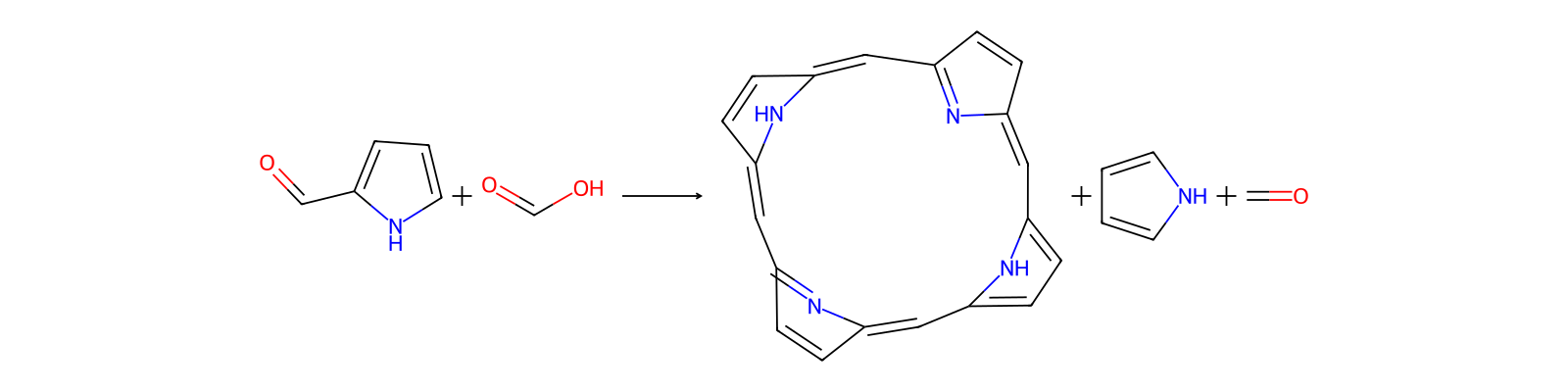
HRID 6945 reaction equation
HRID 6945As reactantuspto-grants-2006_08
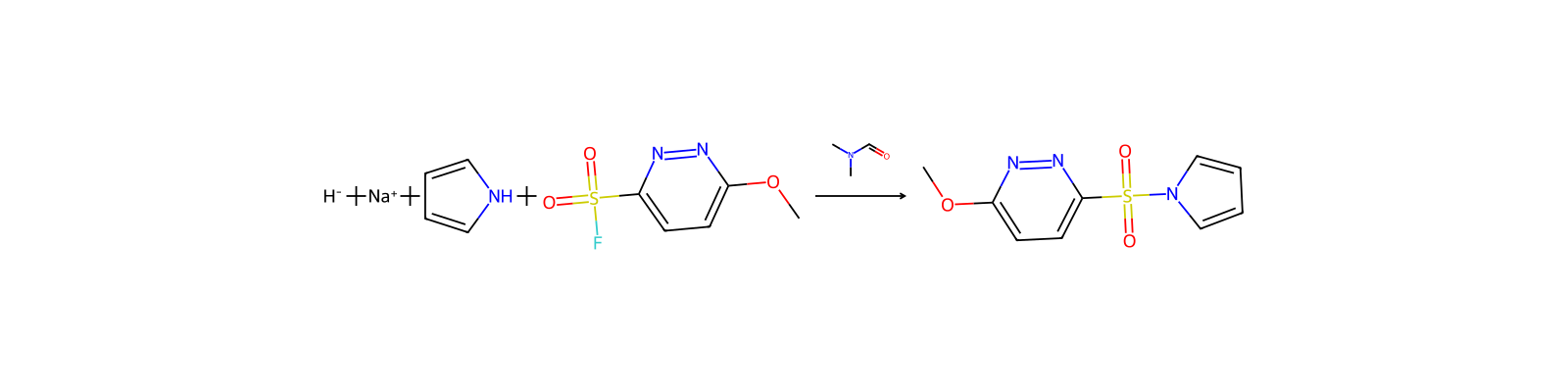
HRID 8313 reaction equation
HRID 8313As reactantuspto-grants-2006_08
HRID 11236 reaction equation
HRID 11236As reactantuspto-grants-2006_08
HRID 18916 reaction equation
HRID 18916As reactantuspto-grants-2010_06
HRID 20198 reaction equation
HRID 20198As productuspto-grants-2010_06
HRID 22754 reaction equation
HRID 22754As reactantuspto-grants-2005_02
Page 1 of 61

Compound notes

Loading…

On this pageBasic informationOverviewNames & identifiersPropertiesSafety & regulationChemistry & industryRelated reactionsCompound notes
More actions
New noteNew reactionRequest quotes
Solubility · 5 items

Soluble in alcohol, ether and dilute acids. Also soluble in most organic chemicals.

Water solubility: 4.5X10+4 mg/l @ 25 °C

45 mg/mL at 25 °C

Soluble in most fixed oils; Slightly soluble in water

Soluble (in ethanol)

Flash Point102 °F (39 °C) (CLOSED CUP)

Physicochemical properties

Melting point
-23 °C · -23 °C (lit.)
Boiling point
131 °C · 131 °C (lit.)
Density
0.967 g/mL · 0.967 g/mL at 25 °C (lit.)
vapor density
2.31 · 2.31 (vs air)
vapor pressure
8.7 hPa · 8.7 hPa (20 °C)
FEMA
3386 · 3386 | PYRROLE
refractive index
20 · n20/D 1.508(lit.)
FLAVIS Number
14.041 · 14.041 | Pyrrole
Flash point
92 °F · 92 °F
storage temp.
2 °C · Store at +2°C to +8°C.
solubility
60 g/l · 60g/l
pka
15 · 15(at 25℃)
form
Liquid
color
Clear almost colorless to brownish
PH
6 · >6 (10g/l, H2O, 20℃)
Odor
0.1 % · at 0.10 % in propylene glycol. sweet warm nutty ethereal
Odor Type
nutty
biological source
synthetic
explosive limit
3.1 · 3.10-14.8%(V)
Water Solubility
60 g/L · 60 g/L (20 ºC)
Specific Heat Capacity
1.9 J/ · Cp(liquid): 1.9 J/(g·K), at 25℃
Sensitive
Air & Light Sensitive
JECFA Number
1314 · 1314
Merck
14 · 14,8014
BRN
1159 · 1159
Henry's Law Constant
5.5 · 5.5×10-1 mol/(m3Pa) at 25℃, Hawthorne et al. (1985)
Dielectric constant
7.5 · 7.5(17℃)
Stability
Stable. Incompatible with strong acids, strong oxidizing agents. Combustible.
Major Application
flavors and fragrances
InChI
1S/C4H5N/c1-2-4-5-3-1/h1-5H
InChIKey
KAESVJOAVNADME-UHFFFAOYSA-N
SMILES
c1cc[nH]c1
LogP
0.85 · 0.85
Surface tension
36.6 mN/m · 36.6mN/m at 20°C
CAS DataBase Reference
109 · 109-97-7(CAS DataBase Reference)
Substances Added to Food (formerly EAFUS)
PYRROLE
EWG's Food Scores
1 · 1
FDA UNII
86 S1ZD6L2C · 86S1ZD6L2C
NIST Chemistry Reference
Pyrrole(109-97-7)
EPA Substance Registry System
1 H-Pyrrole · 1H-Pyrrole (109-97-7)
UNSPSC Code
85151701 · 85151701
NACRES
24 · NA.24
Symbol(GHS)
2 · GHS02,GHS05,GHS06
Signal word
Danger
Hazard statements
311 · H311-H302+H332-H318-H226
Precautionary statements
501 · P501-P261-P270-P240-P210-P233-P243-P241-P242-P271-P264-P280-P370+P378-P361+P364-P303+P361+P353-P301+P312+P330-P304+P340+P312-P305+P351+P338+P310-P403+P235-P405
PPE
Eyeshields, Faceshields, Gloves, type ABEK (EN14387) respirator filter
Hazard Codes
T
Risk Statements
10 · 10-20-25-41
Safety Statements
26 · 26-37/39-45-39-24-16
RIDADR
1992 · UN 1992 3/PG 3
WGK Germany
2 · 2
RTECS
9275000 · UX9275000
F
8 · 8-10-23
Autoignition Temperature
550 °C · 550 °C
TSCA
TSCA listed
HazardClass
3 · 3
PackingGroup
III
HS Code
29339900 · 29339900
Storage Class
3 · 3 - Flammable liquids
Hazard Classifications
3 OralAcute · Acute Tox. 3 OralAcute Tox. 4 InhalationEye Dam. 1Flam. Liq. 3
Hazardous Substances Data
109 · 109-97-7(Hazardous Substances Data)
Toxicity
50 orally · LD50 orally in Rabbit: 137 mg/kg
REACH Registrations
Active
Limited Quantities
5 L · 5.0 L (1.3 gallons) (liquid)
Excepted Quantities
Max Inner Pack (30g or 30ml) and Max Outer Pack (1Kg or 1L)

0 - Materials that in themselves are normally stable, even under fire conditions.

Hazard Classes and Categories · 2 items

Flam. Liq. 3 (10.7%)

Flammable liquids - Category 3

Critical Temperature and PressureCritical temperature: 366.75 °C; Critical pressure: 6.21X10+6 Pa
Hazardous Reactivities and Incompatibilities · 2 items

... CAN REACT WITH OXIDIZING MATERIALS.

Violent reaction with 2-nitrobenzaldehyde.

Safety & protection

Fire Fighting ProceduresFOAM, CARBON DIOXIDE, DRY CHEMICAL.
Disposal Methods · 1 item

SRP: At the time of review, criteria for land treatment or burial (sanitary landfill) disposal practices are subject to significant revision. Prior to implementing land disposal of waste residue (including waste sludge), consult with environmental regulatory agencies for guidance on acceptable disposal practices.

Protective Action Criteria (PAC) · 3 items

0.32 [mg/m3]

3.5 [mg/m3]

21 [mg/m3]

Personal Protective Equipment (PPE)IN VIEW OF THE COMPOUND'S RELATIVELY LOW TOXICITY, ORDINARY HANDLING PRECAUTIONS INCLUDING USE OF GLOVES & GOOD VENTILATION ARE ADEQUATE TO PREVENT INJURY.

Toxicology

Environmental Fate · 3 items

TERRESTRIAL FATE: Based on a classification scheme(1), an estimated Koc value of 61(SRC), determined from a log Kow of 0.75(2) and a regression-derived equation(3), indicates that pyrrole is expected to have high mobility in soil(SRC). Volatilization of pyrrole from moist soil surfaces is expected to be an important fate process(SRC) given a Henry's Law constant of 1.8X10⁻⁵ atm-cu m/mole(4). The potential for volatilization of pyrrole from dry soil surfaces may exist(SRC) based upon a vapor pressure of 8.35 mm Hg(5). Pyrrole does not readily undergo biodegradation in water unless there exists bacteria that have had previous exposure to pyrrole. Given this need for acclimation, the decomposition of pyrrole may be very slow(6).

AQUATIC FATE: Based on a classification scheme(1), an estimated Koc value of 61(SRC), determined from a log Kow of 0.75(2), indicates that pyrrole is not expected to adsorb to suspended solids and sediment in water(SRC). Volatilization from water sources is expected(3) based upon a Henry's Law constant of 1.80X10⁻⁵ atm-cu m/mole(4). Volatilization half-lives for a model river and model lake are 42 hrs and 368 hrs, respectively(SRC), using an estimation method(3). According to a classification scheme(5), an estimated BCF of 2(3,SRC) from a log Kow of 0.75(2) suggests the potential for bioconcentration in aquatic organisms is low. Experiments have shown that pyrrole is actually degraded by gasoline-adapted ground water cultures when present as a single substrate. Adaption time was 480 hrs and degradation time was 600 hrs(6). Pyrrole was not degraded in a mixture of compounds in water after 1100-1300 hrs at 10 °C and at a concentration of 0.2-1 mg/l(6).

ATMOSPHERIC FATE: According to a model of gas/particle partitioning of semivolatile organic compounds in the atmosphere(1), pyrrole, which has a vapor pressure of 8.35 mm Hg at 25 °C(2), is expected to exist solely as a vapor in the ambient atmosphere. Vapor-phase pyrrole is degraded in the atmosphere by reaction with photochemically-produced hydroxyl radicals(SRC); the half-life for this reaction in air is estimated to be 4 days(SRC) from its rate constant of 1X10⁻¹⁰ cu cm/molecule sec(3). In a comparison of room temperature rate constants and loss rates of selected organics in the presence of 7.2X10+11 molecule/cu cm of ozone, 5X10+5 molecule/cu cm of hydroxyl radicals, and 2.4X10+8 molecules/cu cm of NO3 radicals, pyrrole displayed the following rate constants: 1.6X10⁻¹⁷ cu cm/molecule sec with a loss rate of 1 day, 1.2X10⁻¹¹ cu cm/molecule sec with a loss rate of 5.2 days, and 4.9X10⁻¹¹ cu cm/molecule sec with a loss rate of 1000 days, respectively(4).

Food Survey Values · 1 item

Pyrrole has been detected in "popped" popcorn at a level of 26 ug/kg in a dry capture method and 44 ug/kg in a wet capture method(1). Fresh chicken breast with bone was cut into 1.5 inch cubes, coated with flour and fried in Fri-al shortening. During a 48 hour period in which the chicken was fried, pyrrole was detected (detection level not specified)(2).

Adverse EffectsNeurotoxin - Other CNS neurotoxin
Effluent Concentrations · 1 item

Results of a study of several sites show that prior to coal gasification by ground water, pyrrole was not detected (limits of detection were 0.1 ppb). However, once coal gasification began, pyrrole was detected at 208 ppm in Hanna, Wyoming and 111 ppm Gillete, Wyoming. Pyrrole was not detected from low-Btu gasification of Rosebud coal but was detected at 23 ppm from an in situ oil shale process (limits of detection were 0.1 ppb)(1). Two retort wastewaters selected for study were produced from January to May, 1979 in the modified in situ retort 6 at the Occidental Oil Shale, Inc. facility at Logan Wash, CO. In the condensate retort water, 4.9 mg/l of pyrrole was detected while no pyrrole was detected at the process retort water (detection limits not specified)(2). Pyrrole was detected from shale oil wastewaters used to cool hot spent shale, both in gas condensate water and process retort water units not specified(3).

Medical Surveillance...PERSONS WITH ABNORMAL RESPIRATORY, CIRCULATORY OR LIVER CONDITIONS SHOULD NOT BE EXPOSED TO THIS SUBSTANCE.
Soil Adsorption/Mobility · 1 item

The Koc of pyrrole is estimated as approximately 61(SRC), using a log Kow of 0.75(1) and a regression-derived equation(2). According to a classification scheme(3), this estimated Koc value suggests that pyrrole is expected to have high mobility in soil.

Atmospheric Concentrations · 1 item

SOURCE DOMINATED: Pyrrole was detected at <1 ng/ml of air above 1 ml of water in 10 ml samples from two process retort wastewaters collected at Laramie Energy Technology Center during May 1982 and at the Logan Wash site of Occidental Oil Shale Inc. during December 1987; it was also detected in the gas-condensate retort wastewaters at 3.1 and 5.0 ng/ml of air above 1 ml of water at both sites(1). Pyrrole has been found in stock emission during incineration of municipal waste units not specified(2). URBAN/SUBURBAN: Pyrrole was not detected in ambient air at either Logan Wash, CO or at Boulder, CO(1).

Human Toxicity Excerpts · 2 items

IT HAS A DEPRESSANT ACTION ON THE CENTRAL NERVOUS SYSTEM AND, IN SEVERE INTOXICATION, IS INJURIOUS TO THE LIVER.

NO CASES OF OCCUPATIONAL DISEASE DUE TO PYRROLE HAVE BEEN REPORTED; HOWEVER TESTS INDICATE THAT IT HAS A MODERATE CUMULATIVE TOXICITY.

Artificial Pollution SourcesPyrrole's production and presence in creosote(1), chemical intermediate in drug manufacturing(2) may result in its release to the environment through various waste streams(SRC).
Environmental Biodegradation · 2 items

AEROBIC: Pyrrole was not degraded in a mixture of compounds in water after 1100-1300 hrs at 10 °C and at a concentration of 0.2-1 mg/l. Experiments have shown that pyrrole is actually degraded by gasoline-adapted ground water cultures when present as a single substrate. Adaption time was 480 hrs and degradation time was 600 hrs. Pyrrole inhibits benzene biodegradation strongly even at pyrrole concentrations of 100-200 ug/l(1). Degradation of pyrrole seems to be enhanced with the concomitant degradation of other compounds in an aqueous environment. No degradation of pyrrole was observed under denitrifying conditions during 846 days of incubation(2). In an aerobic enrichment culture that originated from groundwater at a creosote-contaminated aquifer in Fredensbury Denmark, pyrrole was completely removed after 49 days. It is suggested that microorganisms have to adapt to pyrrole before they can begin to degrade it and that the lag phase can be very long(3).

ANAEROBIC: Anaerobic research of pyrrole using primary digestive sludge, having an average inflow of 100 cu m/day and a mean retention time of 20 days, displayed negative gas production during the first 11 weeks of incubation. This corresponds to no biodegradation of pyrrole under anaerobic conditions(1).

Sediment/Soil ConcentrationsPyrrole is a constituent of creosote which is a compound used as a wood preservative, especially in electric poles. Due to this, pyrrole may be found in soil in locations where creosote has been used(1).
Environmental BioconcentrationAn estimated BCF of 2 was calculated for pyrrole(SRC), using a log Kow of 0.75(1). According to a classification scheme(2), this BCF suggests the potential for bioconcentration in aquatic organisms is low.

Safety data

F
8-10-23
PPE
Eyeshields, Faceshields, Gloves, type ABEK (EN14387) respirator filter
wgk
2
tsca
TSCA listed
rtecs
UX9275000
ridadr
UN 1992 3/PG 3
hs_code
29339900
Toxicity
LD50 orally in Rabbit: 137 mg/kg
risk_code
10-20-25-41
Signal word
Danger
Symbol(GHS)
GHS02,GHS05,GHS06
hazard_code
T
safety_code
26-37/39-45-39-24-16
hazard_class
3
Storage Class
3 - Flammable liquids
packing_group
III
Hazard statements
H311-H302+H332-H318-H226
Limited Quantities
5.0 L (1.3 gallons) (liquid)
Excepted Quantities
Max Inner Pack (30g or 30ml) and Max Outer Pack (1Kg or 1L)
REACH Registrations
Active
Hazard Classifications
Acute Tox. 3 OralAcute Tox. 4 InhalationEye Dam. 1Flam. Liq. 3
Autoignition Temperature
550 °C
Precautionary statements
P501-P261-P270-P240-P210-P233-P243-P241-P242-P271-P264-P280-P370+P378-P361+P364-P303+P361+P353-P301+P312+P330-P304+P340+P312-P305+P351+P338+P310-P403+P235-P405
Hazardous Substances Data
109-97-7(Hazardous Substances Data)
Applications · 4 items

Uses(1) Spices. The main type use is the preparation of fruit and spice flavors. (2) It is used for the synthesis of pharmaceuticals and fine chemicals such as perfume (3) Its derivatives are widely used in organic synthesis, pharmaceuticals, pesticides, spices, rubber vulcanization accelerator, epoxy curing agents of raw materials (4) It is used as chromatographic analysis standard material, it is also used in organic synthesis and pharmaceutical industry. (5) It can be used for the pharmaceutical, perfume and other synthetic intermediates. (6) It is widely used in the synthesis of pharmaceuticals, pesticides and dyes. In the pharmaceutical industry can be used for synthesis of Barossa Star (Irloxacin), meters pyrrole acid (Piromidic), pyrrole pentanone (Pyrovalerone), pyrrole Cain (Pyrrocaine) and set off disease (TMT) and the like. (7) It can be used to test gold selenite and silicic acid. Determination of chromate, gold, iodine salt, mercury, selenious acid, silicon and vanadium.

OccurrenceThe pyrrole ring is the basic unit of the porphyrin system which occurs, for example, in chlorophyll and in hemoglobin. Other pyrrole-based natural products include pigments such as bilirubin and biliverdin, which are degradative products from porphyrins (Sundberg, 1984). Pyrrole has been found in surface waters and in filtrates from cultures of the blue-green algae, Anabaenaflos aquae. The presence of pyrrole and other organic nitrogen compounds in natural waters is of environmental concern because they may exert significant chlorine demand. Pyrrole is also a precursor to trihalomethane formation (Ram and Morris, 1980). At ambient temperature, pyrrole can be volatilized from shale oil wastewaters. Concentrations of approximately 3 g/m3 have been measured indoors in air at an oil shale wastewater facility (Hawthorne and Sievers, 1984). Pyrrole has been identified in tobacco smoke, although not in tobacco itself (Johnstone and Plim-mer, 1959); in cigarette smoke (Schumacher et al 1977); in cigar butt aroma (Peck et al 1969); and in Cannabis smoke condensate (Jones and Foote, 1975). Pyrrole was found to be naturally occurring in foods; in fact, it is on the Food and Drug Administration GRAS (Generally Recognized As Safe) list, with an average usage level of 3 p.p.m. in flavoring formulations (Maga, 1981). Pyrrole is a volatile constituent of roasted coffee (Gianturco et al 1966), roasted peanuts (Walradt et al 1971), and fried chicken (Tang et al 1983). It has also been identified in beef aroma (MacLeod and Coppock, 1976) and is a constituent of cocoa aroma (Marion et al 1967). It should be noted that all the foods listed have undergone some degree of thermal treatment; pyrrole was not present in the fresh, raw foods. In model system studies, pyrrole was among the resulting compounds when hydroxyproline and glucose were heated under nitrogen at temperatures ranging from 120° to 200°C. Large amounts of pyrrole were found, as well, when casein and collagen were pyrolyzed and when proline underwent high temperature pyrolysis (Maga, 1981).

UsesPyrrole plays a major role in synthesis of drugs, spices, agrochemicals, dyes, photographic chemicals and perfumes. It plays an important role in the electropolymerisation of macroporous conducting polymer films. It acts as a catalyst for polymerization process; as a standard substance in chromatographic analysis; as corrosion inhibitors and preservatives and as solvents for resins and terpenes. It is utilized to study the hydrogen-bond mediated coupling of 1,2,3-triazole to pyrrole and in the preparation of 1-(4-Chloro-benzoyl)-pyrrole by reacting with 4-Chloro-benzoyl chloride. In Ciamician-Dennstedt rearrangement, It is used to prepare 3-chloropyridine by reacting with dichlorocarbene.

General DescriptionPyrrole is one of the flavor compounds that is formed in thermally processed foods due to the Maillard reaction.

Preparation methods · 1 item

PreparationBy fractional distillation of bone oil (bone oil is obtained by destructive distillation of animal bone) and subsequent purification via the corresponding potassium salt; by thermal decomposition of ammonium mucate in glycerol or mineral oil.

Upstream & downstream products

Upstream raw materials

Mucic acidMineral oilBONE OILFuranAmmonia

Downstream products

Methyl 4-bromopyrrole-2-carboxylate1-(2-Pyrrolidinoethyl)piperazineZopiclone2,5-Dimethyl-1H-pyrroleSaquinavirZaleplonPILSICAINIDEN-(2-Cyanoethyl)pyrrole3-PyrrolineKetorolac2-Acetyl pyrroleAcrivastinepolypyrrole synthesized by electrolytic polymerizationpolypyrrole-polyvinyl chloride composite filmGlimepirideFENPICLONILPyrrole-2-carboxylic acid2H-Pyrrol-2-one, 1,3-dihydro-

Additional notes

DefinitionChEBI: 1H-pyrrole is a tautomer of pyrrole that has the double bonds at positions 2 and 4. It is a pyrrole and a secondary amine. It is a tautomer of a 2H-pyrrole and a 3H-pyrrole.