HomeMCPWorkbenchSkills
HomeWorkbenchNotificationsMe
llms.txt · MCP GuidePrivacy Policy · Terms of Service · Supportv1.8.0
  1. Home
  2. /Reaction

3,4-Diacetoxy-1-butene → 3-Formylbut-2-enyl acetate

HRID 1584651
Notes
Print preview

Reaction equation

HRID 1584651 reaction equation
C(OC(COC(=O)C)C=C)(=O)C.[H][H].[C]=O.[C:17]([O:20][CH2:21][CH:22](OC(=O)C)[CH:23]([CH:25]=[O:26])[CH3:24])(=[O:19])[CH3:18].C(OC(COC(=O)C)CCC=O)(=O)C>C1(C)C=CC=CC=1.C/C(/O)=C/C(C)=O.[C-]#[O+].[C-]#[O+].[Rh].C1(P(C2CCCCC2)C2CCCCC2)CCCCC1.C(O)(=O)C>[C:17]([O:20][CH2:21][CH:22]=[C:23]([CH3:24])[CH:25]=[O:26])(=[O:19])[CH3:18]
ParticipantsConditionsProcedureWorkupSources & evidenceReaction notes

Participants

10

Reactant 5

HCID 27350013,4-Diacetoxy-1-butene2×HCID 109655681,2-Diacetoxy-3-formylbutane2×HCID 110199314,5-Bis(acetyloxy)pentanalHCID 178418361HCID 178418361, compound2×HCID 178418416HCID 178418416, compound2×

Product 1

HCID 84699
3-Formylbut-2-enyl acetate
Yield 37.3%

Reagents, catalysts & solvents 4

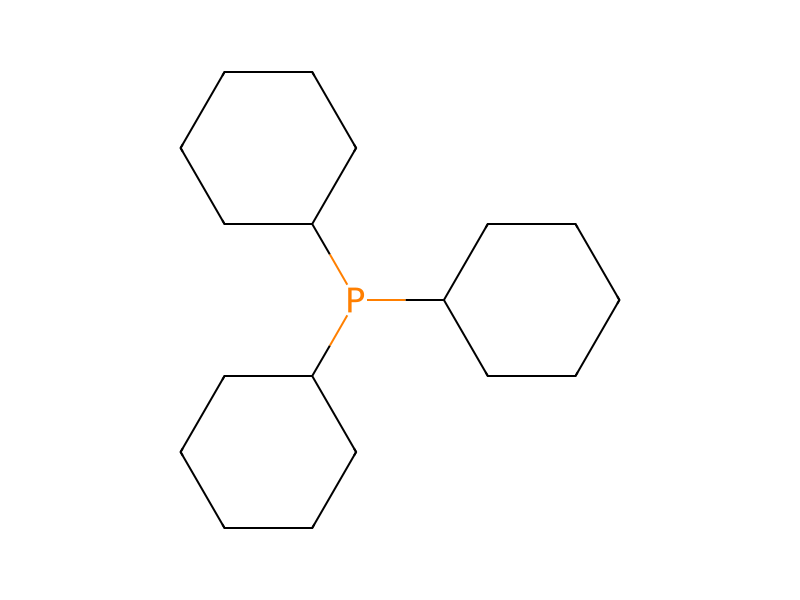
HCID 75806TricyclohexylphosphineCatalystHCID 5377512Rhodium, dicarbonyl(2,4-pentanedionato)-CatalystHCID 176Acetic AcidSolventHCID 1140TolueneSolvent

Conditions

Temperature
80 °C

Procedure

An autoclave equipped with a gas inlet, a sampling port and an electromagnetic stirrer and having an internal volume of 300 ml, was charged with 50 ml (52.7 g, 0.306 mol) of 3,4-diacetoxy-1-butene and a solution of 2.58 mg of rhodium dicarbonyl acetylacetonate and 140 mg (0.5 mmol) of tricyclohexylphosphine in 50 ml of toluene under nitrogen while avoiding their contact with air. Then, the atmosphere inside the autoclave was replaced with a gaseous mixture of hydrogen and carbon monoxide at a molar ratio of 1/1. The pressure inside the autoclave was adjusted to 90 atmospheric pressure (gauze pressure) with the same gaseous mixture and the temperature inside the autoclave was raised to 80° C. The hydroformylation was effected for 2 hours at 80° C. while maintaining the pressure inside the autoclave at 90 atmospheric pressure (gauze pressure) with the gaseous mixture of hydrogen and carbon monoxide at a molar ratio of 1/1. Analysis of the reaction solution with gas chromatography under the same conditions of Example 1 showed that the conversion of the 3,4-diacetoxy-1-butene was 44% and the selectivity to the hydroformylated product was 99%. The anaysis also showed that the reaction solution contained 13.55 g (67 mmol) of 1,2-diacetoxy-3-formylbutane and 8.29 g (41 mmol) of 4,5-diacetoxypentanal and 3.55 g (25 mmol) of 3-methyl-4-oxo-2-butenyl acetate which was formed by the elimination of acetic acid from 1,2-diacetoxy-3-formylbutane. The ratio i/n was 2.2 (=69/31), wherein 3-methyl-oxo-2-butenyl acetate was calculated as 1,2-diacetoxy-3-formylbutane.

Workup

  1. customAn autoclave equipped with a gas inlet
  2. temperaturewhile maintaining the pressure inside the autoclave at 90 atmospheric pressure (gauze pressure)

Sources & evidence

ORD record
ord-773456e075bd4fad99f31304bb87fdf0
Source dataset
uspto-grants-1999_08
DOI
10.6084/m9.figshare.5104873.v1
Patent number
US05932761

Reaction notes

Loading…

On this pageParticipantsConditionsProcedureWorkupSources & evidenceReaction notes