HomeMCPWorkbenchSkills
HomeWorkbenchNotificationsMe
llms.txt · MCP GuidePrivacy Policy · Terms of Service · Supportv1.8.3
  1. Home
  2. /Compound

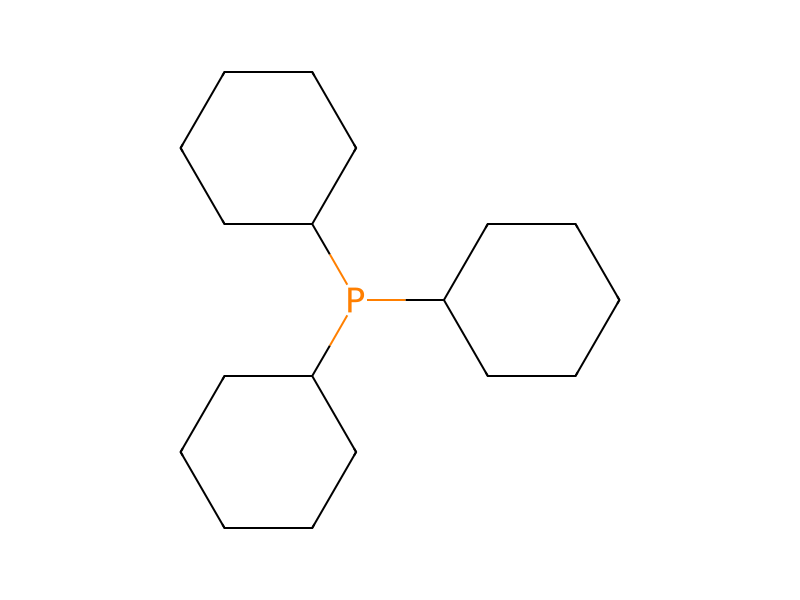
Tricyclohexylphosphine

HCID 75806
New reaction
Print
Basic informationNames & identifiersPropertiesSafety & regulationChemistry & industryRelated reactionsCompound notes
Substructure searchFind similar structures

Basic information

CAS
2622-14-2
Standard SMILES
C1CCC(P(C2CCCCC2)C2CCCCC2)CC1
InChIKey
WLPUWLXVBWGYMZ-UHFFFAOYSA-N
Molecular formula
C18H33P
Average molar mass
280.4 g/mol
Monoisotopic mass
280.23198805

Names & identifiers

Preferred name
Tricyclohexylphosphine
IUPAC
tricyclohexylphosphane
English name
Tricyclohexyl phosphine
Molecular formula
C18H33P
Molecular weight
280.43

Names & synonyms

TricyclohexylphosphinePhosphine, tricyclohexyl-EINECS 220-069-2NSC 158657DTXSID9062562Phosphine, tricyclohexylRefChem:191427DTXCID8037469220-069-2WLPUWLXVBWGYMZ-UHFFFAOYSA-N2622-14-2TRICYCLOHEXYL PHOSPHINE
Show more names
TCHPP(4-MeOC6H4)3TricycLProtein TCHPtricyclohexylphospine
TricyclohexylphosphanePCy3Tricyclohexyl-phosphanetris(cyclohexyl)phosphineCy3PMFCD00003853P(cHex)3P(Cy)3

Database identifiers

CAS
2622-14-2
PubChem CID
75806
DTXSID
DTXSID9062562
UNII
34HJS55VCG
EC Number
220-069-2
Nikkaji
J87.295D

Properties

Computed structural properties

XLogP
5.4
Topological polar surface area
0 Ų
Hydrogen bond donors
0
Hydrogen bond acceptors
0
Rotatable bonds
3
Heavy atoms
19
Formal charge
0
Complexity
202

Experimental & physicochemical properties

Chemical ClassesOther Classes -> Phosphorus Compounds
Physical DescriptionCrystalline powder or chunks; [Sigma-Aldrich MSDS]

Physicochemical properties

Melting point
82 °C · 82 °C (180 °F; 355 K)
Boiling point
383.4 · 383.4±9.0 °C | Condition: Press: 760 Torr
Density
0.901 g/mL · 0.901 g/mL at 25 °C
Flash point
4 °C · 4 °C - closed cup
storage temp.
2 · Inert atmosphere,2-8°C
solubility
Chloroform (Slightly), DMSO (Slightly, Heated, Sonicaetd), Ethyl Acetate (Slightly)
form
solid
color
white
Specific Gravity
0.9 · 0.9
Water Solubility
Soluble in most organic solvents. Insoluble in water.
Sensitive
Air Sensitive
Hydrolytic Sensitivity
8 · 8: reacts rapidly with moisture, water, protic solvents
BRN
957171 · 957171
Stability
Air Sensitive, Moisture Sensitive
InChI
1S/C18H33P/c1-4-10-16(11-5-1)19(17-12-6-2-7-13-17)18-14-8-3-9-15-18/h16-18H,1-15H2
InChIKey
WLPUWLXVBWGYMZ-UHFFFAOYSA-N
SMILES
C1CCC(CC1)P(C2CCCCC2)C3CCCCC3
CAS DataBase Reference
2622 · 2622-14-2(CAS DataBase Reference)
FDA UNII
34 HJS55VCG · 34HJS55VCG
NIST Chemistry Reference
Phosphine, tricyclohexyl-(2622-14-2)
EPA Substance Registry System
Phosphine, tricyclohexyl- (2622-14-2)
UNSPSC Code
12350000 · 12350000
NACRES
22 · NA.22
Symbol(GHS)
2 · GHS02,GHS07,GHS08
Signal word
Danger
Hazard statements
225 · H225-H304-H315-H319-H335-H336-H361d-H373-H412
Precautionary statements
210 · P210-P273-P301+P310-P303+P361+P353-P305+P351+P338-P331
target organs
Central nervous system, Respiratory system
PPE
Eyeshields, Faceshields, Gloves, type ABEK (EN14387) respirator filter
Hazard Codes
Xi,Xn,F
Risk Statements
36 · 36/37/38-22-37/38-36-19-11-67-65-63-48/20-40
Safety Statements
26 · 26-36/37-62-37/39-36-33-29-16
RIDADR
2056 · UN 2056 3/PG 2
WGK Germany
3 · 3
TSCA
TSCA listed
HazardClass
3 · 3
PackingGroup
III
HS Code
2931900090 · 2931900090
Storage Class
3 · 3 - Flammable liquids
Hazard Classifications
3 Asp · Aquatic Chronic 3Asp. Tox. 1Eye Irrit. 2Flam. Liq. 2Repr. 2Skin Irrit. 2STOT RE 2STOT SE 3

Safety & regulation

Safety information is for reference only and does not replace the supplier’s Safety Data Sheet (SDS), applicable regulations, or professional assessment.

GHS classification

GHS Classification · 4 items

Danger

H251 (18.7%): Self-heating; may catch fire [Danger Self-heating substances and mixtures]

P235, P261, P264, P264+P265, P270, P271, P273, P280, P301+P316, P301+P317, P302+P352, P304+P340, P305+P351+P338, P319, P321, P330, P332+P317, P337+P317, P362+P364, P391, P403+P233, P405, P407, P410, P413, P420, and P501 (click each P-code to see the statement)

Aggregated GHS information provided per 91 reports by companies from 14 notifications to the ECHA C&L Inventory. Each notification may be associated with multiple companies.

Hazard information

Hazards SummaryA skin and strong eye irritant; [Sigma-Aldrich MSDS] See Triphenylphosphine.
Hazard Classes and CategoriesSelf-heat. 1 (18.7%)

Safety data

PPE
Eyeshields, Faceshields, Gloves, type ABEK (EN14387) respirator filter
wgk
3
tsca
TSCA listed
ridadr
UN 2056 3/PG 2
hs_code
2931900090
risk_code
36/37/38-22-37/38-36-19-11-67-65-63-48/20-40
Signal word
Danger
Symbol(GHS)
GHS02,GHS07,GHS08
hazard_code
Xi,Xn,F
safety_code
26-36/37-62-37/39-36-33-29-16
hazard_class
3
Storage Class
3 - Flammable liquids
packing_group
III
target organs
Central nervous system, Respiratory system
Hazard statements
H225-H304-H315-H319-H335-H336-H361d-H373-H412
Hazard Classifications
Aquatic Chronic 3Asp. Tox. 1Eye Irrit. 2Flam. Liq. 2Repr. 2Skin Irrit. 2STOT RE 2STOT SE 3
Precautionary statements
P210-P273-P301+P310-P303+P361+P353-P305+P351+P338-P331

Chemistry & industry

Uses & manufacturing

General Manufacturing InformationPhosphine, tricyclohexyl-: ACTIVE
Applications · 3 items

DescriptionTricyclohexyl phosphine is the tertiary phosphine with the formula P( C 6H11) 3. Commonly used as a ligand in organometallic chemistry, it is often abbreviated to PCy 3, where Cy stands for cyclohexyl. It is characterized by both high basicity (pK a = 9.7) and a large ligand cone angle (170°). Tricyclohexyl-phosphine is more basic (and so a better c-donor) than tribu tyiphosphine, which in turn is more basic than triphenyl phosphIne.

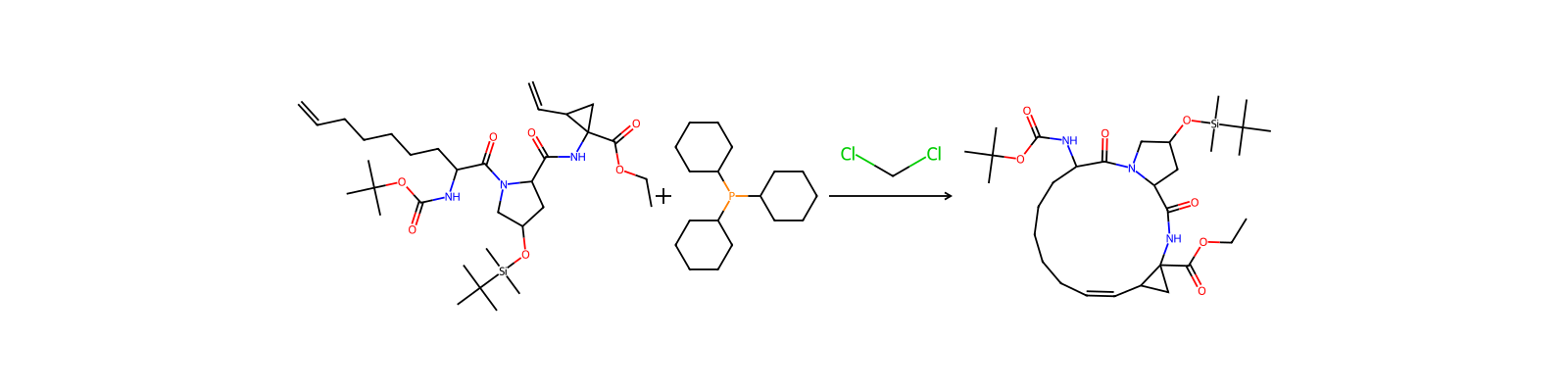
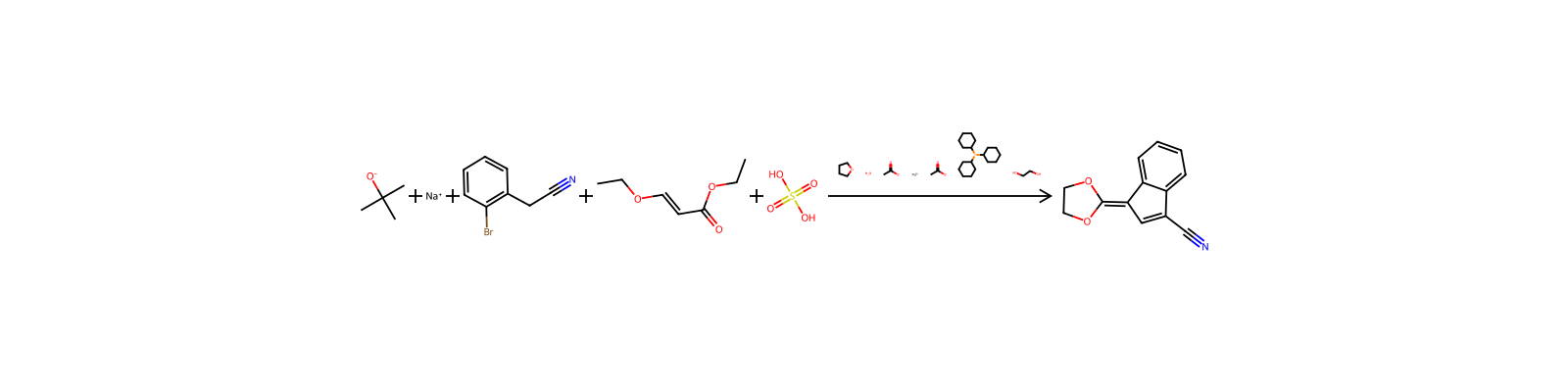
UsesTricyclohexyl Phosphine is a ligand catalyst used primarily in organometallic chemistry. Ligand used in the Pd-catalyzed coupling of malononitrile with aryl halides. suzuki reaction: Bulky phosphine ligand used with a Pd(0)-triolefinic macrocycle catalyst for Suzuki coupling of aryl bromides and chlorides. This ligand is applied with Ni as a key intermediate in the formation of cylcopentane compounds. As a reagent, Tricyclohexylphosphine is used for a range of metal-catalyzed organic transformations. Crabtree's catalyst is an organoiridium compound containing tricyclohexyl phosphine used for hydrogenation of mono-, di-, tri-, and tetra- substituted substrates and hydrogen transfer reactions. Grubbs' catalysts consists of transition metal ruthenium and tricylohexyl phosphine utilized in olefin metathesis in synthetic organic chemistry.

UsesTricyclohexylphosphine is used as a ligand in organometallic chemistry. As a reagent, it is used for a range of metal-catalyzed organic transformations. Crabtree's catalyst is an organoiridium compound containing tricyclohexyl phosphine used for hydrogenation of mono-, di-, tri-, and tetra- substituted substrates and hydrogen transfer reactions. Grubbscatalysts consists of transition metal ruthenium and tricylohexyl phosphine utilized in olefin metathesis in synthetic organic chemistry.

Upstream & downstream products

Upstream raw materials

BromocyclohexanePhosphorus trichlorideDiethyl etherAmmonium chlorideMagnesiumTricyclohexylphosphine Carbon DisulfideTricyclohexylphosphine sulfideTricyclohexylphosphine oxideChlorocyclohexaneCyclohexanolDicyclohexylchlorophosphine

Downstream products

Bis(tricyclohexylphosphine)palladium(II) DichlorideDiphosphine, tetracyclohexyl-Dicyclohexylphosphine oxideMethyl 2-chloro-3-nitrobenzoate(1,5-Cyclooctadiene)(pyridine)(tricyclohexylphosphine)iridium(I) hexafluorophosphateMethanesulfonato(tricyclohexylphosphine)(2'-aMino-1,1'-biphenyl-2-yl)palladiuM(II) dichloroMethane adduct

Related reactions

2,387 records
New reaction record
HRID 10080 reaction equation
HRID 10080As catalyst
HRID 10081 reaction equation
HRID 10081As reactant
HRID 13866 reaction equation
HRID 13866As reactant
HRID 17811 reaction equation
HRID 17811As reactant
HRID 19167 reaction equation
HRID 19167As reactant
HRID 19791 reaction equation
HRID 19791As reactant
HRID 19811 reaction equation
HRID 19811As reactant
HRID 39424 reaction equation
HRID 39424As reactant
PreviousPage 1 of 299

Compound notes

On this pageBasic informationNames & identifiersPropertiesSafety & regulationChemistry & industryRelated reactionsCompound notes