HomeMCPSkillsWorkbenchOpenChem
HomeWorkbenchNotificationsMe
llms.txt · skill.md · MCP GuidePrivacy Policy · Terms of Service · Supportv1.8.5
  1. Home
  2. /Reaction

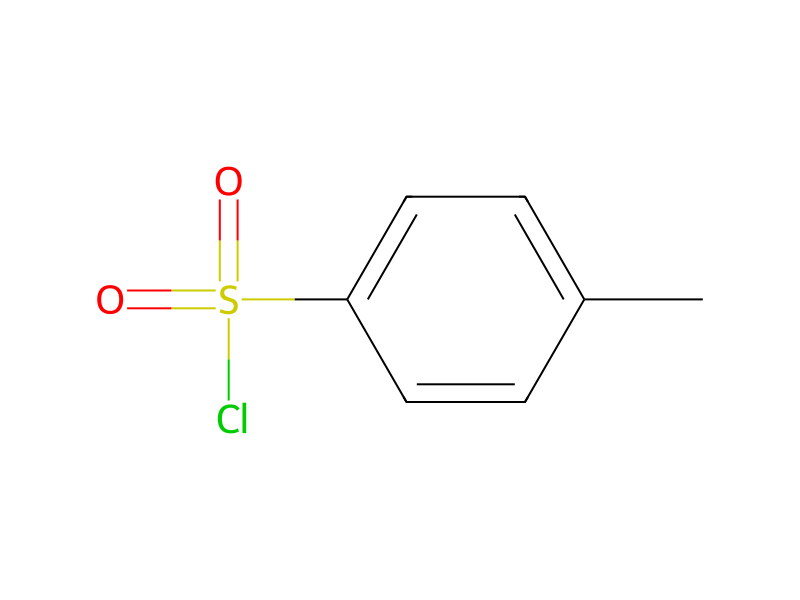
4-Toluenesulfonyl chloride → N-(Benzyloxycarbonyl)-trans-4-tosyloxy-L-proline ethyl ester

HRID 1586101
Print

Reaction equation

[CH2:1]([O:3][C:4](=[O:21])[C@@H:5]1[CH2:9][C@@H:8]([OH:10])[CH2:7][N:6]1[C:11]([O:13][CH2:14][C:15]1[CH:20]=[CH:19][CH:18]=[CH:17][CH:16]=1)=[O:12])[CH3:2].[C:22]1([CH3:32])[CH:27]=[CH:26][C:25]([S:28](Cl)(=[O:30])=[O:29])=[CH:24][CH:23]=1>C(Cl)(Cl)Cl.C(Cl)Cl.N1C=CC=CC=1>[CH2:1]([O:3][C:4](=[O:21])[C@@H:5]1[CH2:9][C@@H:8]([O:10][S:28]([C:25]2[CH:26]=[CH:27][C:22]([CH3:32])=[CH:23][CH:24]=2)(=[O:30])=[O:29])[CH2:7][N:6]1[C:11]([O:13][CH2:14][C:15]1[CH:16]=[CH:17][CH:18]=[CH:19][CH:20]=1)=[O:12])[CH3:2]
ParticipantsProcedureWorkupSources & evidenceReaction notes

Participants

6

Reactant 2

HCID 73974-Toluenesulfonyl chlorideHCID 146545901-Benzyl 2-ethyl (2S,4R)-4-hydroxypyrrolidine-1,2-dicarboxylate

Product 1

HCID 14804601N-(Benzyloxycarbonyl)-trans-4-tosyloxy-L-proline ethyl ester

Reagents, catalysts & solvents 3

HCID 1049PyridineSolvent2×HCID 6212ChloroformSolvent
HCID 6344DichloromethaneSolvent

Procedure

To a solution of N-CBZ-trans-4-hydroxy-L-proline ethyl ester (5.6 g, 19 mmol) and anhydrous pyridine (4.6 mL, 4.5 g, 57 mmol) in CHCl3 (30 mL) was added p-toluenesulfonyl chloride (7.2 g, 38 mmol) in one portion. After stirring at room temperature for 72 h, the reaction was diluted with CH2Cl2 (70 mL) and pyridine removed by repeated extraction with 10% HCl (4×10 mL). The organic layer was dried (MgSO4) and concentrated to a golden oil which was purified by silica gel flash chromatography (gradient elution, using 1:1, 2:1 ethyl ether-petroleum ether) to yield 8.2 g (98%) of pure 2 as a colorless oil: TLC Rf 0.27 (3:3:1 ethyl ether-petroleum ether-CH2CL2); [α]24D -29° (c 1.5, CHCl3); 1H NMR (250 MHz, CDCl3 δ 7.79-7.74 (m, 2 H), 7.37-7.26 (m, 7 H), 5.18-5.00 (m, 3H, phCH2 and H-4), 4.44 (app q, J=7.5 Hz, 1 H, H-2), 4.19-3.99 (q, J=7.1 Hz, 2H, CO2CH2CH3, two rotamers), 3.76-3.60 (m, 2 H, H-5), 2.62-2.38 (m, 1 H, H-3), 2.45+2.43 (s, 3 H, PhCH3), 2.23-2.08 (m, 1 H, H-3), 1.25+1.08 (t, J=7.1 Hz, 3 H, CO2CH2CH3); 13C NMR (75.5 MHz, CDCl3) δ 171.59, 171.39, 154.12, 153.64, 145.10, 135.96, 135.81, 133.14, 133.08, 129.88, 129.86, 128.25, 128.17, 127.85, 127.60, 127.48, 78.66, 78.00, 67.14, 67.11, 61.25, 61.17, 57.39, 57.07, 52.25, 51.87, 36.99, 35.86, 21.41, 13.84, 13.69; IR (CHCl3) 1740, 1705, 1420, 1355, 1175 cm-1 ; LRMS (EI, 70 eV) m/e 447 (M+, 0.23), 374 (2), 202 (2), 158 (24), 91 (100); HRMS (EI, 40 eV) m/e 447.1337 (447.1351 calcd for C22H25NO7S).

Workup

  1. customremoved
  2. extractionextraction with 10% HCl (4×10 mL)
  3. dry with materialThe organic layer was dried (MgSO4)
  4. concentrationconcentrated to a golden oil which
  5. customwas purified by silica gel flash chromatography (gradient elution, using 1:1, 2:1 ethyl ether-petroleum ether)

Sources & evidence

ORD record
ord-4ebc49bd5fe747c4bfc31a6dc6fff7d1
Source dataset
uspto-grants-1999_08
DOI
10.6084/m9.figshare.5104873.v1
Patent number
US05942537

Reaction notes

On this pageParticipantsProcedureWorkupSources & evidenceReaction notes


