Reaction equation

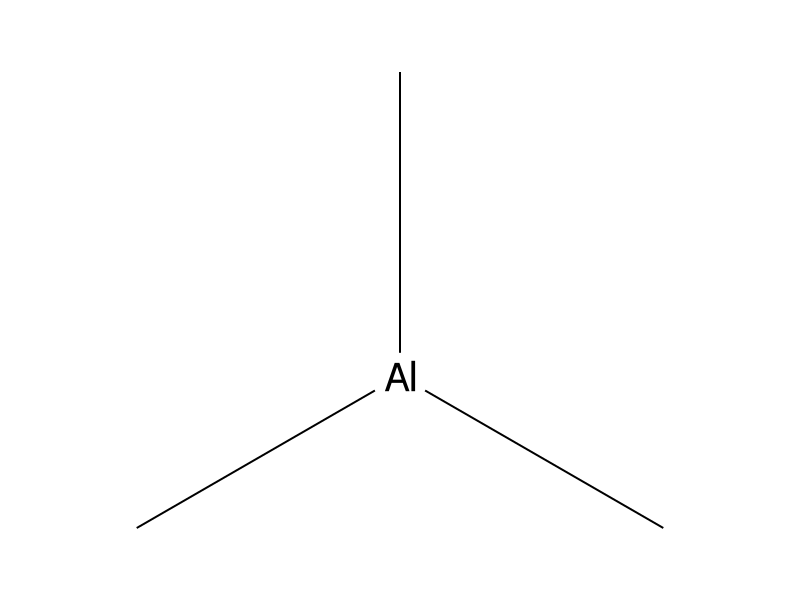
[CH3:1][C:2]([C:9]1[CH:14]=[CH:13][C:12](C#C)=[CH:11][CH:10]=1)([CH3:8])[CH2:3][CH2:4][CH:5]([CH3:7])[CH3:6].O=C(C1C=CC([Br:30])=CC=1)CCC(C)C.C[Al](C)C>CCCCCC>[CH3:1][C:2]([C:9]1[CH:14]=[CH:13][C:12]([Br:30])=[CH:11][CH:10]=1)([CH3:8])[CH2:3][CH2:4][CH:5]([CH3:7])[CH3:6]Participants
5




Procedure
Reaction Scheme 6 discloses specific synthetic steps leading to 4-(1,1,4-trimethylpentyl)phenylethyne (Compound 34). In this synthetic route 4-(1-oxo-4-methyl-pentyl) bromobenzene (Compound 31, obtained for example as shown in Reaction Scheme 5) is reacted under a protective nitrogen atmosphere with trimethylaluminum in hexane to yield 4-(1,1,4-trimethyl-pentyl)bromobenzene (Compound 35). The bromobenzene derivative 35 is converted through the corresponding trimethylsilylethyne derivative 36 into the target intermediate 34 by treatment with trimethylsilyl ethyne and subsequently with KOH in isopropanol, as described above. ##STR10##
Workup
- customReaction Scheme 6
Sources & evidence
- ORD record
- ord-dd1c397b01ec49dd9c16149a92b91ea6
- Source dataset
- uspto-grants-1993_04
- Patent number
- US05202471
Linked notes
Loading…