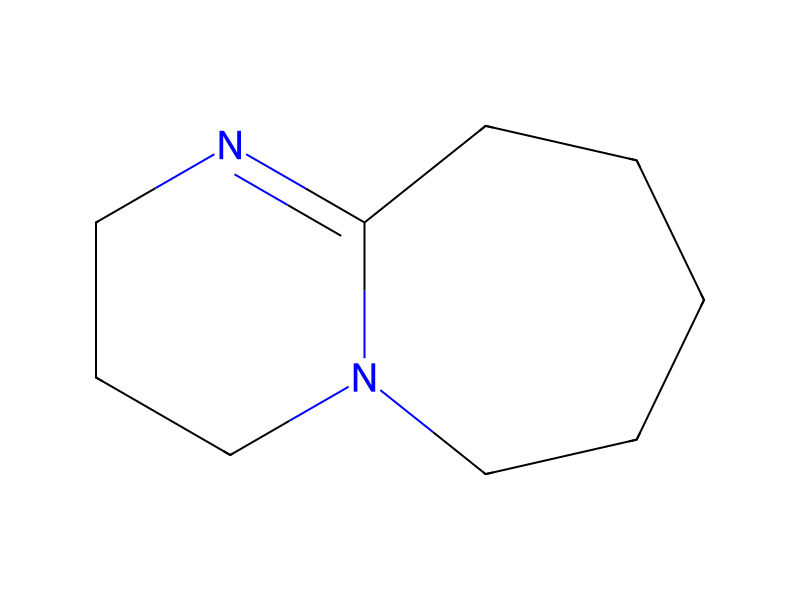
CI.N12CCCN=C1CCCC[CH2:4]2.[O:14]=[C:15]1[CH2:20][CH2:19][CH:18]([C:21]2[CH:26]=[CH:25][CH:24]=[CH:23][CH:22]=2)[C:17]([C:27]([OH:29])=[O:28])=[CH:16]1>CC(C)=O>[O:14]=[C:15]1[CH2:20][CH2:19][CH:18]([C:21]2[CH:22]=[CH:23][CH:24]=[CH:25][CH:26]=2)[C:17]([C:27]([O:29][CH3:4])=[O:28])=[CH:16]1358 g (2.52 mol) of methyl iodide and 361 g (2.38 mol) of 1,8-diazabicyclo[5.4.0]undec-7-ene are successively added to a solution of 428 g (1.98 mol) of (RS)-3-oxo-6-phenylcyclohex-1-ene-1-carboxylic acid, which can be obtained according to J. Org. Chem., 1971, 36, 3707, in 4.5 dm3 of acetone and then the reaction mixture is brought to reflux for five hours. The acetone is subsequently distilled off and the residue is stirred with 2.5 dm3 of water. After cooling to 10° C., the precipitate formed is filtered off, washed with ice-cold water and then dried at 30° C. 423 g (93%) of methyl (RS)-3-oxo-6-phenylcyclohex-1-ene-1-carboxylate are thus obtained in the form of a yellow powder, the characteristics of which are as follows: