Reaction equation
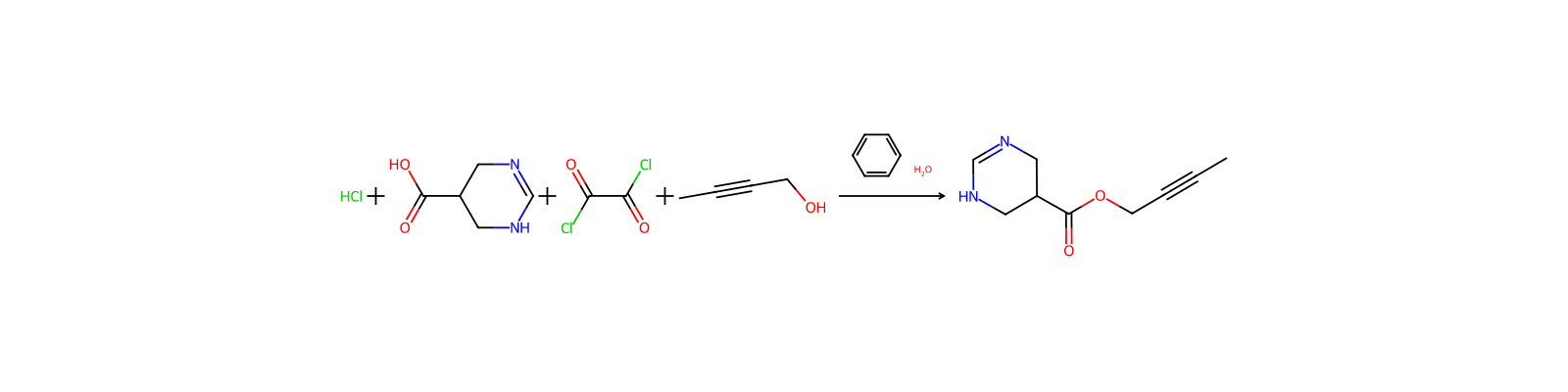
Cl.[NH:2]1[CH2:7][CH:6]([C:8]([OH:10])=[O:9])[CH2:5][N:4]=[CH:3]1.C(Cl)(=O)C(Cl)=O.[CH2:17](O)[C:18]#[C:19][CH3:20]>C1C=CC=CC=1.O>[CH2:17]([O:9][C:8]([CH:6]1[CH2:7][NH:2][CH:3]=[N:4][CH2:5]1)=[O:10])[C:18]#[C:19][CH3:20]Participants




Procedure
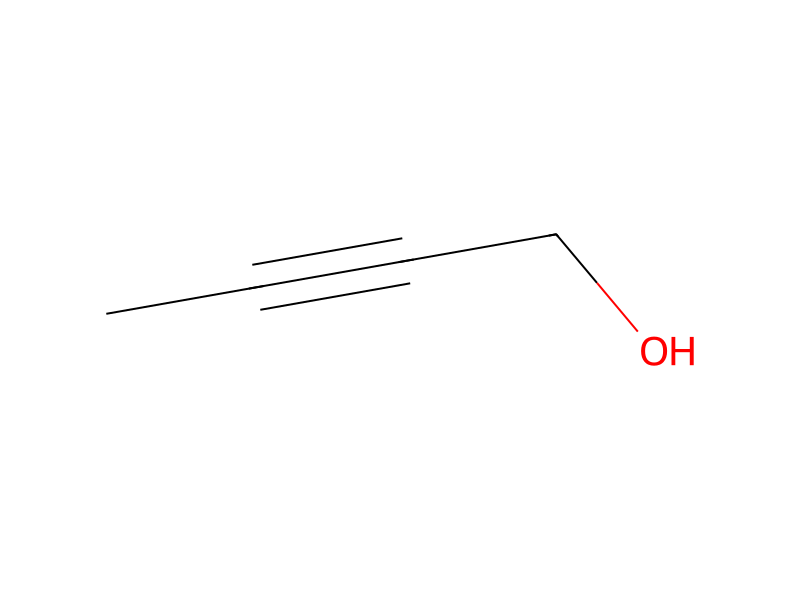
1,4,5,6-tetrahydropyrimidine-5-carboxylic acid hydrochloride (1 g, 6 mmol) was suspended in a solution of oxalyl chloride (1.5 mL, 17 mmol) in benzene (10 mL), heated with stirring under reflux for 2.5 h, and then evaporated to dryness in vacuo after cooling, to give an orange-yellow residue. A mixture of the acid chloride (04 g) and 2-butyn-l-ol (20 mL, excess) was stirred at room temperature overnight. After stirring overnight, the solvents were removed in vacuo to give a brownish residue. The residue was taken up in water (100 mL), stirred at room temperature for 2 h and filtered. The brown residue obtained on removal of the solvents in vacuo was recrystallized (ethanol/ether) to give a brown viscous oil (0.3 g, 61%) of 5-(2-butynyloxycarbonyl)-1,4,5,6-tetrahydropyrimidine as the hydrochloride salt. 1H NMR (D2O): δ 1.5 (t, 3H, CH3), 3.1 (m, 1H), 3.5 (d, 4H), 3.9 (q, 2H, OCH2), 7.9 (s, 1H, amidine-H). Anal. (C9H13N2O2Cl) C, H, N.
Workup
- temperatureheated
- temperatureunder reflux for 2.5 h
- customevaporated to dryness in vacuo
- temperatureafter cooling
- customto give an orange-yellow residue
- stirringwas stirred at room temperature overnight
- stirringAfter stirring overnight
- customthe solvents were removed in vacuo
- customto give a brownish residue
- stirringstirred at room temperature for 2 h
- filtrationfiltered
- customThe brown residue obtained on removal of the solvents in vacuo
- customwas recrystallized (ethanol/ether)
Sources & evidence
- ORD record
- ord-47a44d0423b048a0ba771f9e6b7956a7
- Source dataset
- uspto-grants-1998_03
- Patent number
- US05726179
Linked notes
Loading…