HomeMCPWorkbenchSkills
HomeWorkbenchNotificationsMe
llms.txt · MCP GuidePrivacy Policy · Terms of Service · Supportv1.8.0
  1. Home
  2. /Reaction

Acetone → HCID 21547089, compound

HRID 1605649
Notes
Print preview

Reaction equation

HRID 1605649 reaction equation
[Na].[H][H].CC(C)=O.[F:8][C:9]1[CH:14]=[CH:13][CH:12]=[CH:11][C:10]=1[C:15]1[CH:20]=[CH:19][C:18](/[CH:21]=[CH:22]/[C:23](=[O:25])[CH3:24])=[CH:17][CH:16]=1>C(O)C.O.O.O.O.C([O-])(=O)C.[Ni+2].C([O-])(=O)C.B#[Ni]>[F:8][C:9]1[CH:14]=[CH:13][CH:12]=[CH:11][C:10]=1[C:15]1[CH:20]=[CH:19][C:18]([CH2:21][CH2:22][C:23](=[O:25])[CH3:24])=[CH:17][CH:16]=1
ParticipantsProcedureWorkupSources & evidenceReaction notes

Participants

8

Reactant 4

HCID 180AcetoneHCID 5360545SodiumHCID 21547110HCID 21547110, compoundHCID 178418361HCID 178418361, compound

Product 1

HCID 21547089HCID 21547089, compoundYield 62.1%

Reagents, catalysts & solvents 3

HCID 62601
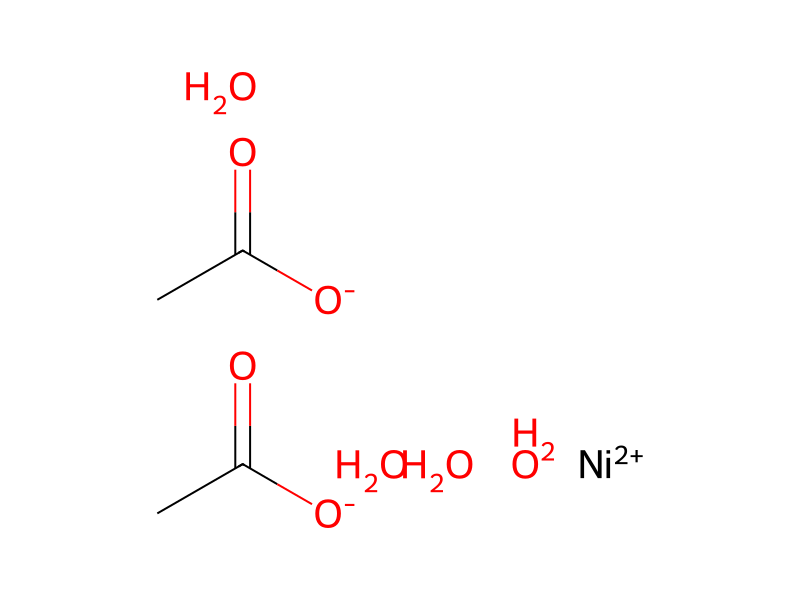
Nickel acetate tetrahydrate
Catalyst
HCID 82791nickel boride (NiB)Catalyst
HCID 702EthanolSolvent

Procedure

15 Gm (0.06 mol) of nickel(II)acetate tetrahydrate, dissolved in 600 ml of 95% ethanol, were reduced to black, colloidal nickel boride (P-2-catalyst) in a hydrogenation vessel with 60 ml of 1 M sodium borohyride solution in an atmosphere of hydrogen. In order to remove any unreacted borohydride which may be present, 14 gm (0.24 mol) of acetone were first added and the mixture was shaken for one hour at room temperature. Thereafter, 30.0 gm (0.123 mol) of (E)-4-(2'-fluoro-4-biphenylyl)-3-buten-2-one were added, and the mixture was hydrogenated at room temperature and 5 atmospheres until the absorption of hydrogen terminated. Subsequently, the catalyst was filtered off, the filtrate was evaporated in vacuo, and the residue was shaken with a mixture of water and ethyl acetate. The organic phase was dried over sodium sulfate and then evaporated, and the residue was distilled in a high vacuum, yielding 18.5 gm (62% of theory) of 4-(2'-fluoro-4-biphenylyl)-2-butanone in the form of a colorless, viscous oil having a boiling point of 153°-155°C at 0.4 mm Hg which solidified after prolonged standing and then had a melting point of 30°C.


Workup

  1. customIn order to remove any unreacted borohydride which
  2. customwas hydrogenated at room temperature
  3. custom5 atmospheres until the absorption of hydrogen
  4. customterminated
  5. filtrationSubsequently, the catalyst was filtered off
  6. customthe filtrate was evaporated in vacuo
  7. stirringthe residue was shaken with a mixture of water and ethyl acetate
  8. dry with materialThe organic phase was dried over sodium sulfate
  9. customevaporated
  10. distillationthe residue was distilled in a high vacuum

Sources & evidence

ORD record
ord-37a8dffdab874fcd8f5ac5f562c3a7ea
Source dataset
uspto-grants-1976_04
DOI
10.6084/m9.figshare.5104873.v1
Patent number
US03950427

Reaction notes

Loading…

On this pageParticipantsProcedureWorkupSources & evidenceReaction notes