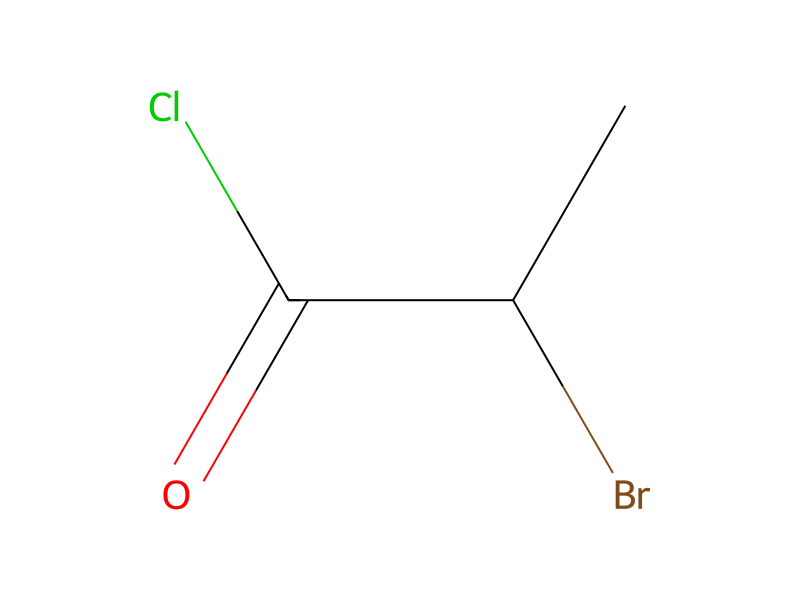
[C:1]([NH:6][C:7]1[CH:8]=[CH:9][C:10]2[CH2:16][CH2:15][C:14]3[CH:17]=[CH:18][CH:19]=[CH:20][C:13]=3[NH:12][C:11]=2[CH:21]=1)([O:3][CH2:4][CH3:5])=[O:2].[Br:22][CH:23]([CH3:27])[C:24](Cl)=[O:25].Cl>C1(C)C=CC=CC=1>[C:1]([NH:6][C:7]1[CH:8]=[CH:9][C:10]2[CH2:16][CH2:15][C:14]3[CH:17]=[CH:18][CH:19]=[CH:20][C:13]=3[N:12]([C:24](=[O:25])[CH:23]([Br:22])[CH3:27])[C:11]=2[CH:21]=1)([O:3][CH2:4][CH3:5])=[O:2]The starting material can be synthesized as follows. 3-Carbethoxyamino-10,11-dihydro-5H-dibenz[b,f]azepine (28.2 g, 0.1 moles) is mixed with 300 ml toluene and 20 g (0.11 moles) of 2-bromopropionyl chloride and stirred for 4 hours on a boiling water bath, while HCl gas is escaping. The mixture is allowed to cool to room temperature and filtered and the filtrate is evaporated to dryness under reduced pressure. Upon addition of diethyl ether, the residue crystallizes, after temporarily going into solution. The crystalline deposit is filtered off with suction, washed with ether and dried. 3-Carbethoxyamino-5-(α-bromopropionyl)-10,11-dihydro-5H-dibenz[b,f]azepine (39 g) is obtained, which is purified by recrystallization from the 5-fold amount of isopropanol.