HomeMCPWorkbenchSkills
HomeWorkbenchNotificationsMe
llms.txt · MCP GuidePrivacy Policy · Terms of Service · Supportv1.8.0
  1. Home
  2. /Reaction

Benzenamine, 4-(4-morpholinyl)- → 2-(4-Morpholinophenylamino)-6-(3-acetamidophenyl)pyrazine

HRID 16267
Notes
Print preview

Reaction equation

HRID 16267 reaction equation
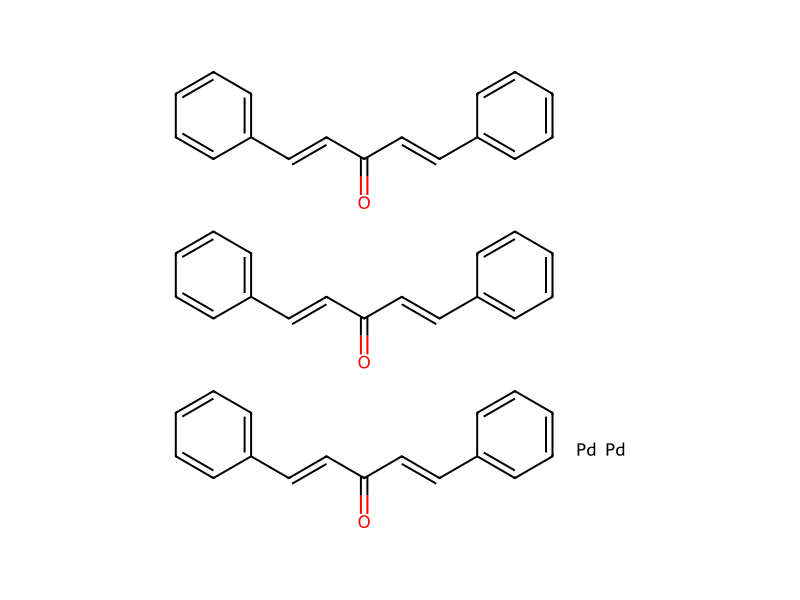
[C:1]([NH:4][C:5]1[CH:6]=[C:7]([C:11]2[CH:16]=[N:15][CH:14]=[C:13](Cl)[N:12]=2)[CH:8]=[CH:9][CH:10]=1)(=[O:3])[CH3:2].[O:18]1[CH2:23][CH2:22][N:21]([C:24]2[CH:30]=[CH:29][C:27]([NH2:28])=[CH:26][CH:25]=2)[CH2:20][CH2:19]1.F[B-](F)(F)F.C(C1C=CC=C(CCC)C=1[N+]1CCN(C2C(CCC)=CC=CC=2CCC)C=1)CC.CC(C)([O-])C.[K+]>[Pd].[Pd].C(=CC(C=CC1C=CC=CC=1)=O)C1C=CC=CC=1.C(=CC(C=CC1C=CC=CC=1)=O)C1C=CC=CC=1.C(=CC(C=CC1C=CC=CC=1)=O)C1C=CC=CC=1.O1CCOCC1>[O:18]1[CH2:19][CH2:20][N:21]([C:24]2[CH:25]=[CH:26][C:27]([NH:28][C:13]3[N:12]=[C:11]([C:7]4[CH:6]=[C:5]([NH:4][C:1](=[O:3])[CH3:2])[CH:10]=[CH:9][CH:8]=4)[CH:16]=[N:15][CH:14]=3)=[CH:29][CH:30]=2)[CH2:22][CH2:23]1
ParticipantsProcedureWorkupSources & evidenceReaction notes

Participants

7

Reactant 4

HCID 75655Benzenamine, 4-(4-morpholinyl)-HCID 116874302-(3-Acetamidophenyl)-6-chloropyrazineHCID 23665647Potassium tert-butoxideHCID 866178521,3-Bis(2,6-di-1-propylphenyl)-4,5-dihydroimidazolium tetrafluoroborate

Product 1

HCID 115746252-(4-Morpholinophenylamino)-6-(3-acetamidophenyl)pyrazineYield 29.8%

Reagents, catalysts & solvents 2

HCID 9832798Tris(dibenzylideneacetone) dipalladiumCatalystHCID 312751,4-DioxaneSolvent

Procedure

Using Method O, 2-(3-acetamidophenyl)-6-chloropyrazine (150 mg, 0.61 mmol), 4-morpholinoaniline (155.4 mg, 0.87 mmol), tris(dibenzylideneacetone) dipalladium (0) (28 mg, 0.030 mmol), 1,3-bis(2,6-di-1-propylphenyl)-4,5-dihydro-imidazolium tetrafluoroborate (29 mg, 0.061 mmol), potassium tert-butoxide (102 mg, 0.91 mmol), and dioxane (3.5 mL) were reacted at 100° C. for 30 minutes with microwave heating. The reaction crude was passed through a short silica gel column (2 g silica), which was thoroughly washed with ethyl acetate. The last fractions of this column were collected to give 9 mg of pure title compound. The first fractions were collected, the solvent was evaporated under vacuo and the resulting solid was crystallised in ethyl acetate to produce 61 mg of the title compound. Yield: 29.8%. 1H NMR (250 MHz, DMSO-d6) δ 2.09 (s, 3 H), 3.03-3.07 (bt, 4 H), 3.72-3.76 (bt, 4 H), 6.97 (d, 2 H, J=9.0 Hz), 7.42 (t, 1 H, J=7.9 Hz), 7.65-7.68 (m, 2 H), 7.70 (d, 2H, J=8.9 Hz), 8.11 (s; 1 H), 8.33 (bs, 2 H), 9.36 (s, 1 H), 10.09 (s, 1 H); 13C NMR (62.9 MHZ, DMSO-d6) δ 24.11, 49.24, 66.16, 116.01, 117.08, 119.61, 119.89, 121.08, 129.16, 133.03, 133.15, 137.23, 139.87, 146.10, 147.95, 151.70, 168.45; m/z 390.2 [(M+H)+, calcd for C22H23N5O2 389.2].

Workup

  1. customwere reacted at 100° C. for 30 minutes with microwave heating
  2. customThe reaction crude
  3. washwas thoroughly washed with ethyl acetate
  4. customThe last fractions of this column were collected

Sources & evidence

ORD record
ord-9d88e03a5af74bb6a37187a58cbeb9ef
Source dataset
uspto-grants-2010_06
DOI
10.6084/m9.figshare.5104873.v1
Patent number
US07737152B2

Reaction notes

Loading…

On this pageParticipantsProcedureWorkupSources & evidenceReaction notes