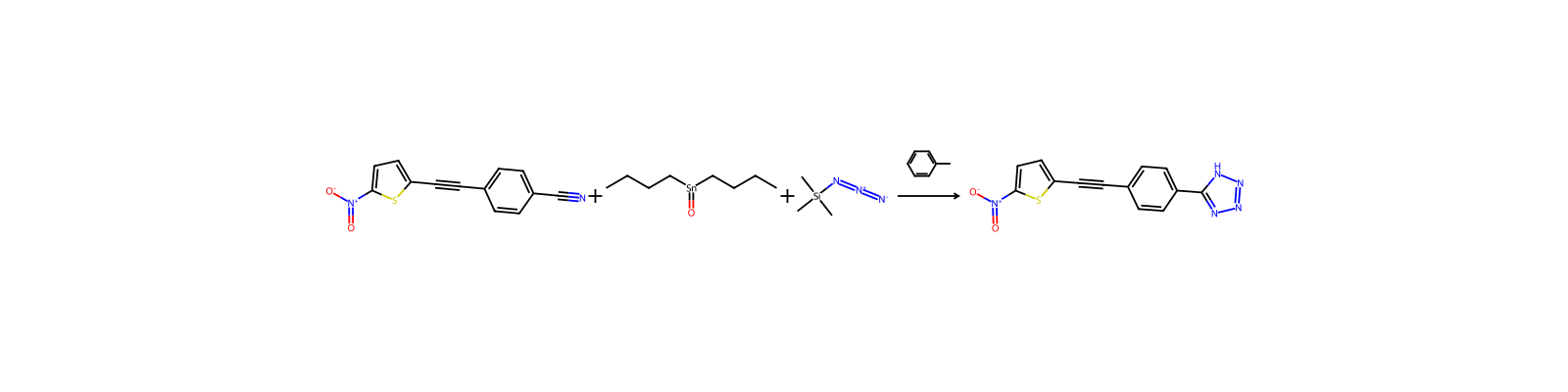
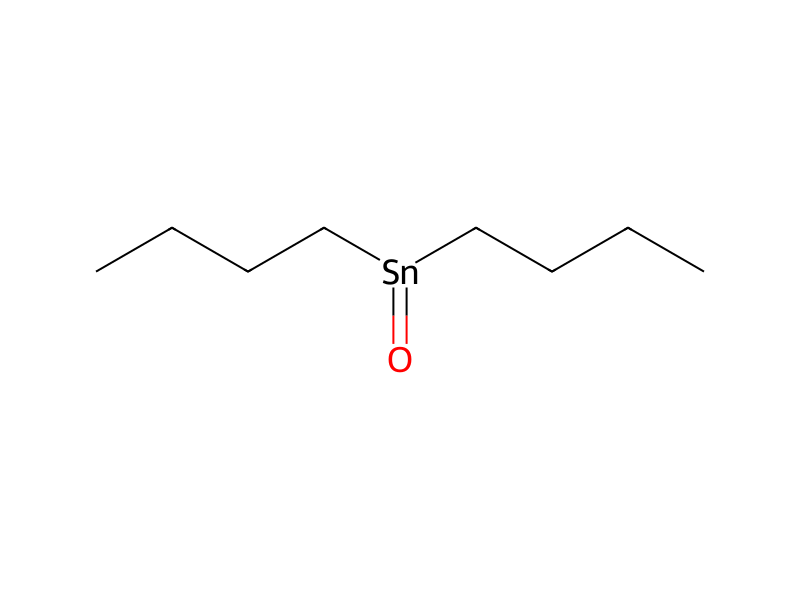
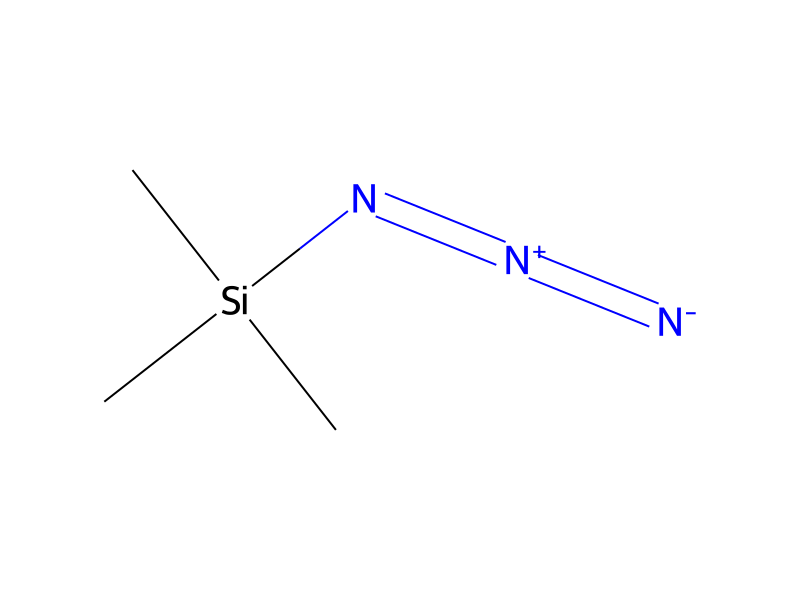
[N+:1]([C:4]1[S:8][C:7]([C:9]#[C:10][C:11]2[CH:18]=[CH:17][C:14]([C:15]#[N:16])=[CH:13][CH:12]=2)=[CH:6][CH:5]=1)([O-:3])=[O:2].C([Sn](=O)CCCC)CCC.C[Si]([N:33]=[N+:34]=[N-:35])(C)C>C1(C)C=CC=CC=1>[N+:1]([C:4]1[S:8][C:7]([C:9]#[C:10][C:11]2[CH:12]=[CH:13][C:14]([C:15]3[NH:35][N:34]=[N:33][N:16]=3)=[CH:17][CH:18]=2)=[CH:6][CH:5]=1)([O-:3])=[O:2]To a solution of 4-[(5-nitro-2-thienyl)ethynyl]benzonitrile (0.6 g) and dibutyltin oxide (59 mg) in anhydrous toluene (30 ml) was added trimethylsilyl azide (0.5 ml). The reaction mixture was heated to reflux in the dark for 12 hours, then allowed to cool to room temperature. The reaction mixture was washed with saturated sodium bicarbonate (2×300 ml) and the combined aqueous layer was acidified to pH 1 with concentrated hydrochloric acid (30 ml). The acidified solution was washed with 1:1 ethyl acetate/tetrahydrofuran (500 ml) and the organic layer was dried over anhydrous sodium sulfate, filtered and evaporated to dryness to give 5-[4-[(5-nitro-2-thienyl)ethynyl]-phenyl]-1H-tetrazole as a yellow solid.
Loading…