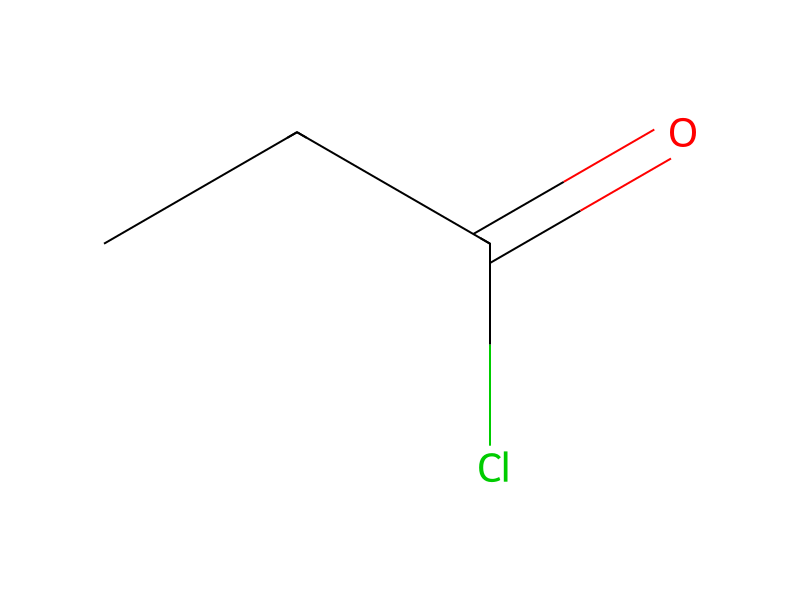
[Cl:1][C:2]1[C:19]([OH:20])=[CH:18][C:5]2[C@H:6]([C:12]3[CH:17]=[CH:16][CH:15]=[CH:14][CH:13]=3)[CH2:7][N:8]([CH3:11])[CH2:9][CH2:10][C:4]=2[CH:3]=1.C(=O)(O)[O-].[Na+].[C:26](Cl)(=[O:29])[CH2:27][CH3:28]>C(#N)C>[ClH:1].[Cl:1][C:2]1[C:19]([O:20][C:26](=[O:29])[CH2:27][CH3:28])=[CH:18][C:5]2[C@H:6]([C:12]3[CH:17]=[CH:16][CH:15]=[CH:14][CH:13]=3)[CH2:7][N:8]([CH3:11])[CH2:9][CH2:10][C:4]=2[CH:3]=1Reflux a mixture of 6.70 g (0.0232) moles of (S)-7-chloro-8-hydroxy-3-methyl-1-phenyl-2,3,4,5-tetrahydro-1H-3-benzazepine, 8.0 g of anhydrous sodium bicarbonate and 6.0 ml of propionyl chloride in 150 ml of dry acetonitrile with stirring for 2.5 hours and concentrate to dryness on a steam bath. Dissolve the residue in a mixture of 60 ml of water and 70 ml of ethyl ether. Separate the ether layer, dry over anhydrous sodium sulfate, filter and evaporate to dryness. Redissolve the residue in 150 ml of anhydrous ethyl ether and precipitate (S)-7-chloro-3-methyl-1-phenyl-8-propionyloxy-2,3,4,5-tetrahydro-1H-3-benzazepine hydrochloride by slow addition of a slight excess of 1N ethereal hydrogen chloride. Obtain an analytical sample by crystallization from 2-propanol, m.p. 234°-236° C., [α]D26 =+32.5° (c=1, dimethylformamide).