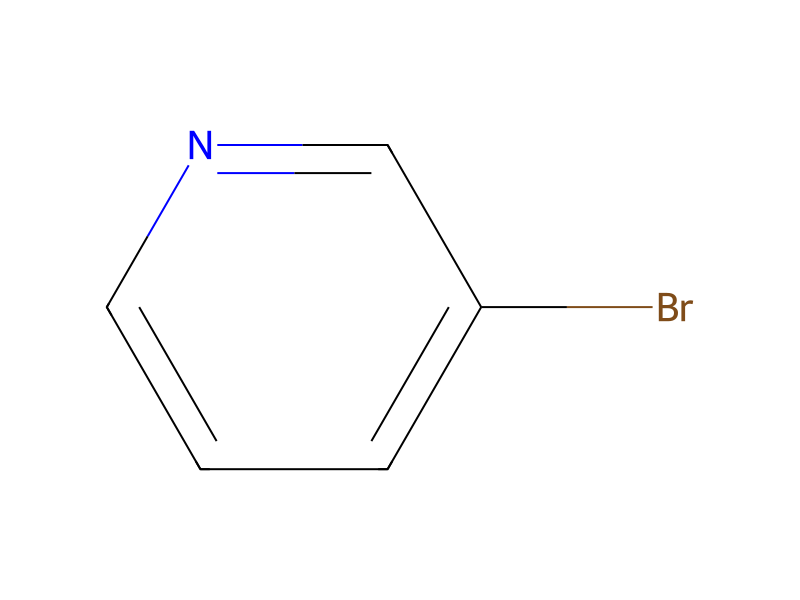
Br[C:2]1[CH:3]=[N:4][CH:5]=[CH:6][CH:7]=1.C([Li])CCC.[CH:13]([C:15]1[CH:16]=[C:17]([C:26]([CH3:30])([CH3:29])[C:27]#[N:28])[CH:18]=[C:19]([C:21]([CH3:25])([CH3:24])[C:22]#[N:23])[CH:20]=1)=[O:14]>C(OCC)C.CCCCCC>[OH:14][CH:13]([C:15]1[CH:20]=[C:19]([C:21]([CH3:25])([CH3:24])[C:22]#[N:23])[CH:18]=[C:17]([C:26]([CH3:30])([CH3:29])[C:27]#[N:28])[CH:16]=1)[C:2]1[CH:3]=[N:4][CH:5]=[CH:6][CH:7]=1A solution of 3-bromopyridine (0.31 g) in diethyl ether was stirred and cooled to -70° while a solution of n-butyl-lithium in hexane (1.6M, 1.33 ml) was added, followed by 2,2'-(5 formyl-1,3-phenylene)di(2-methylpropiononitrile), (0.48 g). The mixture was allowed to warm to room temperature and was then extracted with 2N aqueous hydrochloric acid (10 ml). The acid extract was separated, basified with 10N aqueous sodium hydroxide solution and extracted twice with ethyl acetate. The extracts were combined, dried and evaporated to dryness under reduced pressure, and the residue was purified by flash column chromatography, eluting with ethyl acetate, to give 2,2'-[5-(1-hydroxy-1-(3-pyridyl]methyl)-1,3-phenylene]di(2-methyl propiononitrile), mp. 117°-120°.