Reaction equation
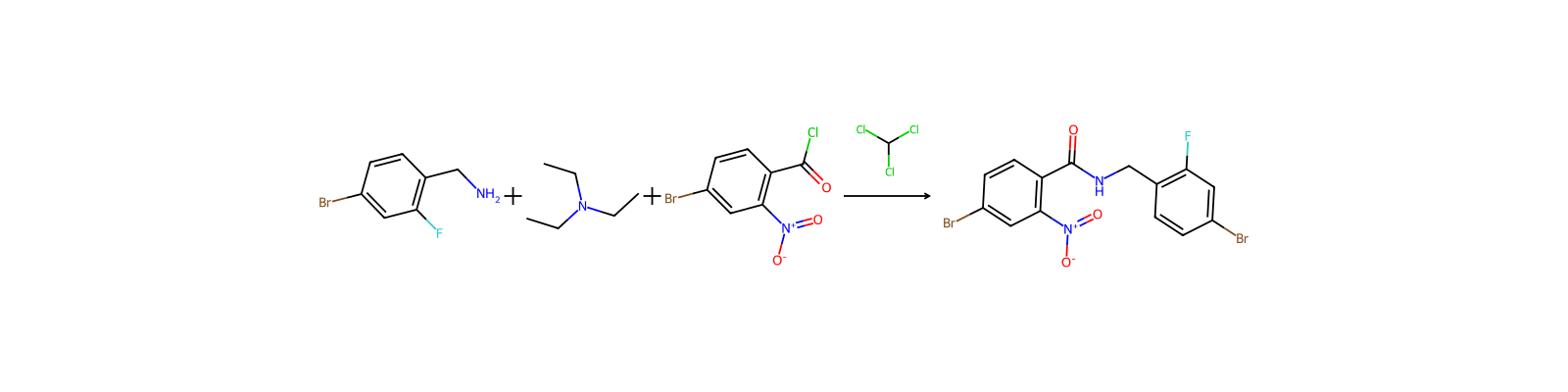
[Br:1][C:2]1[CH:9]=[CH:8][C:5]([CH2:6][NH2:7])=[C:4]([F:10])[CH:3]=1.C(N(CC)CC)C.[Br:18][C:19]1[CH:27]=[CH:26][C:22]([C:23](Cl)=[O:24])=[C:21]([N+:28]([O-:30])=[O:29])[CH:20]=1>C(Cl)(Cl)Cl>[Br:18][C:19]1[CH:27]=[CH:26][C:22]([C:23]([NH:7][CH2:6][C:5]2[CH:8]=[CH:9][C:2]([Br:1])=[CH:3][C:4]=2[F:10])=[O:24])=[C:21]([N+:28]([O-:30])=[O:29])[CH:20]=1Participants
5



Procedure
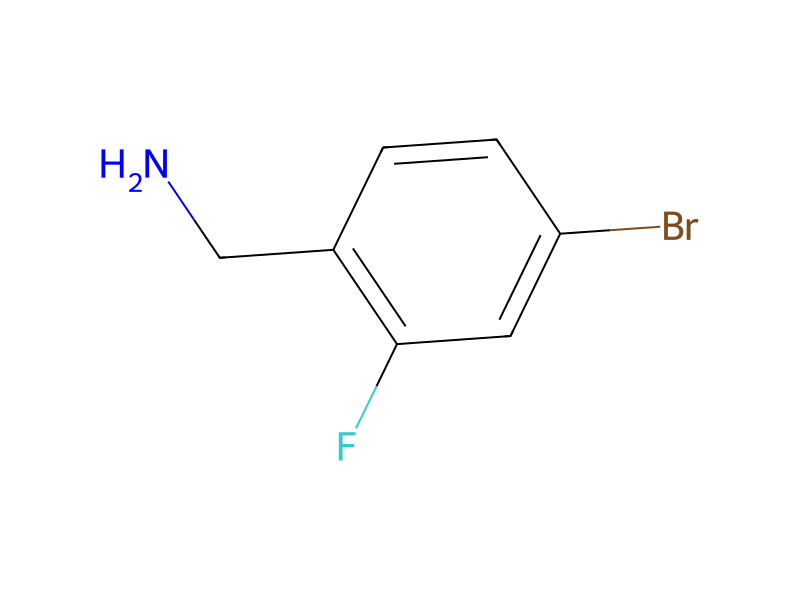
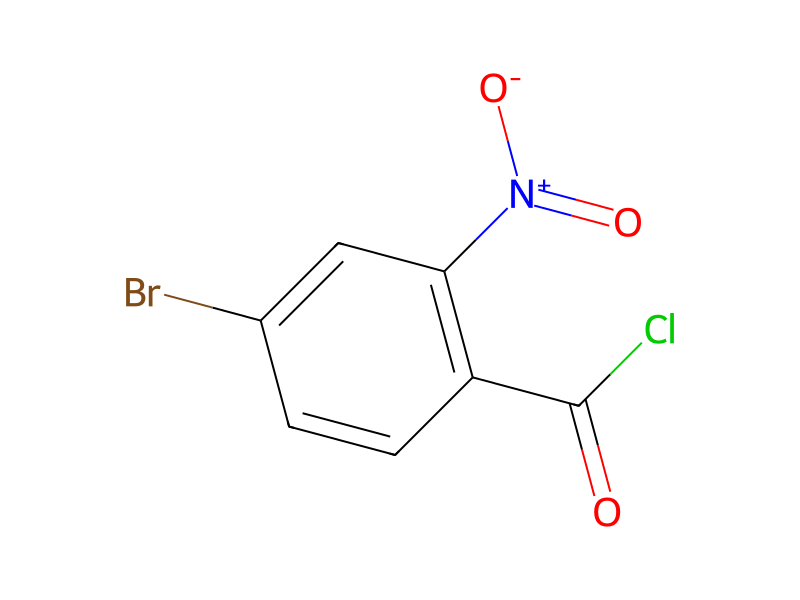
To a solution of 4-bromo-2-fluorobenzylamine (2.3 g) and triethylamine (1.55 ml) in chloroform (40 ml) was added dropwise a solution of 4-bromo-2-nitrobenzoyl chloride (2.69 g) in chloroform (10 ml) at 0° C. with stirring and the mixture was stirred at the same temperature for 1 hour. The reaction mixture was washed in turn with diluted aqueous hydrochloric acid and water, and then dried. Evaporation of the solvent followed by recrystallization from diethyl ether gave 4-bromo-N-(4-bromo-2-fluorobenzyl)-2-nitrobenzamide (3.60 g).
Workup
- stirringthe mixture was stirred at the same temperature for 1 hour
- washThe reaction mixture was washed in turn with diluted aqueous hydrochloric acid and water
- customdried
- customEvaporation of the solvent
- customfollowed by recrystallization from diethyl ether
Sources & evidence
- ORD record
- ord-acb49f0dbaa5489e8e7915b30e3a5ec7
- Source dataset
- uspto-grants-1989_11
- Patent number
- US04883800
Linked notes
Loading…