Reaction equation

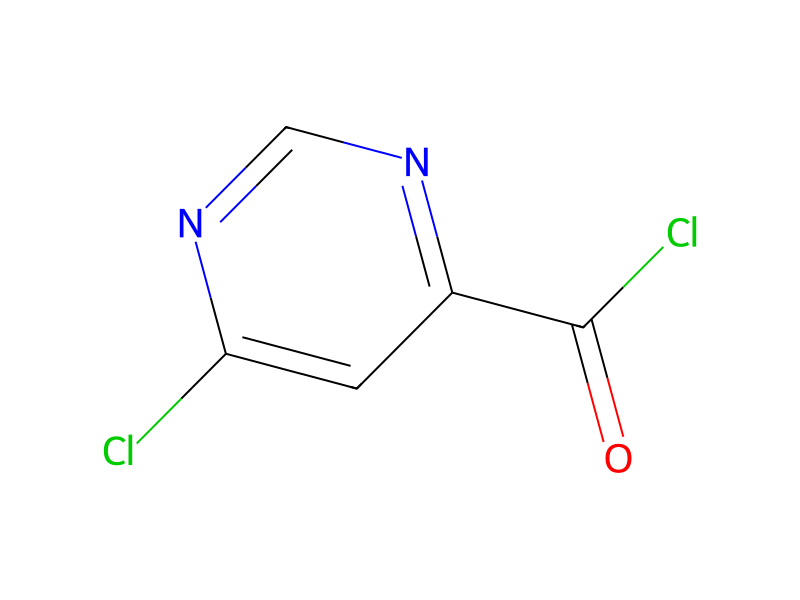
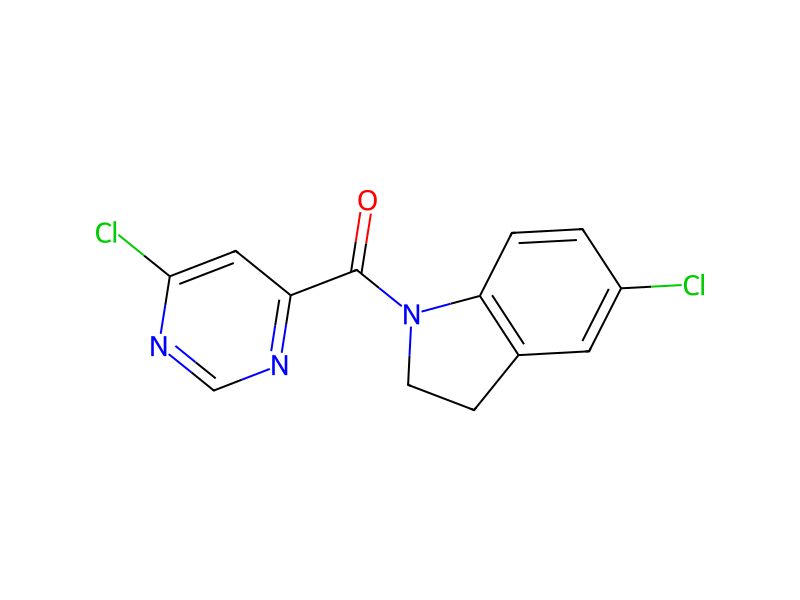
[Cl:1][C:2]1[N:7]=[CH:6][N:5]=[C:4]([C:8](Cl)=[O:9])[CH:3]=1.[Cl:11][C:12]1[CH:13]=[C:14]2[C:18](=[CH:19][CH:20]=1)[NH:17][CH2:16][CH2:15]2.[OH-].[Na+].C(=O)([O-])O.[Na+]>ClCCl>[Cl:11][C:12]1[CH:13]=[C:14]2[C:18](=[CH:19][CH:20]=1)[N:17]([C:8]([C:4]1[CH:3]=[C:2]([Cl:1])[N:7]=[CH:6][N:5]=1)=[O:9])[CH2:16][CH2:15]2Participants
6




Procedure
1.5 g (8.48 mmol) 6-chloropyrimidine-4-carboxylic acid chloride in 50 mL dichloromethane were cooled with an ice/ethanol bath and combined with 1.2 g (7.81 mmol) 5-chloro-2,3-dihydro-1H-indole. 7.9 mL (7.9 mmol) of a 1M sodium hydroxide solution were added dropwise. The reaction mixture was stirred for 2 h with cooling and for 1 h at RT. The man 50 mL of an aqueous saturated sodium hydrogen carbonate solution were added. After 10 min stirring the organic phase was separated off and washed with water and 1 M hydrochloric acid. The organic phases was dried on magnesium sulphate, filtered and evaporated down i.vac.
Workup
- stirringAfter 10 min stirring the organic phase
- customwas separated off
- washwashed with water and 1 M hydrochloric acid
- customThe organic phases was dried on magnesium sulphate
- filtrationfiltered
- customevaporated down i.vac
Sources & evidence
- ORD record
- ord-9609d5247b264aa78617f25df36161f9
- Source dataset
- uspto-grants-2012_02
- Patent number
- US08110575B2
Linked notes
Loading…