HomeMCPWorkbenchSkills
HomeWorkbenchNotificationsMe
llms.txt · MCP GuidePrivacy Policy · Terms of Service · Supportv1.8.3
  1. Home
  2. /Reaction

Tetrahydrofuran → 3-bromo-N-(4-chloro-2-(1-cyclopropylethylcarbamoyl)phenyl)-1-(3-chloropyridin-2-yl)-4,5-dihydro-1H-pyrazole-5-carboxamide

HRID 1641445
Print

Reaction equation

HRID 1641445 reaction equation
O1CCCC1.P(Br)(Br)[Br:7].CC1C=CC(S(O[C:21]2[CH2:25][CH:24]([C:26](=[O:43])[NH:27][C:28]3[CH:33]=[CH:32][C:31]([Cl:34])=[CH:30][C:29]=3[C:35](=[O:42])[NH:36][CH:37]([CH:39]3[CH2:41][CH2:40]3)[CH3:38])[N:23]([C:44]3[C:49]([Cl:50])=[CH:48][CH:47]=[CH:46][N:45]=3)[N:22]=2)(=O)=O)=CC=1>O>[Br:7][C:21]1[CH2:25][CH:24]([C:26]([NH:27][C:28]2[CH:33]=[CH:32][C:31]([Cl:34])=[CH:30][C:29]=2[C:35](=[O:42])[NH:36][CH:37]([CH:39]2[CH2:41][CH2:40]2)[CH3:38])=[O:43])[N:23]([C:44]2[C:49]([Cl:50])=[CH:48][CH:47]=[CH:46][N:45]=2)[N:22]=1
ParticipantsConditionsProcedureWorkupSources & evidenceReaction notes

Participants

5

Reactant 3

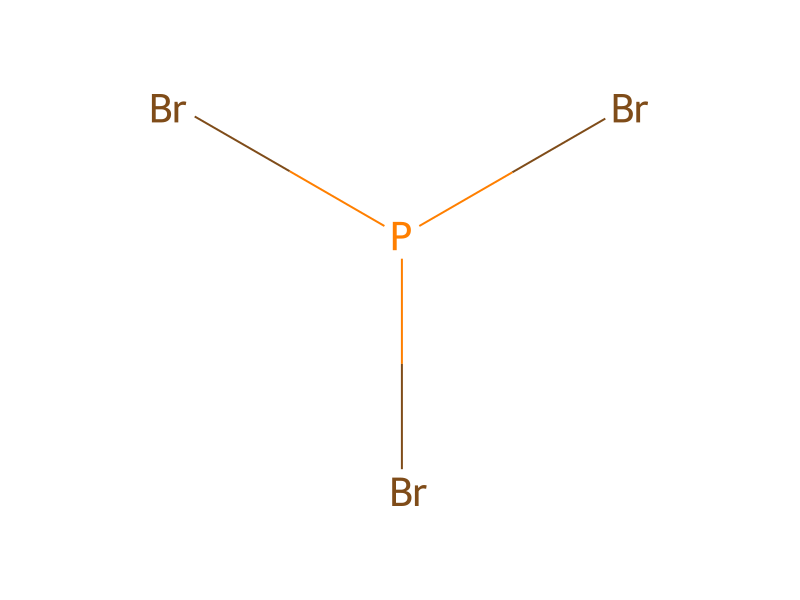
HCID 8028Tetrahydrofuran2×HCID 24614Phosphorus tribromideHCID 866399065-(4-chloro-2-(1-cyclopropylethylcarbamoyl)phenylcarbamoyl)-1-(3-chloropyridin-2-yl)-4,5-dihydro-1H-pyrazol-3-yl 4-methylbenzenesulfonate

Product 1

HCID 441856063-bromo-N-(4-chloro-2-(1-cyclopropylethylcarbamoyl)phenyl)-1-(3-chloropyridin-2-yl)-4,5-dihydro-1H-pyrazole-5-carboxamideYield 235.1%

Reagents, catalysts & solvents 1

HCID 962WaterSolvent

Conditions

Temperature
45 °C

Procedure

A tetrahydrofuran (1 ml) solution comprising 0.16 g of phosphorus tribromide was dropwise added to a mixed liquid comprising 1.0 g of 5-(4-chloro-2-(1-cyclopropylethylcarbamoyl)phenylcarbamoyl)-1-(3-chloropyridin-2-yl)-4,5-dihydro-1H-pyrazol-3-yl 4-methylbenzenesulfonate and 9 ml of tetrahydrofuran under cooling with ice. After stirring for 5 minutes, the reaction liquid was heated to 45° C. 5 hours later, the reaction liquid was poured to 50 ml of water, followed by extraction with ethyl acetate. The organic layer was washed with a saturated sodium chloride aqueous solution and dried over anhydrous sodium sulfate. The solvent was distilled off under reduced pressure, and the residue was purified by silica gel column chromatography (eluent: n-hexane/ethyl acetate=1/0 to 1/1) to obtain 0.73 g of the desired product in the form of a paste.

Workup

  1. additionwas dropwise added to a mixed liquid
  2. temperatureunder cooling with ice
  3. customthe reaction liquid
  4. custom5 hours later, the reaction liquid
  5. extractionfollowed by extraction with ethyl acetate
  6. washThe organic layer was washed with a saturated sodium chloride aqueous solution
  7. dry with materialdried over anhydrous sodium sulfate
  8. distillationThe solvent was distilled off under reduced pressure
  9. customthe residue was purified by silica gel column chromatography (eluent: n-hexane/ethyl acetate=1/0 to 1/1)

Sources & evidence

ORD record
ord-a10c777f17cd416794b3b1aed7a6050b
Source dataset
uspto-grants-2012_02
DOI
10.6084/m9.figshare.5104873.v1
Patent number
US08115006B2

Reaction notes

On this pageParticipantsConditionsProcedureWorkupSources & evidenceReaction notes