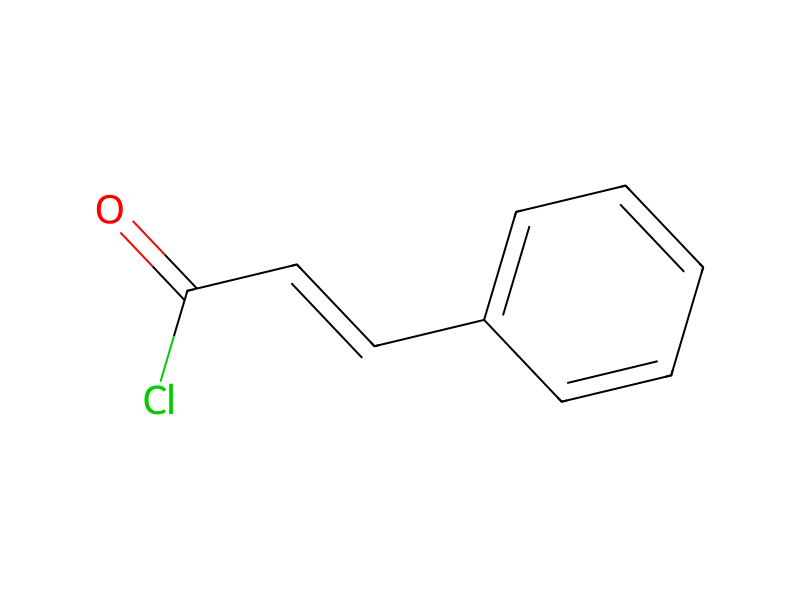
[Br:1][C:2]1[CH:3]=[C:4]([CH:6]=[CH:7][CH:8]=1)[NH2:5].N1C(C)=CC=CC=1C.[C:17](Cl)(=[O:26])[CH:18]=[CH:19][C:20]1[CH:25]=[CH:24][CH:23]=[CH:22][CH:21]=1>ClCCl>[Br:1][C:2]1[CH:3]=[C:4]([NH:5][C:17](=[O:26])/[CH:18]=[CH:19]/[C:20]2[CH:25]=[CH:24][CH:23]=[CH:22][CH:21]=2)[CH:6]=[CH:7][CH:8]=1To a solution of 3-bromoaniline (13.1 mL, 120 mmol) in dichloromethane (100 mL) and 2,6-lutidine (21 mL, 180 mmol) at 0° C. was added a solution of cinnamoylchloride (20 g, 120 mmol) in dichloromethane (50 mL) dropwise. The reaction mixture was allowed to reach room temperature and was stirred for 2 hours. It was quenched with potassium phosphate buffer (100 mL, 1M, pH 7) and stirred for 15 minutes. Dichloromethane was removed under reduced pressure. The residue was extracted with ethyl acetate. The organic phase was washed with phosphate buffer (200 mL), dried over sodium sulfate and concentrated to dryness. The residue was crystallized from toluene/hexanes to give the product as colorless solid (33.4 g, 92%).