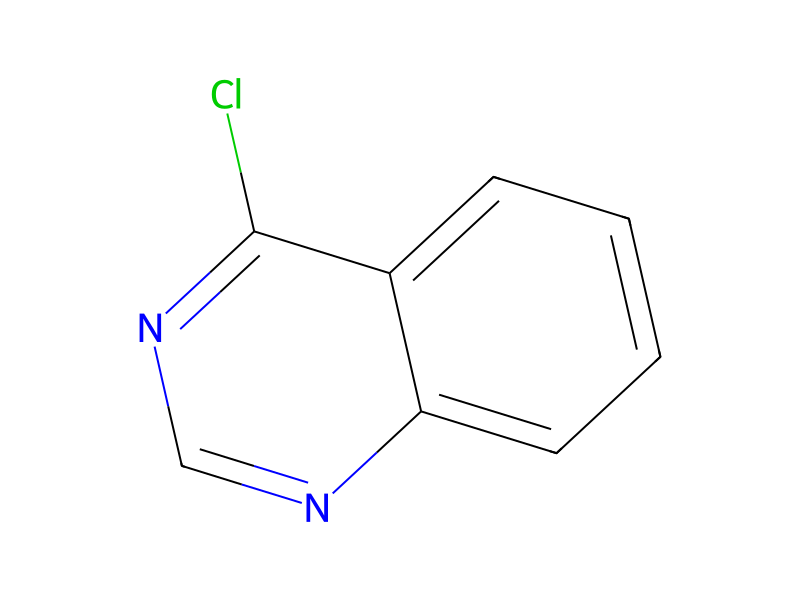
Cl[C:2]1[C:11]2[C:6](=[CH:7][CH:8]=[CH:9][CH:10]=2)[N:5]=[CH:4][N:3]=1.[CH3:12][NH:13][CH2:14][CH2:15][O:16][C:17]1[CH:22]=[CH:21][CH:20]=[CH:19][CH:18]=1.C(N(CC)CC)C>C1C=CC=CC=1>[CH3:12][N:13]([C:2]1[C:11]2[C:6](=[CH:7][CH:8]=[CH:9][CH:10]=2)[N:5]=[CH:4][N:3]=1)[CH2:14][CH2:15][O:16][C:17]1[CH:22]=[CH:21][CH:20]=[CH:19][CH:18]=1To a solution of 2.5 g (0.015 mole) of 4-chloroquinazoline in benzene were added 2.3 g (0.015 mole) of N-methyl-N-phenoxyethylamine and 1.5 g (0.015 mole) of triethylamine. The mixture was then refluxed, with stirring, for 7 hours. After completion of the reaction, the benzene was removed by evaporation. Water was added to the residue and the mixture was extracted with chloroform and the extract was dried. The chloroform was removed by evaporation and the resulting oil was purified by column chromatography through silica gel (eluted with a 1:1 by volume mixture of benzene and ethyl acetate) to give 3.7 g (88%) of the desired Compound No. 4 in the form of a pale yellow liquid having a refractive index nD27 1.6329.