HomeMCPWorkbenchSkills
HomeWorkbenchNotificationsMe
llms.txt · MCP GuidePrivacy Policy · Terms of Service · Supportv1.8.3
  1. Home
  2. /Reaction

1-(2-bromo-5-fluorophenyl)-5-methyl-1H-1,2,4-triazole → 4-Fluoro-2-(5-methyl-1H-1,2,4-triazol-1-yl)benzonitrile

HRID 1664145
Print

Reaction equation

HRID 1664145 reaction equation
Br[C:2]1[CH:7]=[CH:6][C:5]([F:8])=[CH:4][C:3]=1[N:9]1[C:13]([CH3:14])=[N:12][CH:11]=[N:10]1.[Cu][C:16]#[N:17]>CN1CCCC1=O>[F:8][C:5]1[CH:6]=[CH:7][C:2]([C:16]#[N:17])=[C:3]([N:9]2[C:13]([CH3:14])=[N:12][CH:11]=[N:10]2)[CH:4]=1
ParticipantsConditionsProcedureWorkupSources & evidenceReaction notes

Participants

4

Reactant 2

HCID 588778451-(2-bromo-5-fluorophenyl)-5-methyl-1H-1,2,4-triazoleHCID 178418546HCID 178418546, compound2×

Product 1

HCID 210699064-Fluoro-2-(5-methyl-1H-1,2,4-triazol-1-yl)benzonitrile

Reagents, catalysts & solvents 1

HCID 13387N-methyl-2-pyrrolidoneSolvent

Conditions

Temperature
145 °C

Procedure

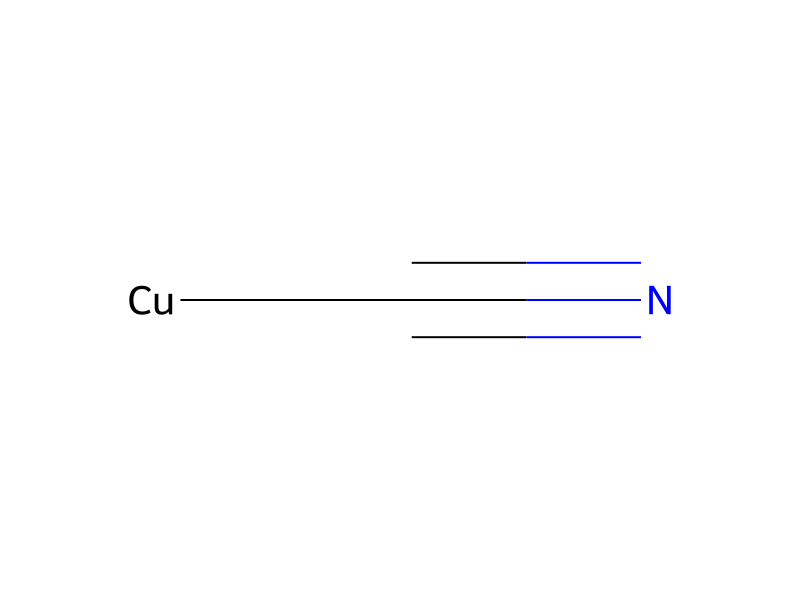
To a solution of 1-(2-bromo-5-fluorophenyl)-5-methyl-1H-1,2,4-triazole (4.1 g, 16 mmol) in N-methylpyrrolidone (NMP, 30 mL) was added copper (I) cyanide, CuCN (1.72 g, 19.2 mmol; Aldrich) and the mixture was stirred in an oil bath heated at 140-150° C. under a nitrogen atmosphere for 3 h. After cooling, the solvent was removed in vacuo and the residue mixed with CH2Cl2 (50 mL), water (50 mL), and conc-NH4OH (50 mL). The mixture was stirred for 30 min, and the insoluble material was filtered through Celite®. The aqueous filtrate was extracted again with CH2Cl2. The combined CH2Cl2 filtrate and extracts were washed again with dilute NH4OH, dried (MgSO4), filtered and concentrated to a dark solid which was triturated with diethyl ether to give 1.6 g of the title compound as an off-white solid. An additional amount (750 mg) of the title compound was obtained from the mother liquor by column chromatography (SiO2, 5% Et2O—CH2Cl2) followed by trituration with Et2O. Total yield, 2.35 g (11.6 mmol, 73% yield); HPLC: 1.29 min (AP 99% at 254 nm); LC/MS m/z 203 (M+H); 1H NMR (CDCl3, 500 MHz) δ ppm 2.50 (3H, s, 10-Me), 7.25 (1H, dd, J=8, 2.5 Hz, 3-CH), 7.30-7.36 (1H, m, 5-CH), 7.85 (1H, dd, J=8.8, 5.5 Hz, 6-CH), 8.00 (1H, s, 9-CH); 13C NMR (CDCl3, 125.8 Hz) δ ppm 12.7 (10-Me), 107.2 (d, J=Hz, 1-C), 114.6 (7-CN), 116.2, (d, J=25 Hz, 3-CH), 117.9 (d, J=23 Hz, 5-CH), 136.1 (d, J=10 Hz, 6-CH), 141.5 (d, J=l 1 Hz, 2-C), 152.3 (9-CH), 153.9 (8-C), 164.9 (d, J=261 Hz, 4-CF).

Workup

  1. temperatureAfter cooling
  2. customthe solvent was removed in vacuo
  3. additionthe residue mixed with CH2Cl2 (50 mL), water (50 mL)
  4. stirringThe mixture was stirred for 30 min
  5. filtrationthe insoluble material was filtered through Celite®
  6. extractionThe aqueous filtrate was extracted again with CH2Cl2
  7. washThe combined CH2Cl2 filtrate and extracts were washed again with dilute NH4OH
  8. dry with materialdried (MgSO4)
  9. filtrationfiltered
  10. concentrationconcentrated to a dark solid which
  11. customwas triturated with diethyl ether

Sources & evidence

ORD record
ord-a3103259589347e3af4e8c055ab2f949
Source dataset
uspto-grants-2011_10
DOI
10.6084/m9.figshare.5104873.v1
Patent number
US08039458B2

Reaction notes

On this pageParticipantsConditionsProcedureWorkupSources & evidenceReaction notes