HomeMCPSkillsWorkbenchOpenChem
HomeWorkbenchNotificationsMe
llms.txt · skill.md · MCP GuidePrivacy Policy · Terms of Service · Supportv1.8.6
  1. Home
  2. /Reaction

Pivalaldehyde → 1-(2-Chloro-5-triisopropylsilanyl-5h-pyrrolo[2,3-b]pyrazin-7-yl)-2,2-dimethyl-propan-1-ol

HRID 1677368
Print

Reaction equation

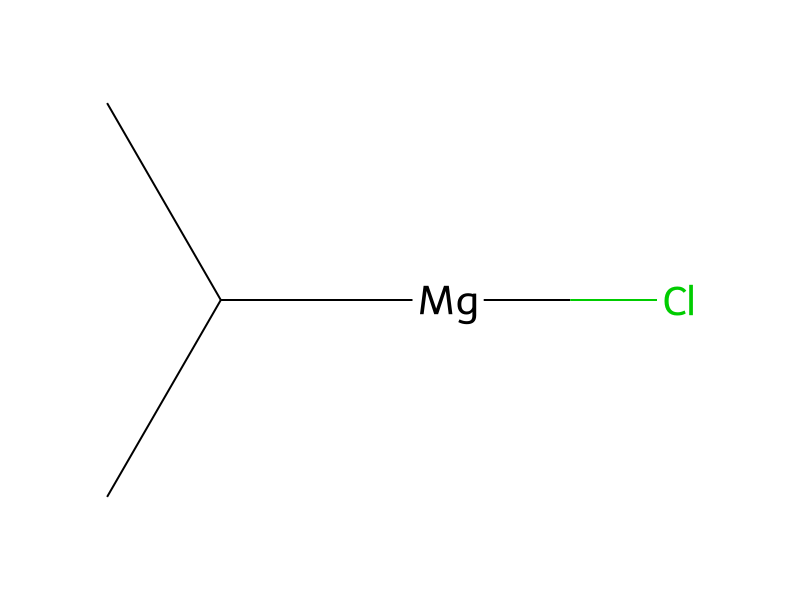
[Cl:1][C:2]1[N:3]=[C:4]2[C:10](I)=[CH:9][N:8]([Si:12]([CH:19]([CH3:21])[CH3:20])([CH:16]([CH3:18])[CH3:17])[CH:13]([CH3:15])[CH3:14])[C:5]2=[N:6][CH:7]=1.C([Mg]Cl)(C)C.[Cl-].[Li+].[CH3:29][C:30]([CH:33]=[O:34])([CH3:32])[CH3:31]>O1CCCC1>[Cl:1][C:2]1[N:3]=[C:4]2[C:10]([CH:33]([OH:34])[C:30]([CH3:32])([CH3:31])[CH3:29])=[CH:9][N:8]([Si:12]([CH:19]([CH3:21])[CH3:20])([CH:16]([CH3:18])[CH3:17])[CH:13]([CH3:15])[CH3:14])[C:5]2=[N:6][CH:7]=1
ParticipantsConditionsProcedureWorkupSources & evidenceReaction notes

Participants

6

Reactant 4

HCID 12417PivalaldehydeHCID 433294Lithium ChlorideHCID 578309962-Chloro-7-iodo-5-(triisopropylsilyl)-5H-pyrrolo[2,3-b]pyrazineHCID 178418918HCID 178418918, compound

Product 1

HCID 578310051-(2-Chloro-5-triisopropylsilanyl-5h-pyrrolo[2,3-b]pyrazin-7-yl)-2,2-dimethyl-propan-1-ol

Reagents, catalysts & solvents 1

HCID 8028TetrahydrofuranSolvent

Conditions

Temperature
-78 °C

Procedure

2-Chloro-7-iodo-5-triisopropylsilanyl-5H-pyrrolo[2,3-b]pyrazine (0.56 g, 1.28 mmol) was dissolved in 10 mL of dry tetrahydrofuran and stirred under argon with cooling to −78° C. A solution of isopropylmagnesium chloride with lithium chloride (3 mL, 1M, 3 mmol) was added via syringe. After 10 m, neat pivaldehyde (0.325 mL, 3 mmol, distilled) was added all at once. After 1 h at −78° C., the reaction was quenched by the addition of saturated aqueous ammonium chloride, then diluted with ethyl acetate and allowed to warm to ambient temperature. The organic layer was then washed successively with saturated aqueous sodium bicarbonate and brine. After drying over magnesium sulfate, the solution was filtered and solvent removed, and carried directly into the next step.

Workup

  1. customthe reaction was quenched by the addition of saturated aqueous ammonium chloride
  2. additiondiluted with ethyl acetate
  3. temperatureto warm to ambient temperature
  4. washThe organic layer was then washed successively with saturated aqueous sodium bicarbonate and brine
  5. dry with materialAfter drying over magnesium sulfate
  6. filtrationthe solution was filtered
  7. customsolvent removed

Sources & evidence

ORD record
ord-b4c0b36b8cde496d82d1957a56603da9
Source dataset
uspto-grants-2011_08
DOI
10.6084/m9.figshare.5104873.v1
Patent number
US08008298B2

Reaction notes

On this pageParticipantsConditionsProcedureWorkupSources & evidenceReaction notes